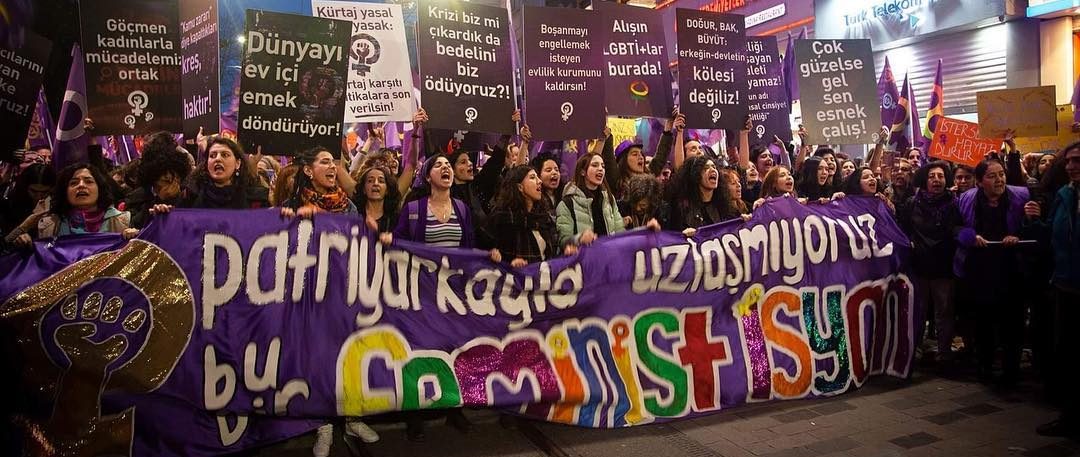
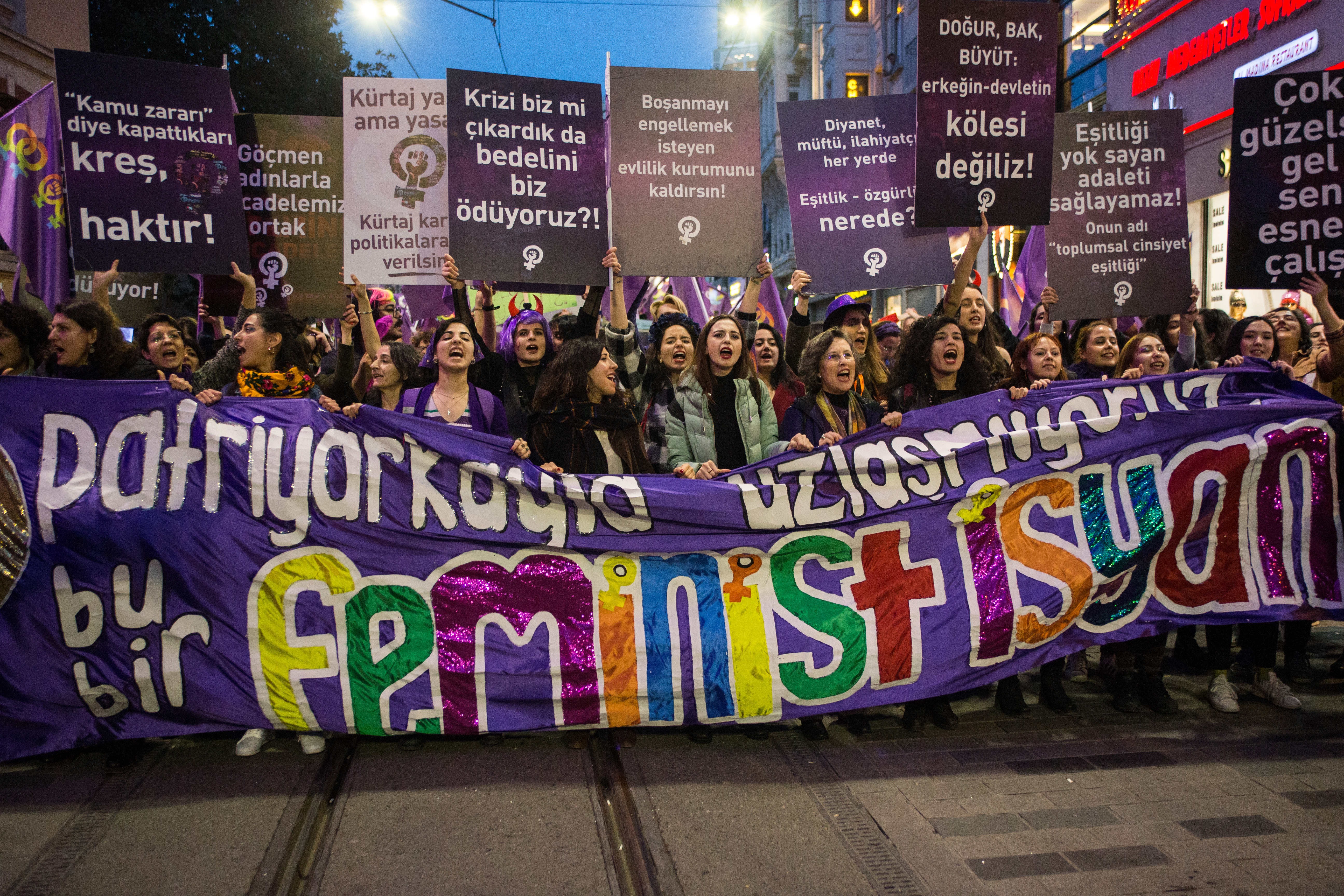
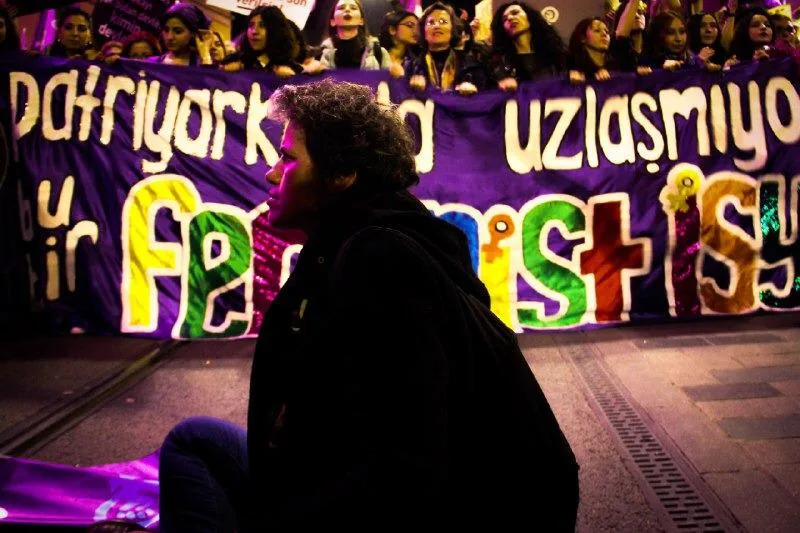
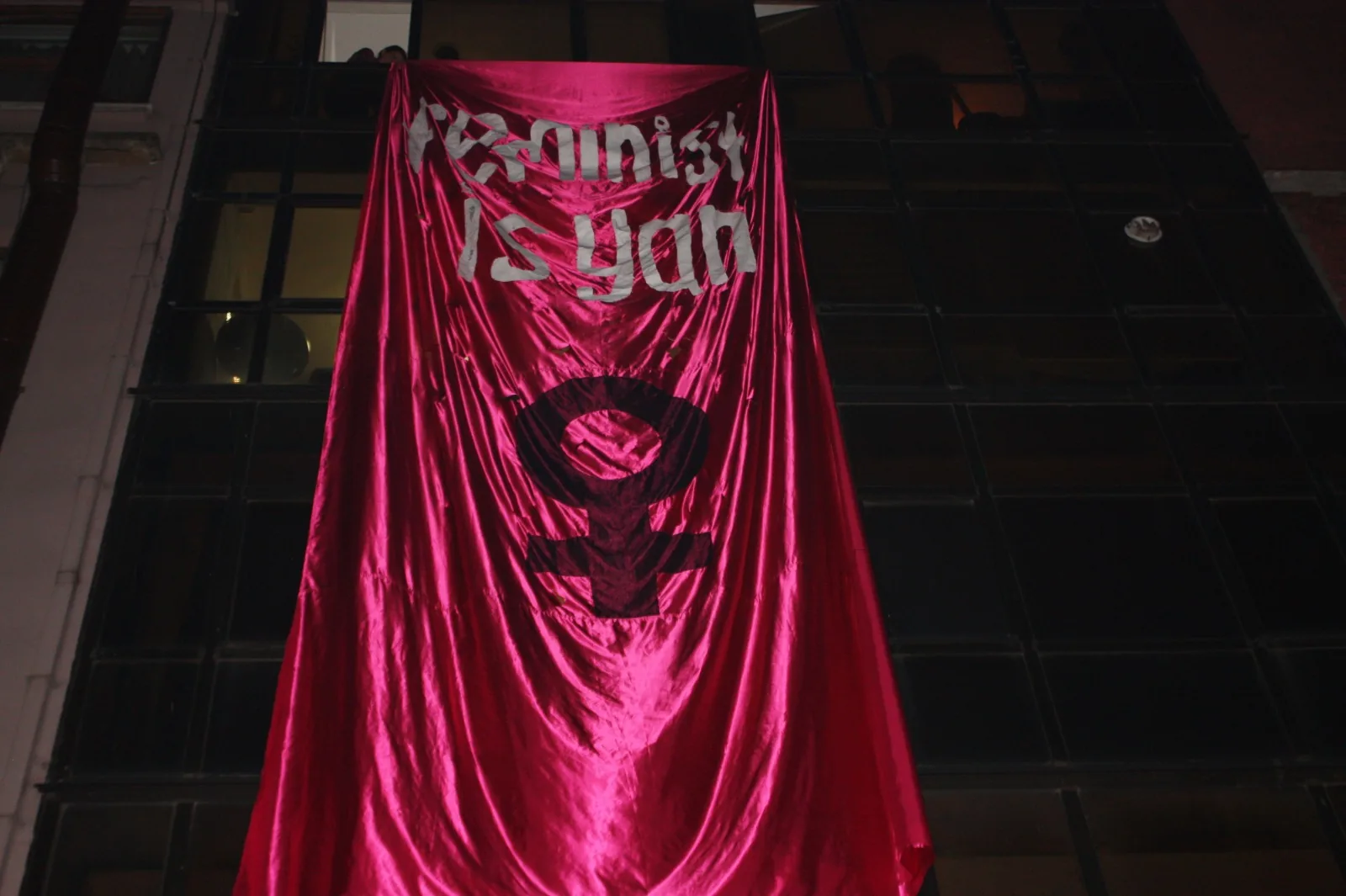
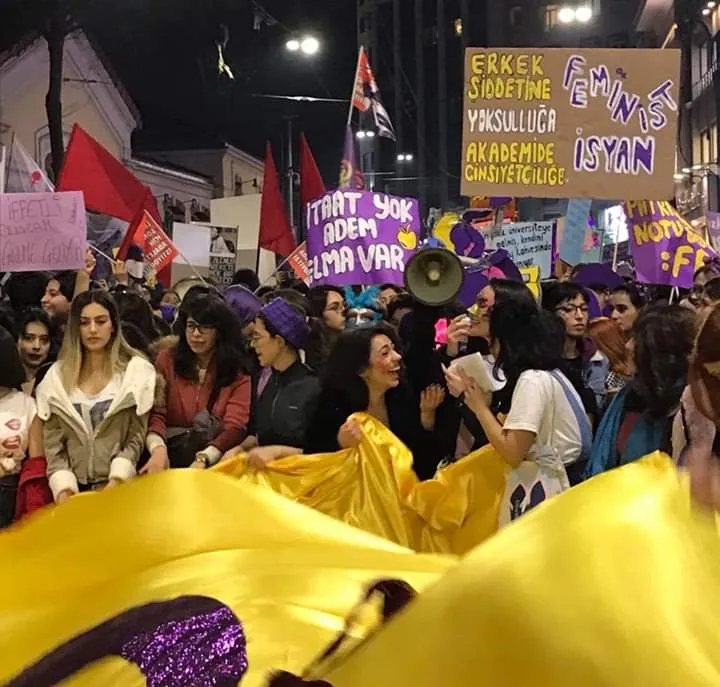
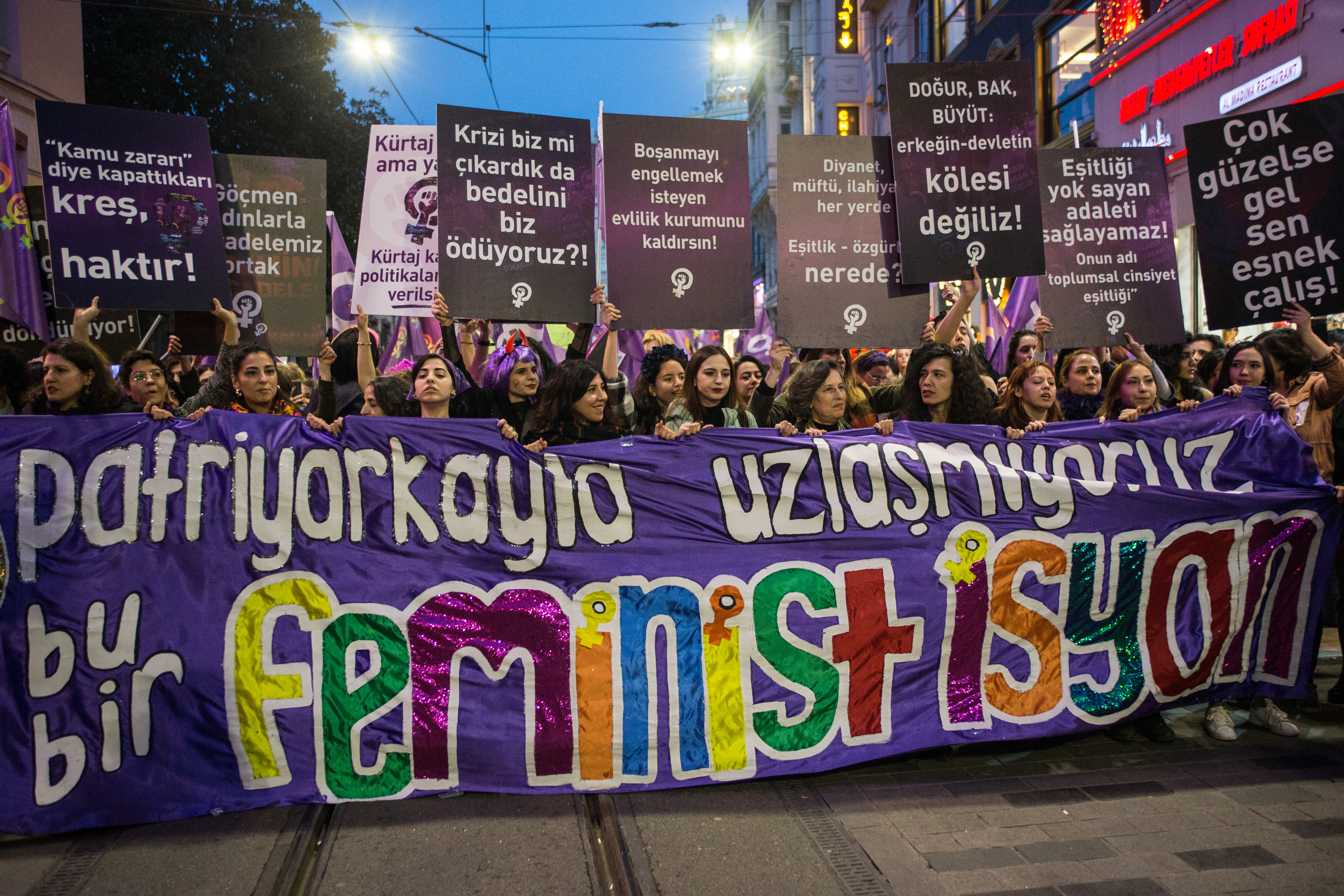
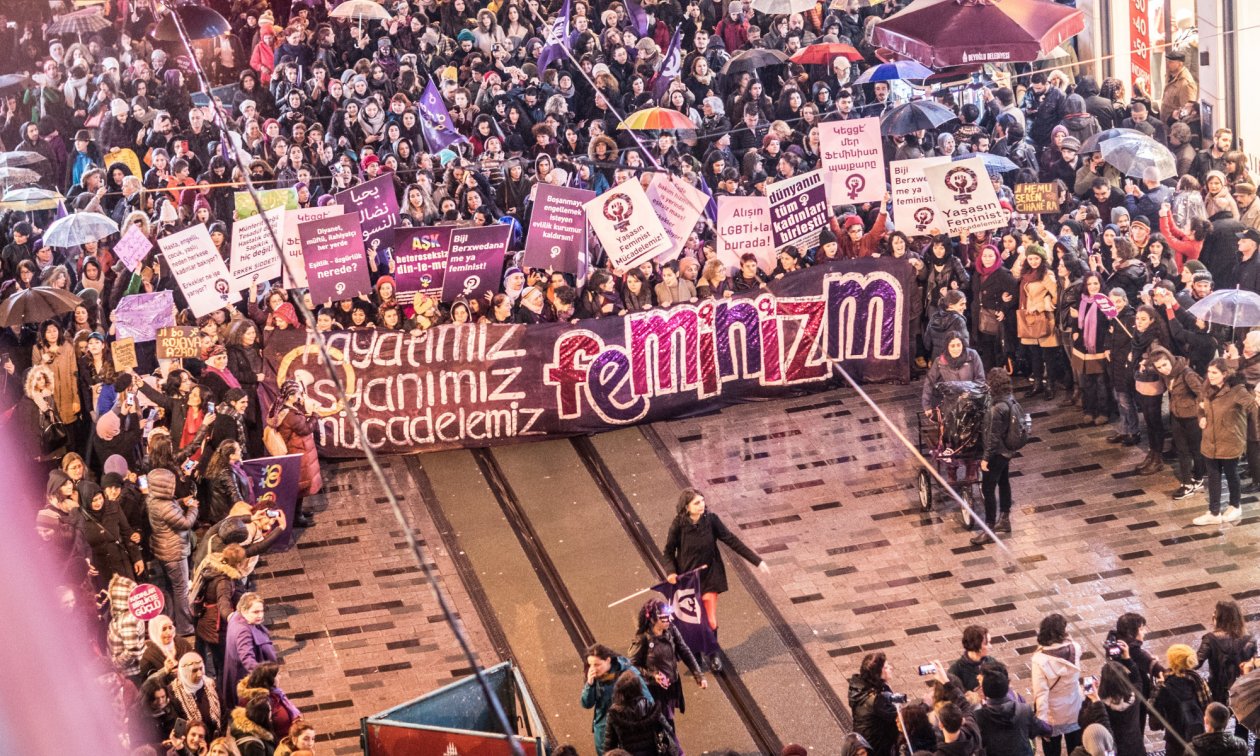
2019: We will not compromise with patriarchy: this is a feminist revolt.
Signed by: No signature
The 2019 Feminist Night March was organised at a time when bans on demonstrations were becoming increasingly common, even though the two-year state of emergency had ended. Following the general election in the summer of 2018, one-man rule was fully in place. Meanwhile, rallies and statements were taking place across the country ahead of the local elections on March 31, 2019, which would eventually see the AKP lose Istanbul and Ankara. These were the circumstances leading up to March 8, 2019. The November 25 demonstration in 2018 had been the first women's demonstration to be blocked on İstiklal Avenue. Preparations for the night march therefore took account of the possibility that it, too, might be blocked or pushed back.
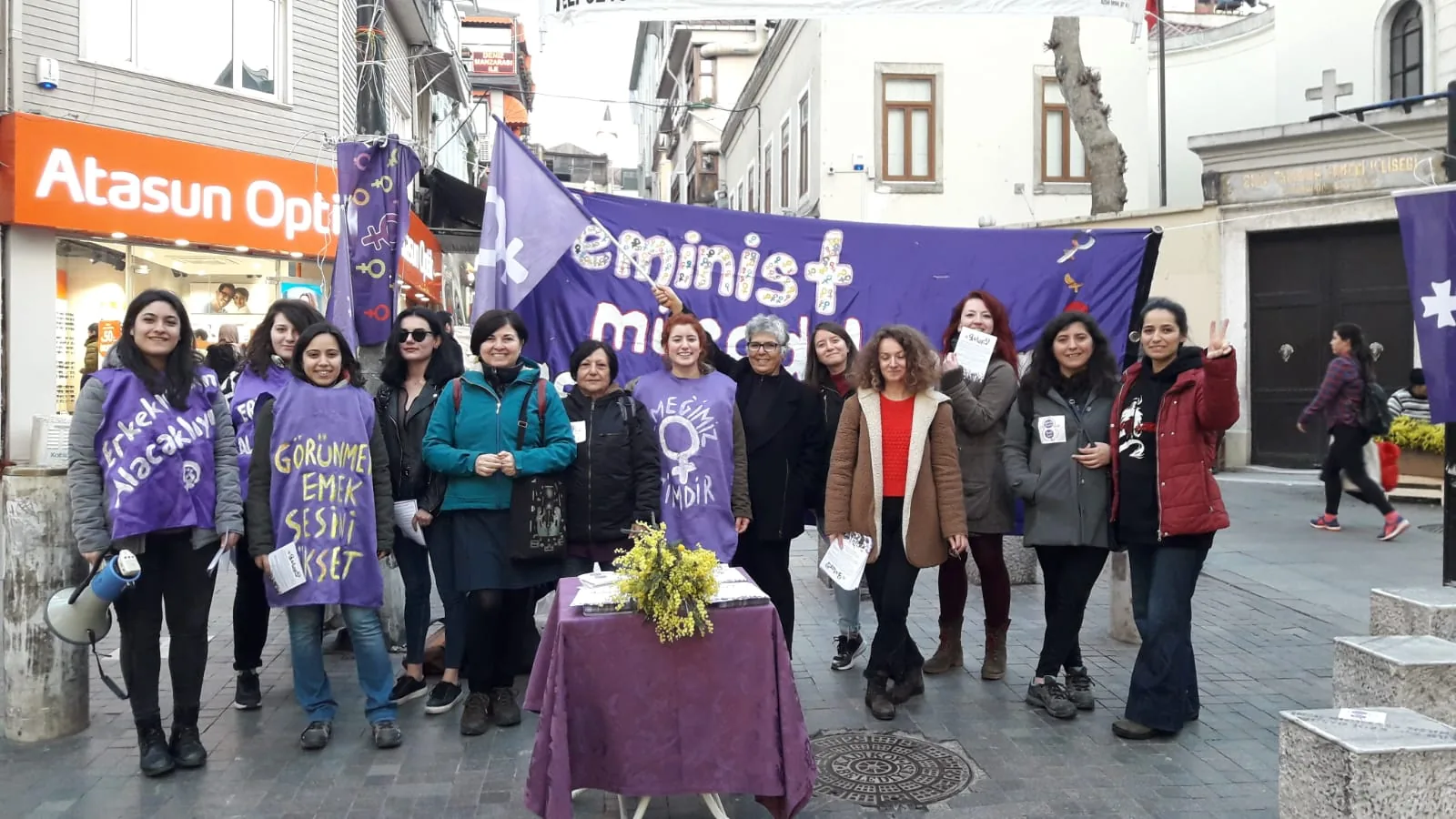
This year, the invitation to the organising meeting addressed 'feminists', while the call to the demonstration would state that it was 'not open to men'. This wording, without the terms trans or cis, took shape through feedback from the LGBTI+ movement, and agreement was reached on the call. Other discussions about the text, for example over the concept of secularism, took place by email. With the Pride March banned since 2015, the Feminist Night March was the last demonstration that could still draw a large crowd on İstiklal. Although the march had not yet been blocked, this remained a possibility. The importance of emphasising 'we are marching, as we do every year' was discussed in that context.
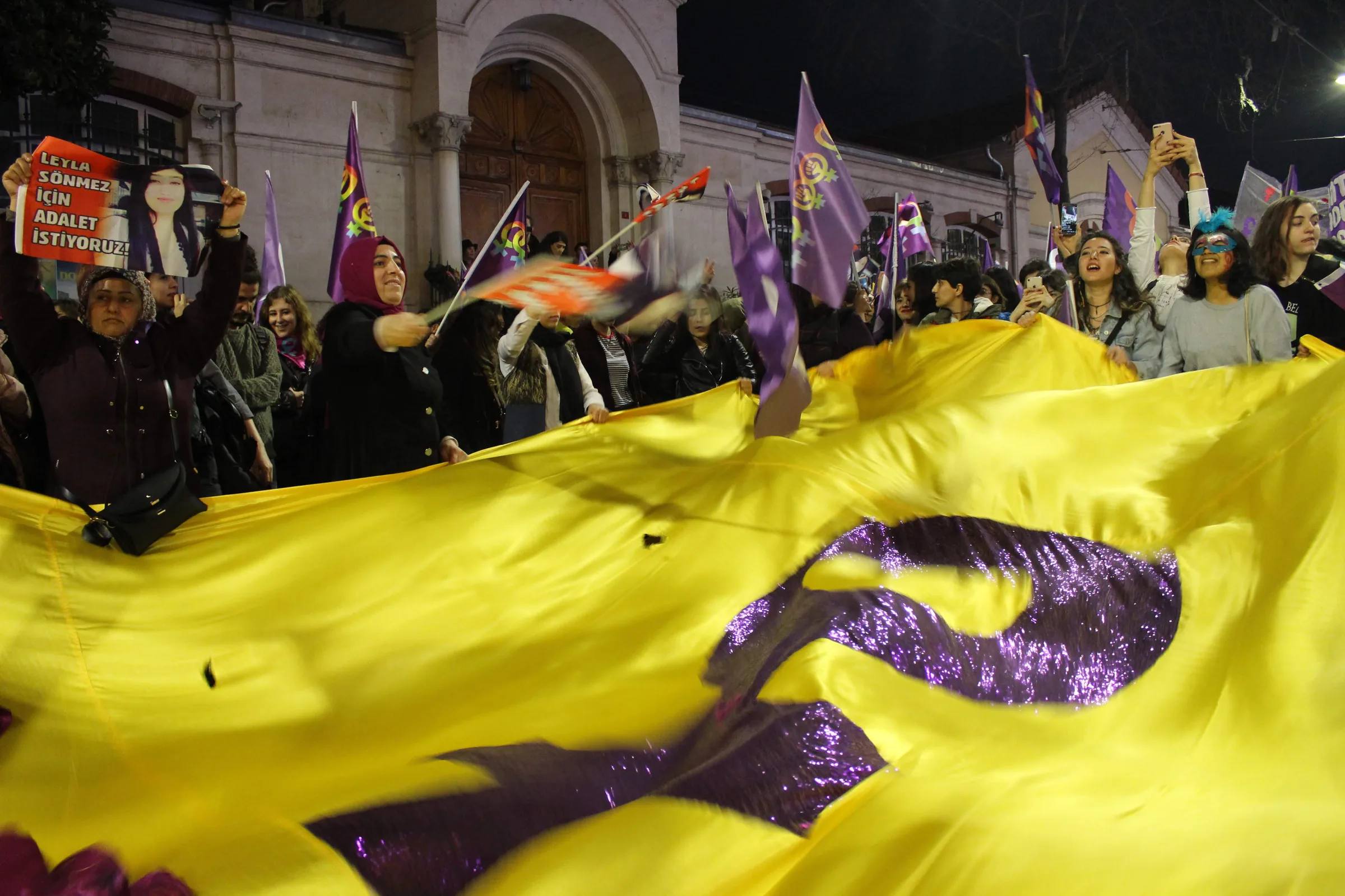
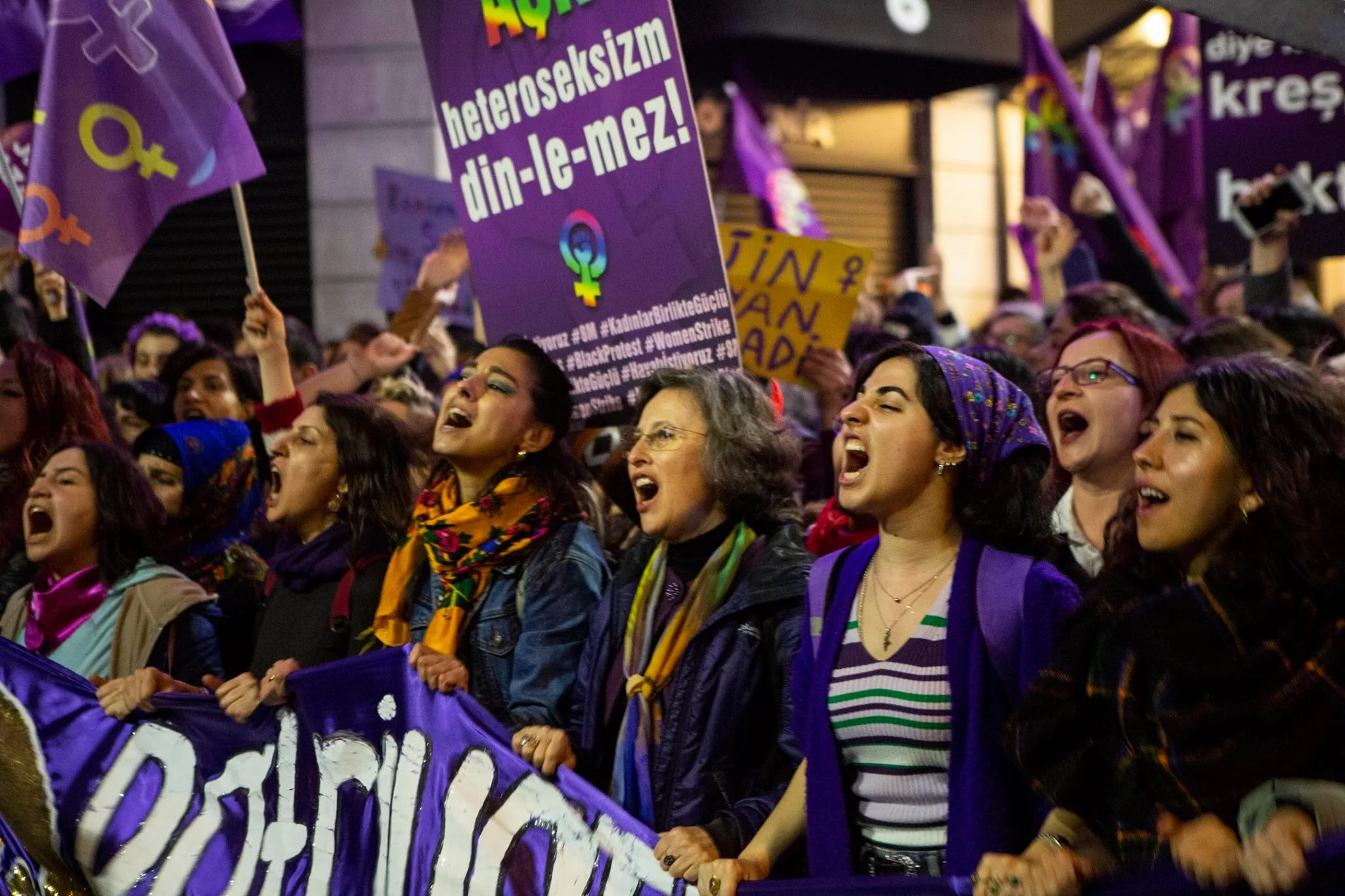
The declaration opened with a brief assessment: 'Since last March 8, we have been surrounded by all kinds of sexism, hostility to feminism, transphobia and homophobia, and forms of misogyny that have repeatedly made us say: surely this cannot go any further. Those who draw their power from patriarchy have done everything they can to silence us and restrict the spaces in which we live, calling us sinful, immoral or criminal, or asking what we could possibly know.' It emphasised that 'we draw our strength from one another' and set out feminist messages on different issues under the hashtag #BuBirFeministİsyandır [This Is a Feminist Revolt]. The declaration was to centre feminist revolt against patriarchy without becoming overwhelmed by discussion of the political agenda. Its language would assert demands and foreground solidarity, using formulations such as 'we stand in solidarity' and 'we refuse to obey'. It also addressed the feminist strikes being organised around the world. Solidarity with trans prisoner Buse Aydın, who was on a death fast, and with Leyla Güven, who had been on hunger strike for some time, was included, while slogans addressing that year's issues were added to the march's slogan list.
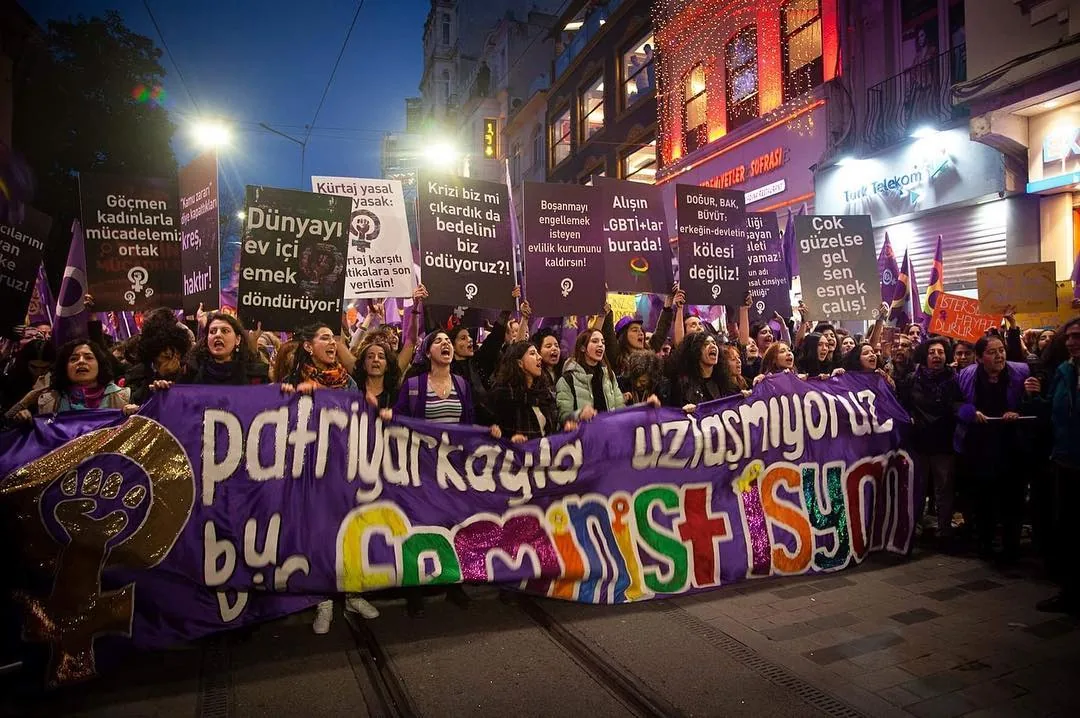
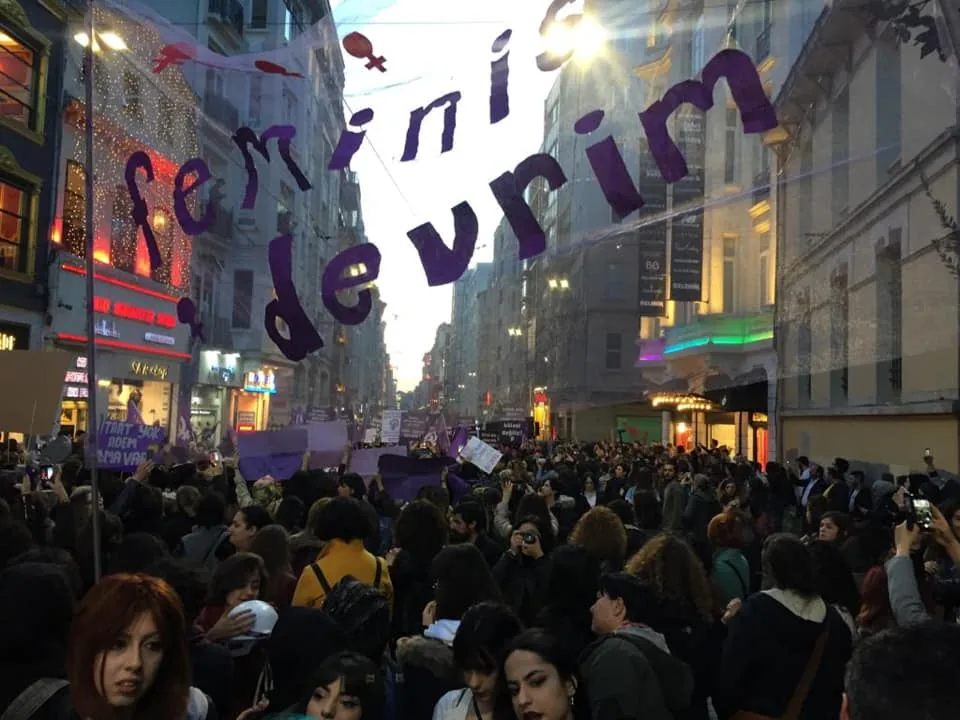
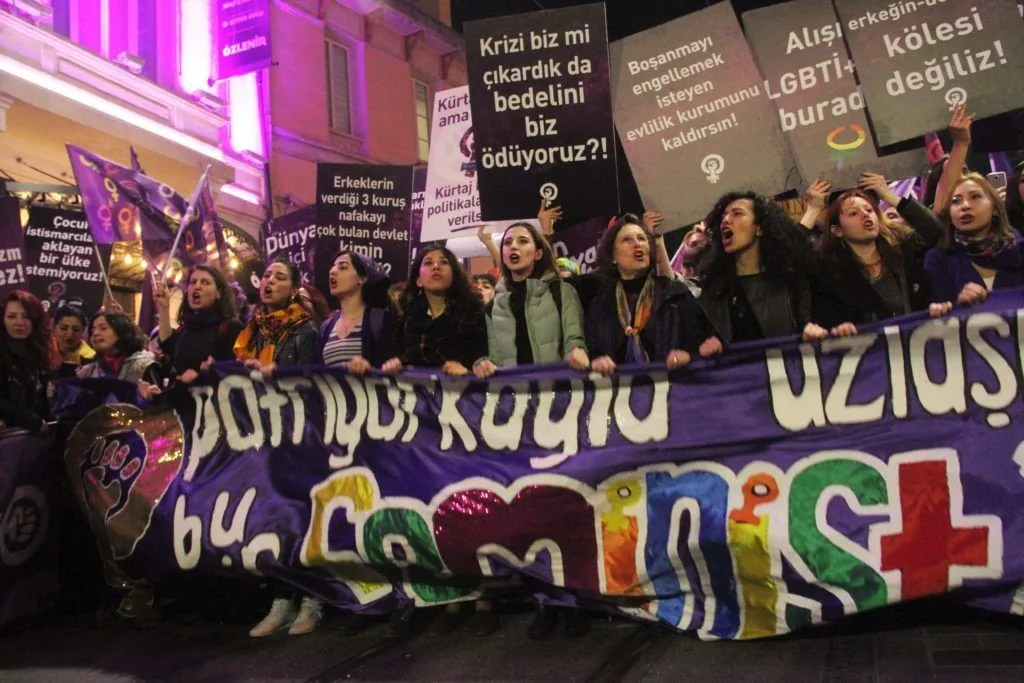
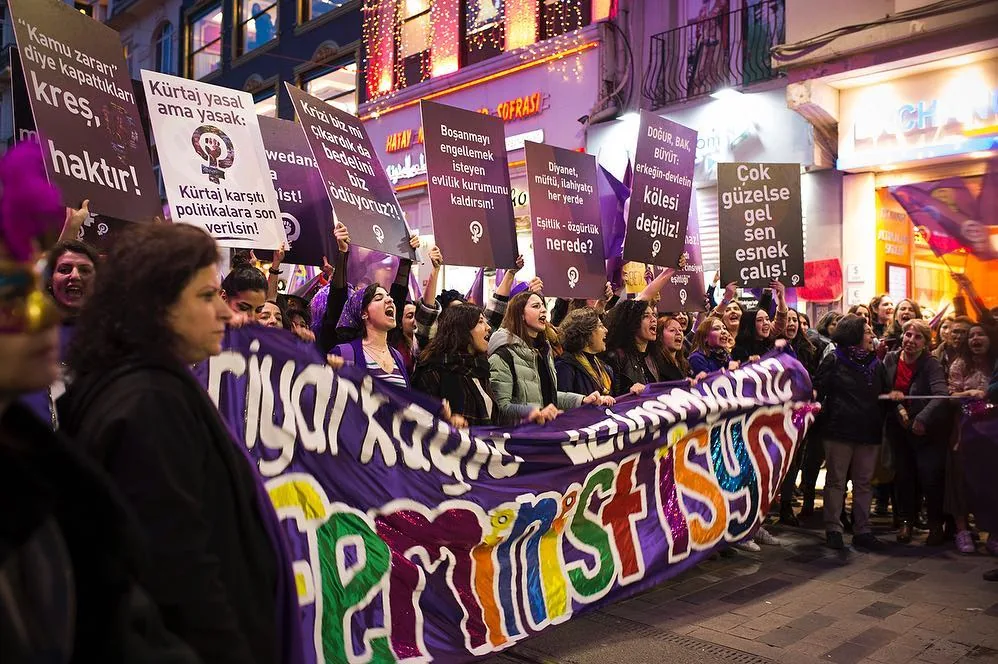
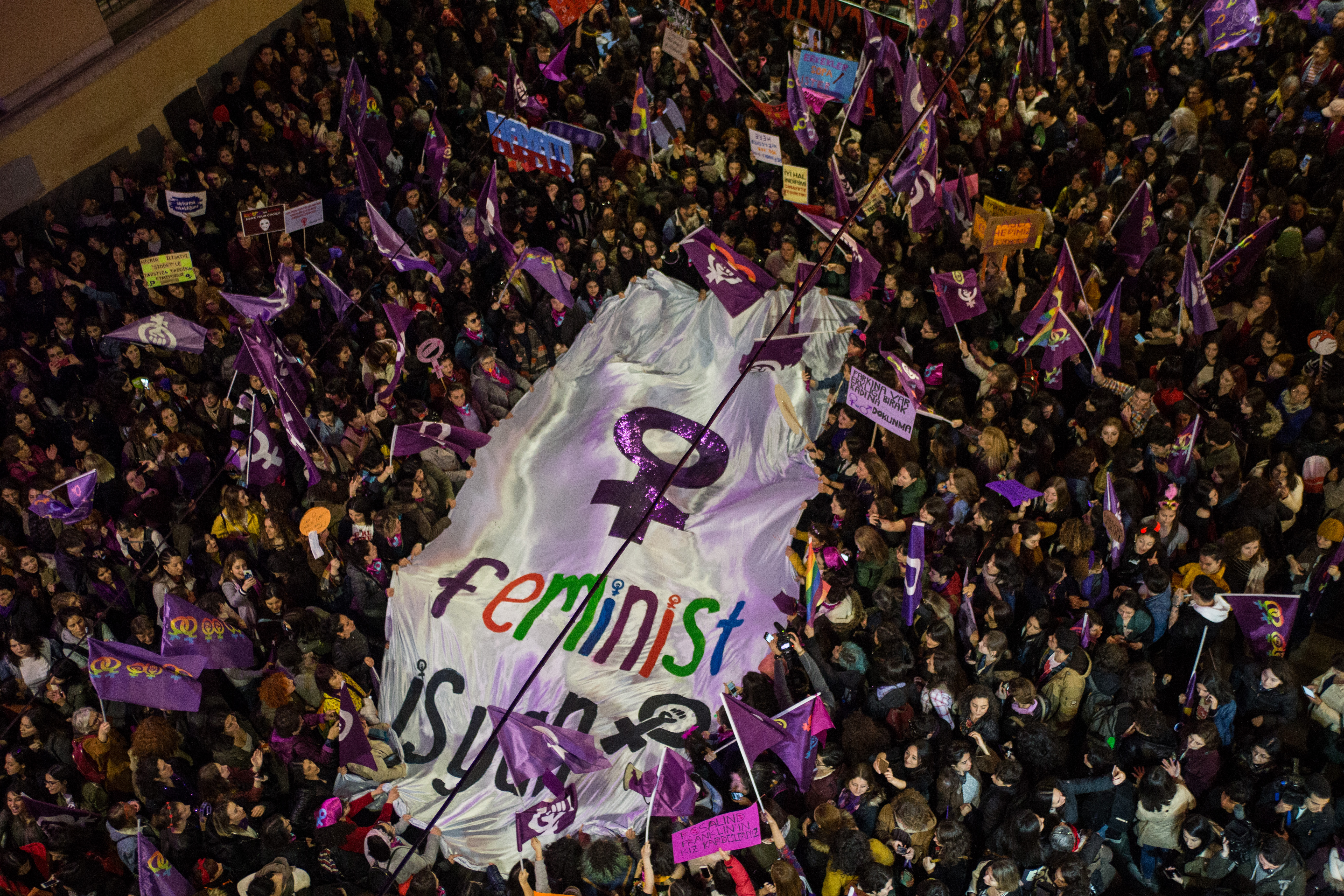
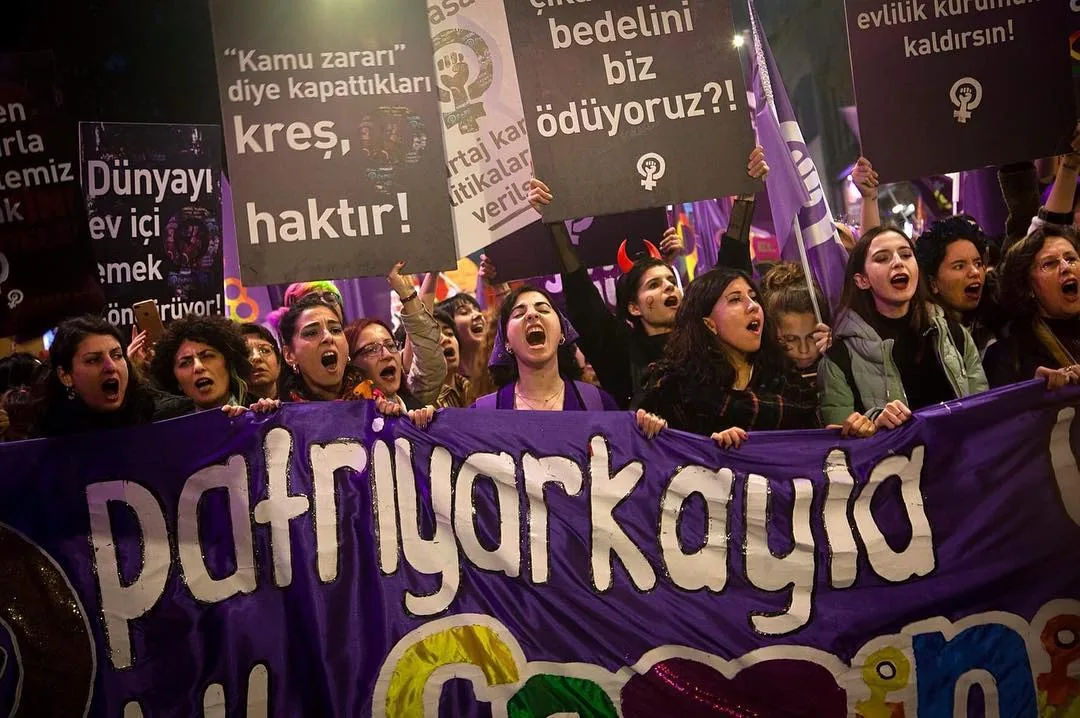
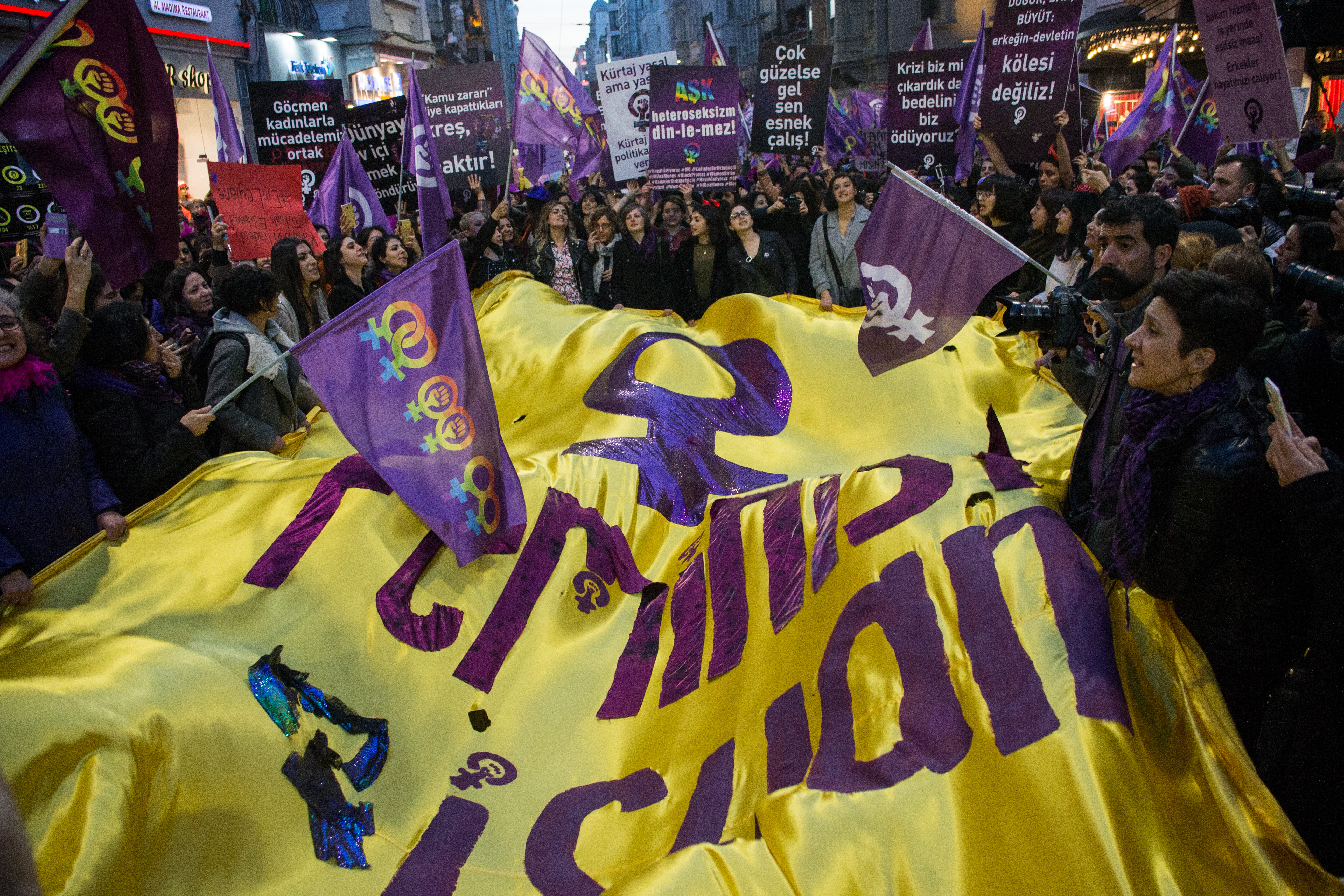
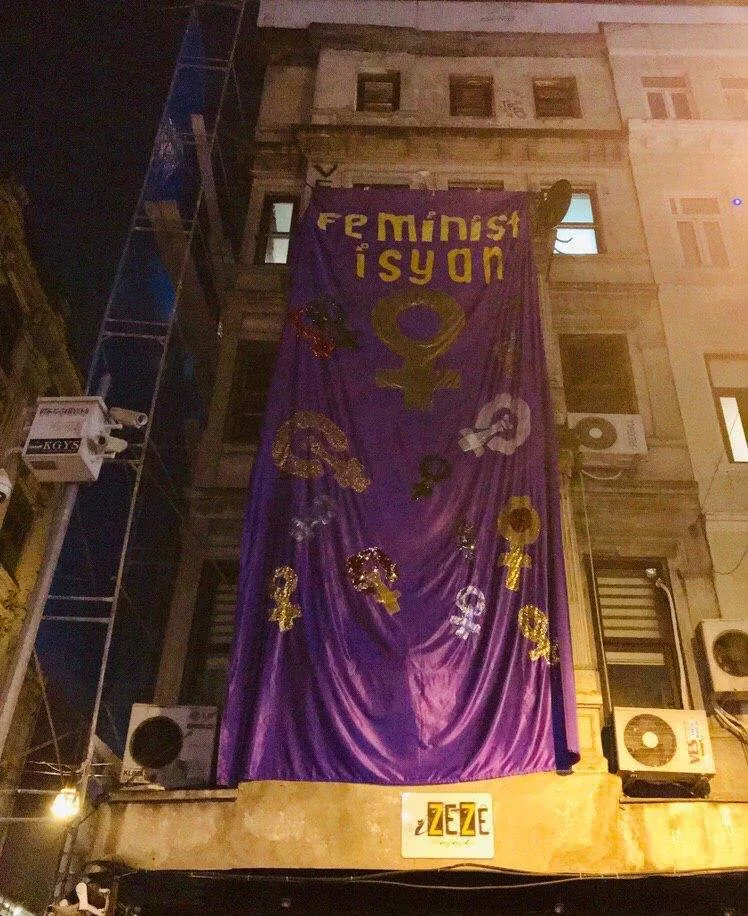
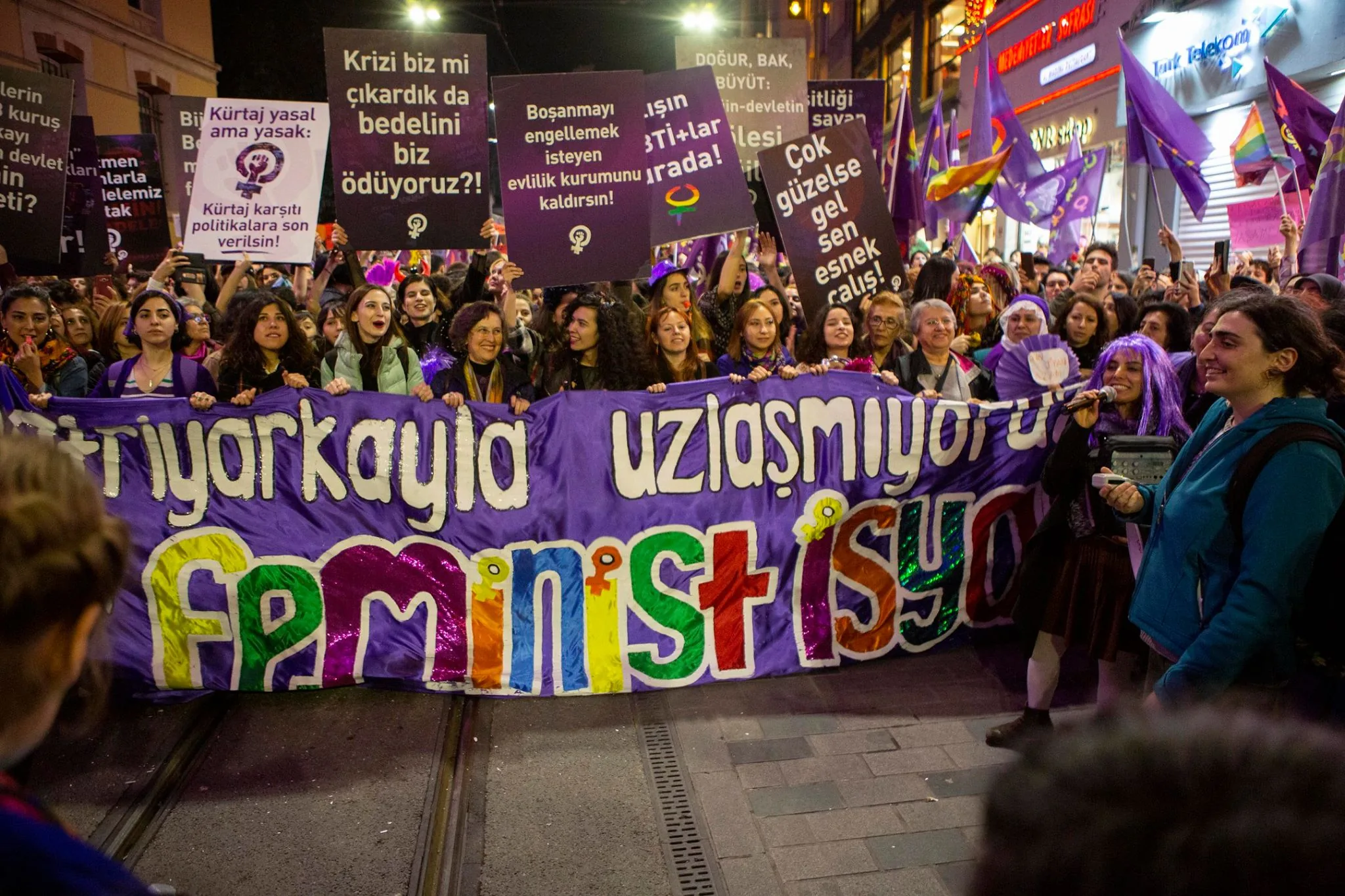
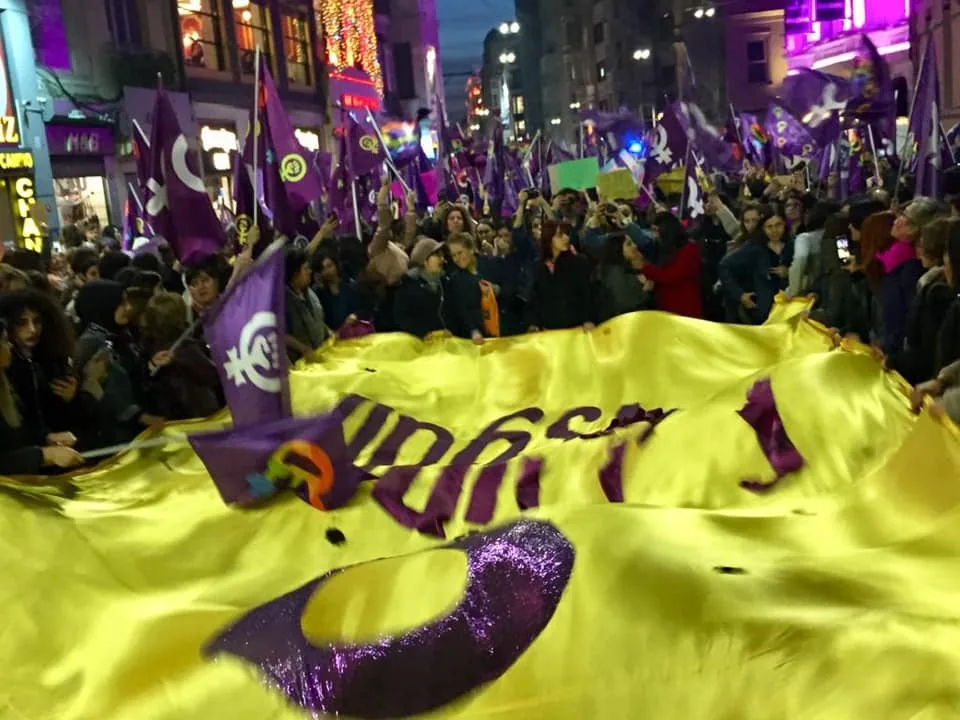
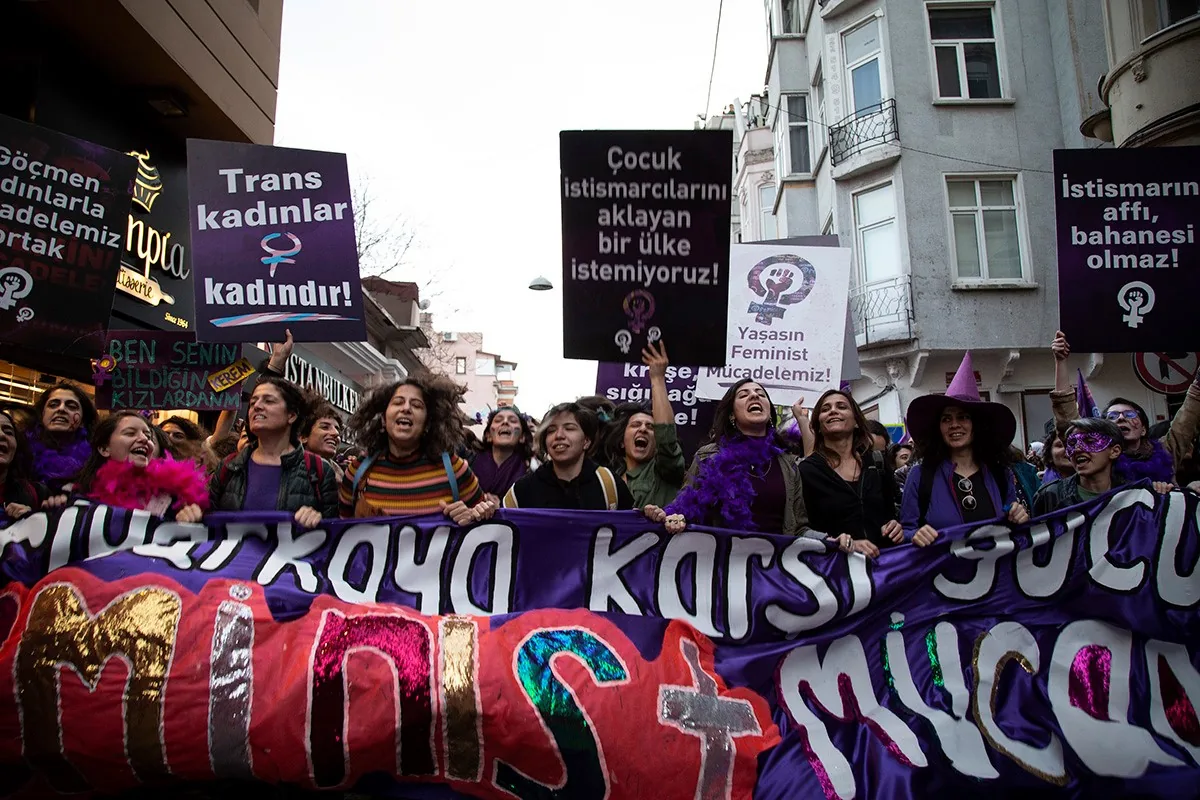
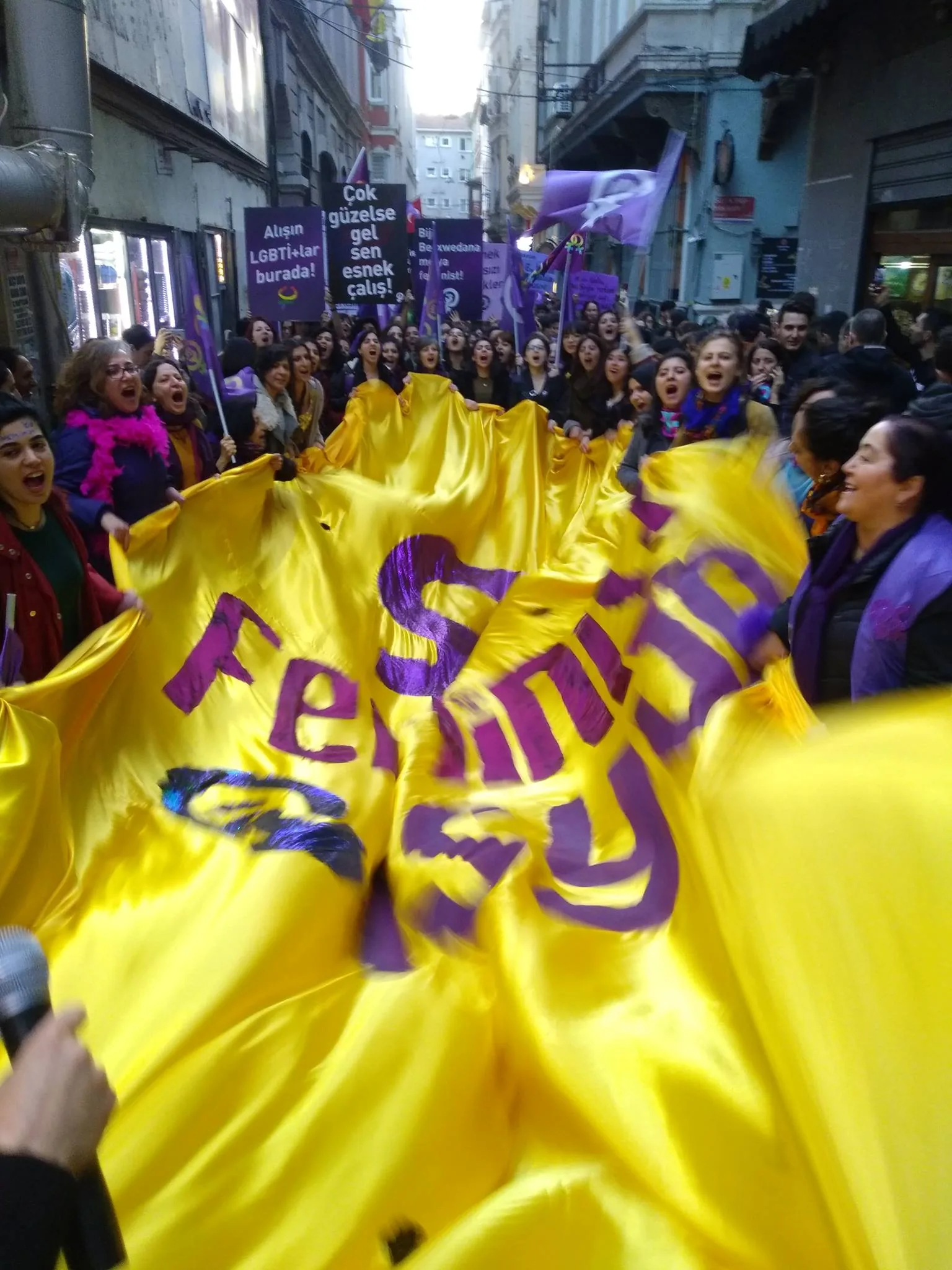
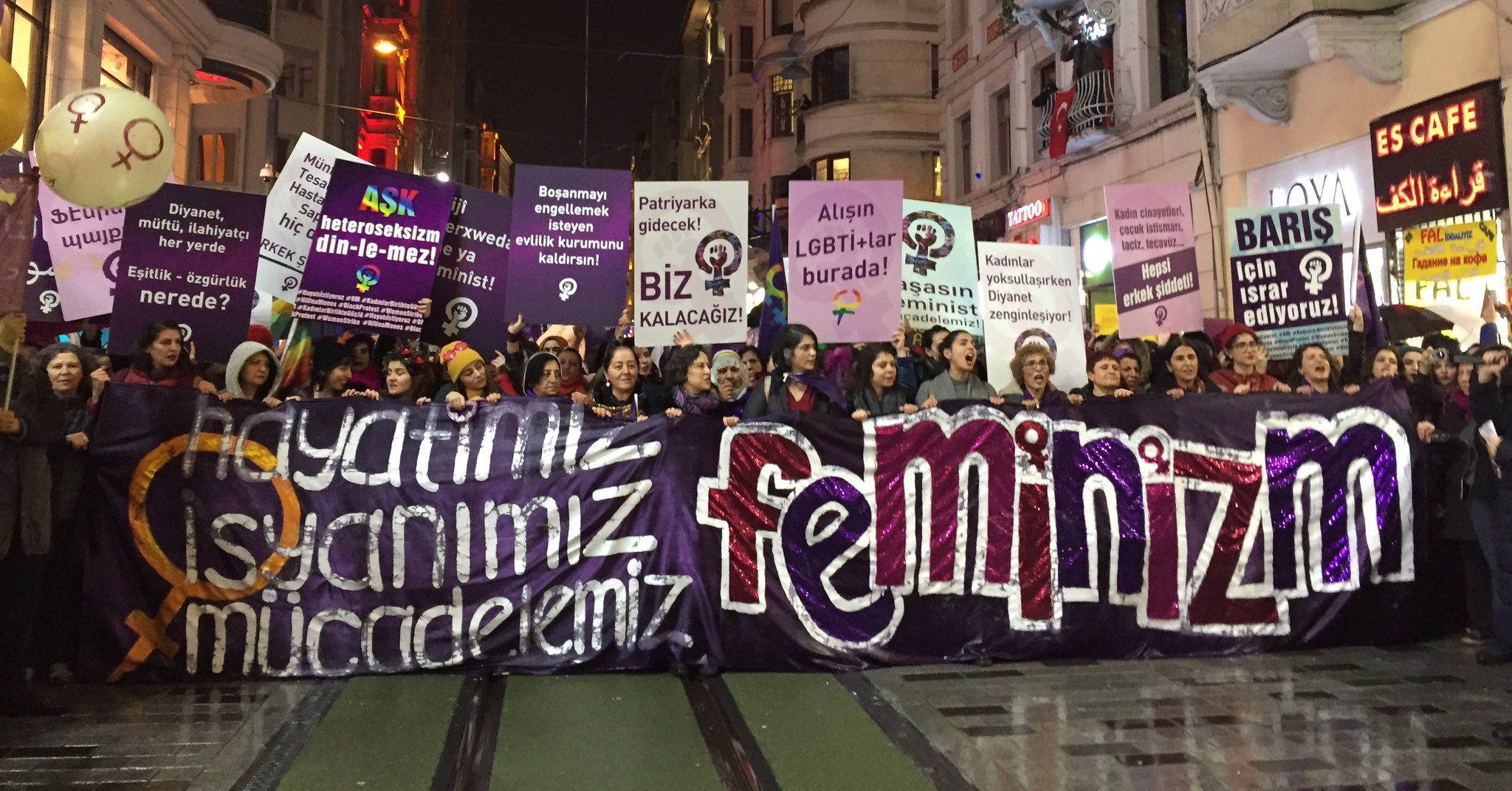
In discussions about the banner, there was agreement on making its message as simple as possible. The political context was also debated. Participants discussed capital's persistent use of feminism as a marketing strategy. On one side stood the image of the strong woman as a marketing device; on the other, hate speech produced by outlets such as Yeni Akit and other forces hostile to women and LGBTI+ people. Two main positions emerged. One insisted that the word patriarchy must appear on the banner: as the number of women attending grew each year, identifying a shared political goal had become more difficult. The other held that a slogan such as 'This is a feminist revolt' was clear enough on its own, accessible to everyone and open to participants bringing their own revolt to the march, with foam-board placards providing further political content. Some participants also considered 'struggle' more political than 'revolt'. The suggestion 'We will not compromise with patriarchy' prompted discussion of the word compromise. Did it suggest that common ground for compromise existed? Or did it point to the way we were being drawn, however unwillingly, into negotiations over reconciling work, home and family life? Following these discussions, the slogan chosen was 'We will not compromise with patriarchy: this is a feminist revolt'.
For the social media action on February 22, the hashtag #BuBirFeministİsyandır [This Is a Feminist Revolt] was chosen, accompanied by images of collective and individual actions in Turkey and around the world. These included abortion rights protests in Argentina and Poland; the photograph of a woman being obstructed as she became the first woman to run the Boston Marathon; the march against battering; a photograph from the anti-manspreading campaign; the peace banner suspended from balloons used the previous year; a woman burning her hijab in Iran; bra-burning protests; an artwork for Nevin; a demonstration in support of Vietnam in the United States; and an image of the artwork 'Ayşe Loves Fatma'.
On March 1, images, videos and calls to demonstrations were shared under #8MartGeliyor [March 8 Is Coming]. For March 7, a series of images was prepared under #8MarttaFeministİsyan [Feminist Revolt on March 8], placing the call to the march over photographs of placards and stencils. Care was taken to balance the issues and forms of representation in all the images used. Their themes included peace, the Kurdish question, labour, care work, the body, abortion, LGBTI+ people, male violence, women's solidarity and feminist struggle. As Twitter's algorithm made it increasingly difficult for the Feminist Night March to trend, there was concern that the social media actions might be less visible than in previous years. Taking this and the possibility of the march being blocked into account, the hashtag #8MarttaYürüyoruz [We Are Marching on March 8] was chosen. A GIF entitled 'What's Happening on March 8?' was also prepared.
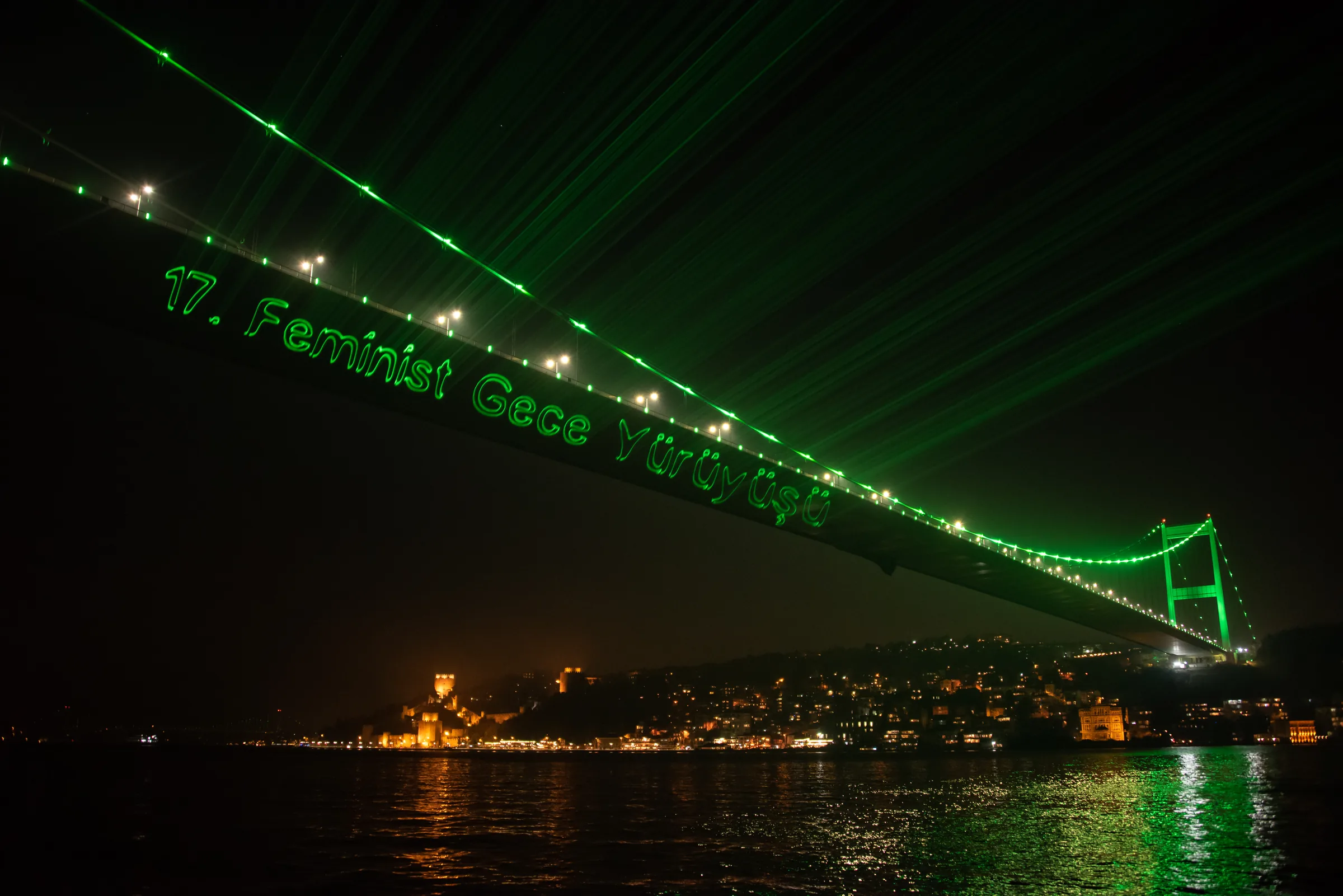
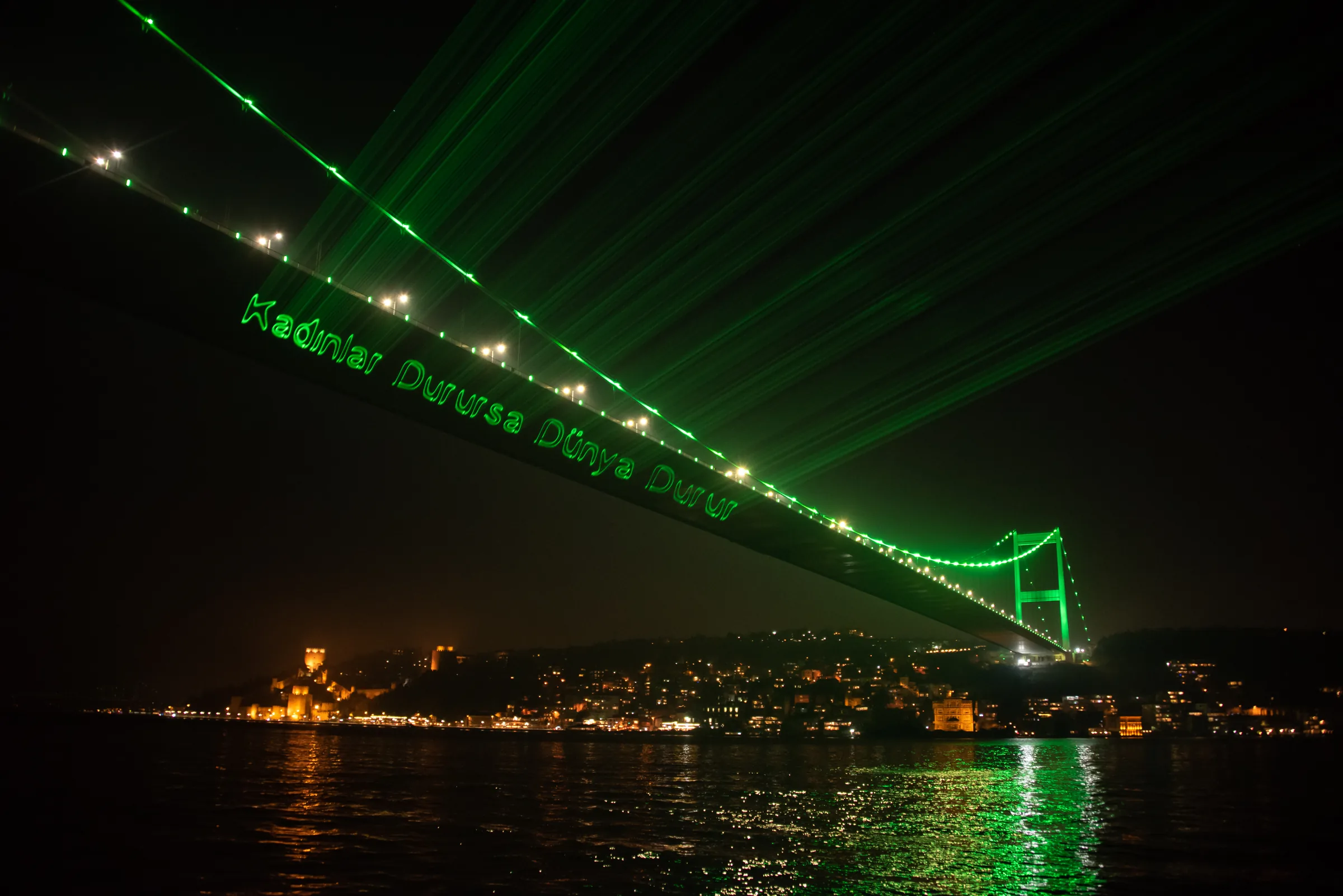
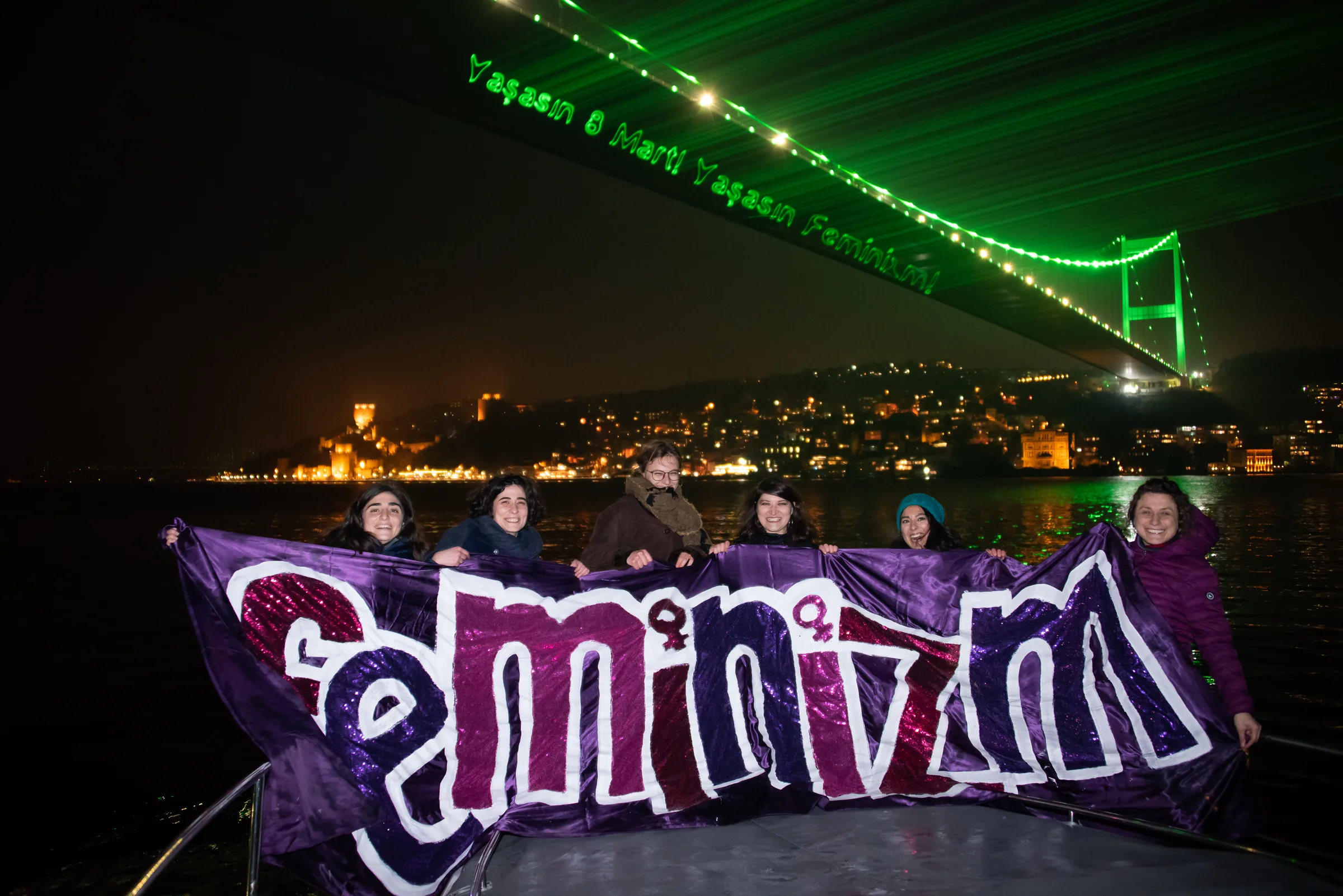
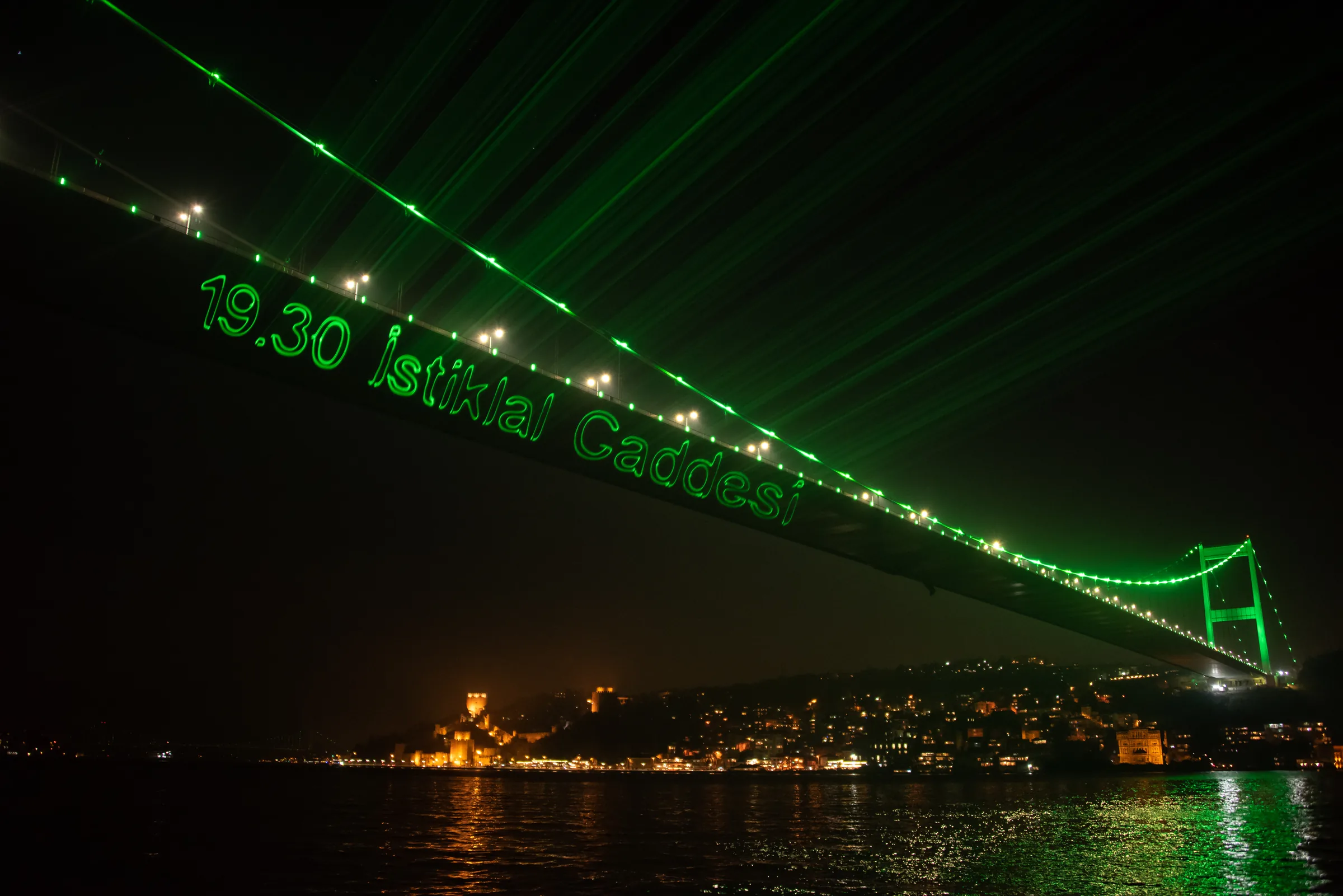
Stencils were painted in the streets and posters put up both outdoors and in venues. Images and videos projected by laser onto the Bosphorus Bridge from the Etiler-Arnavutköy area became that year's most widely noticed call to the march and were shared repeatedly on social media. As in the previous year, a text setting out the principles of the march was prepared and circulated in groups.
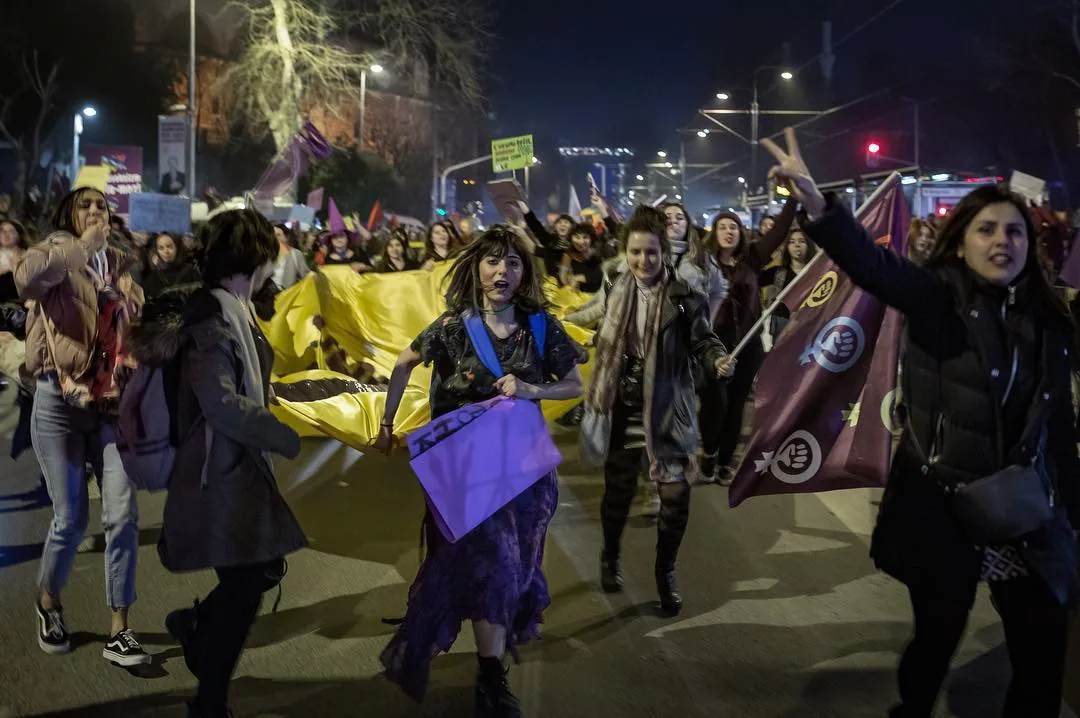
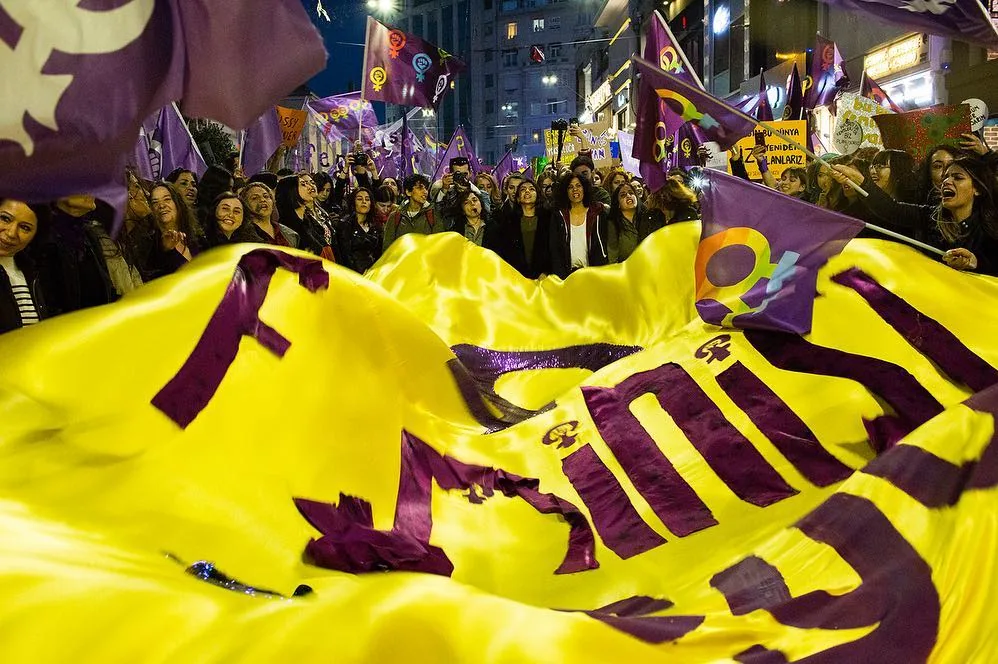
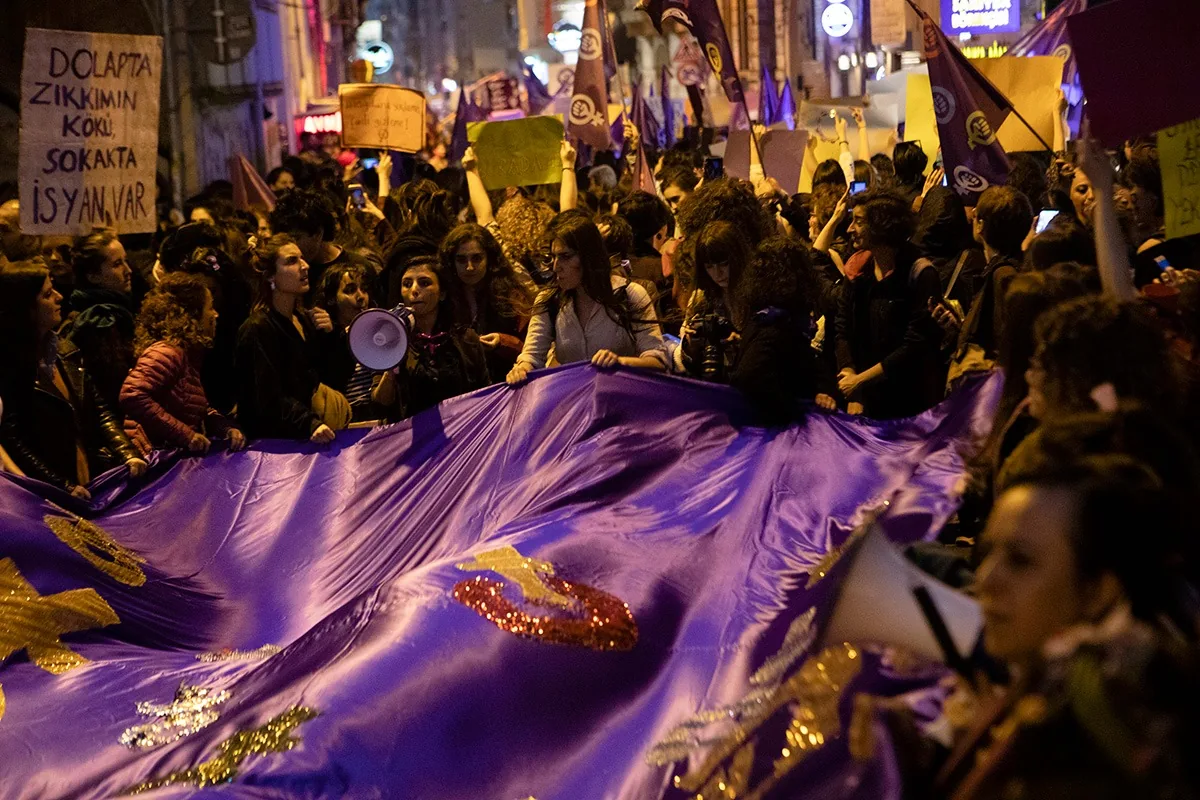
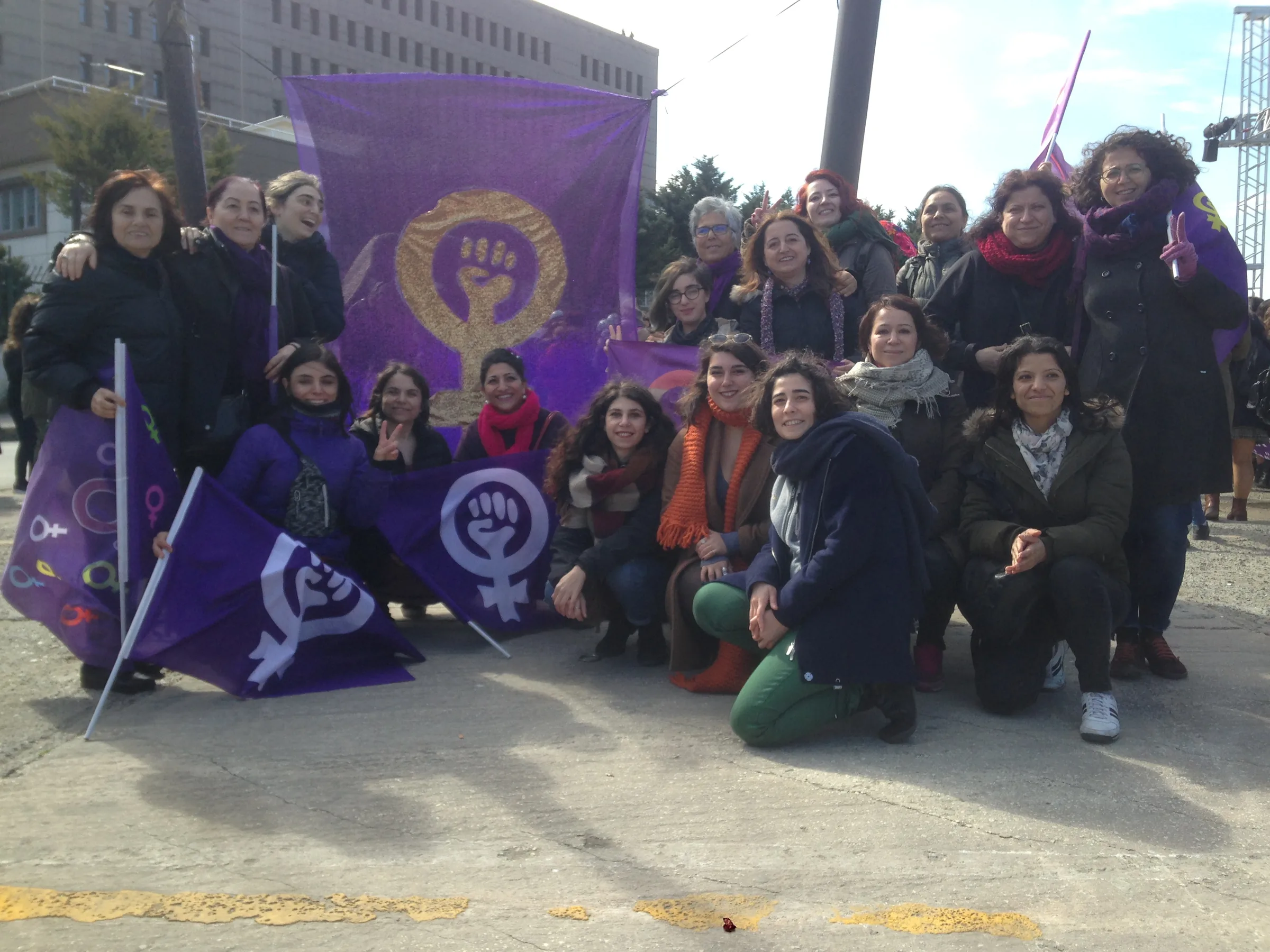
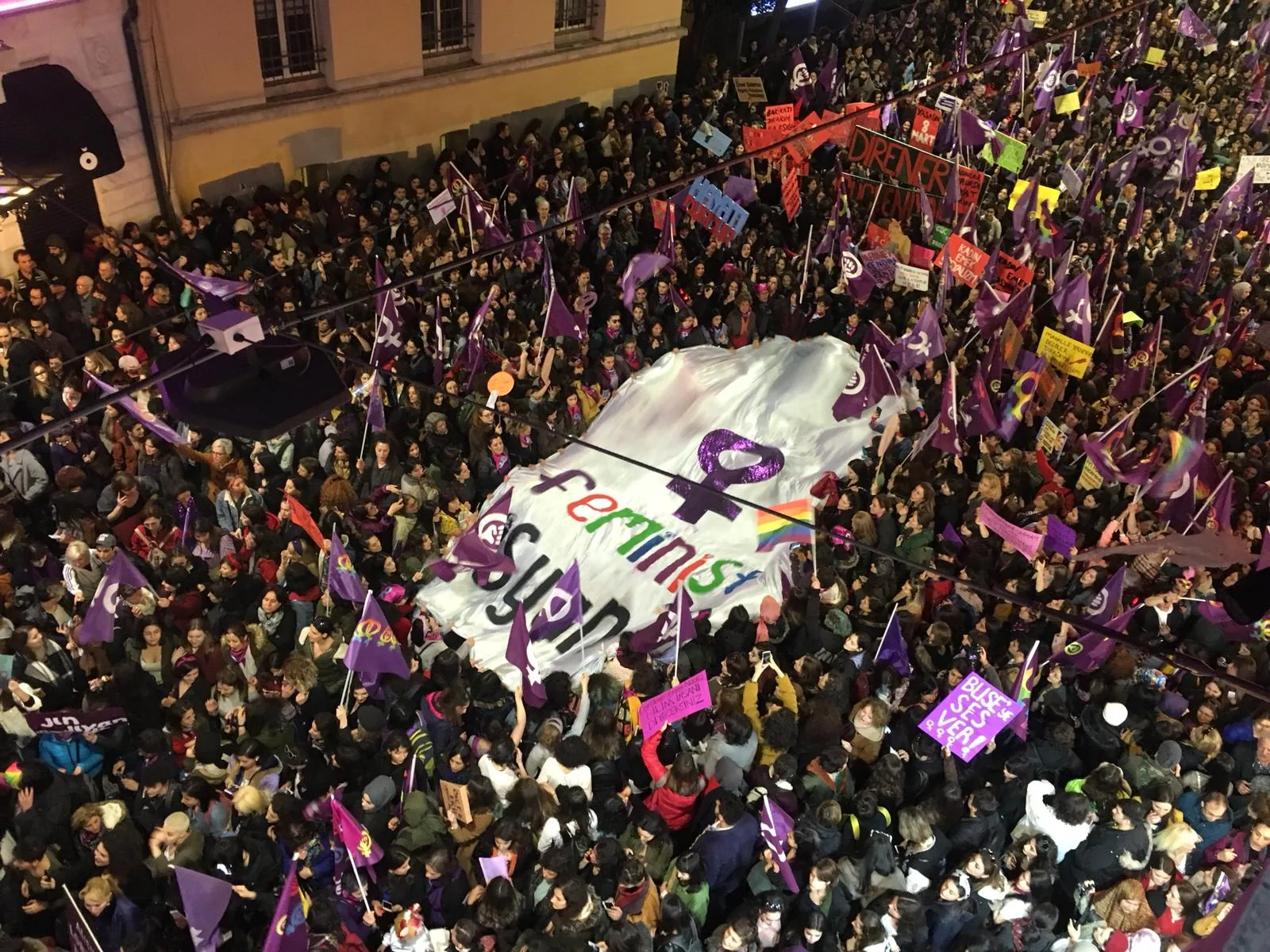
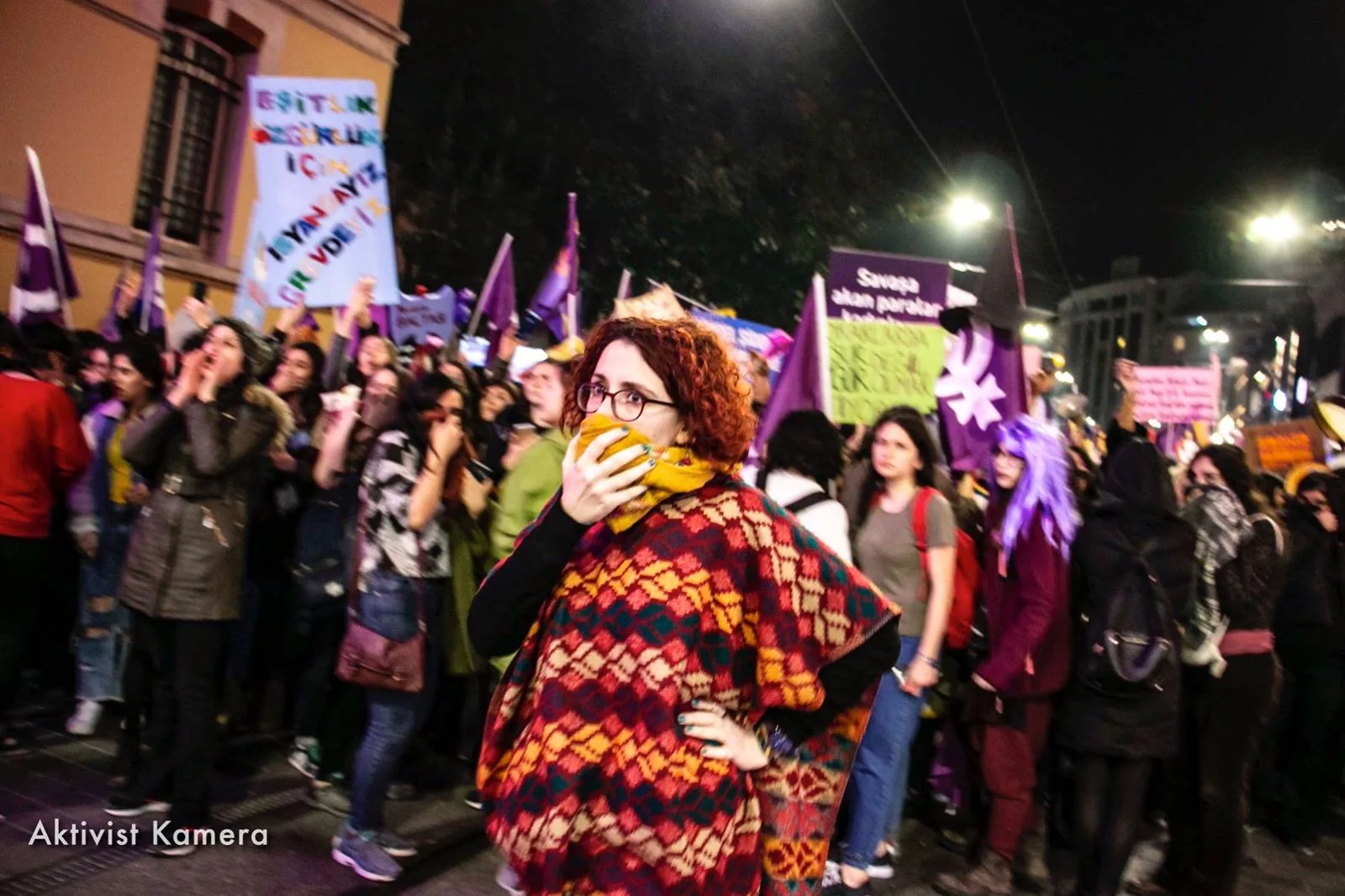
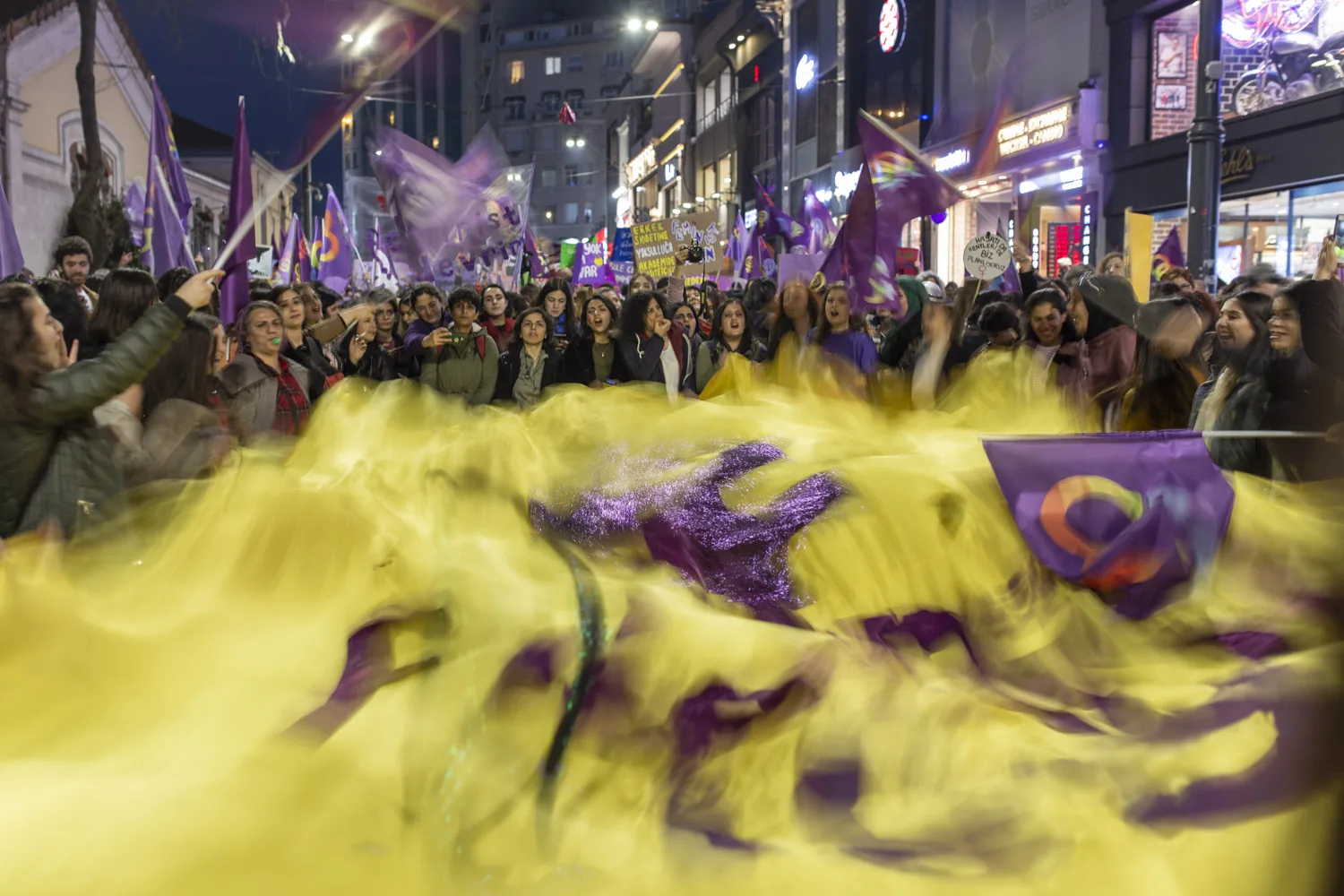
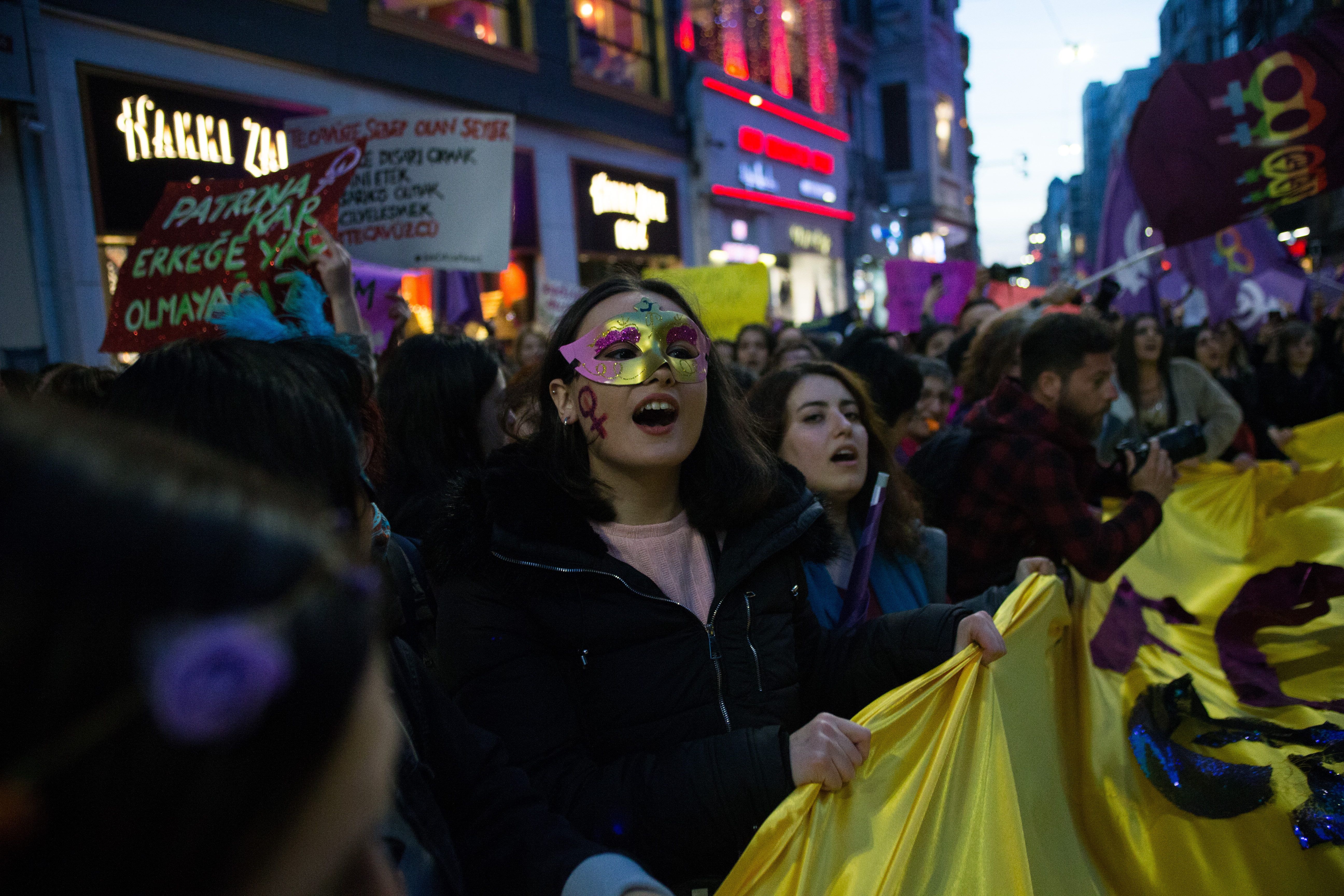
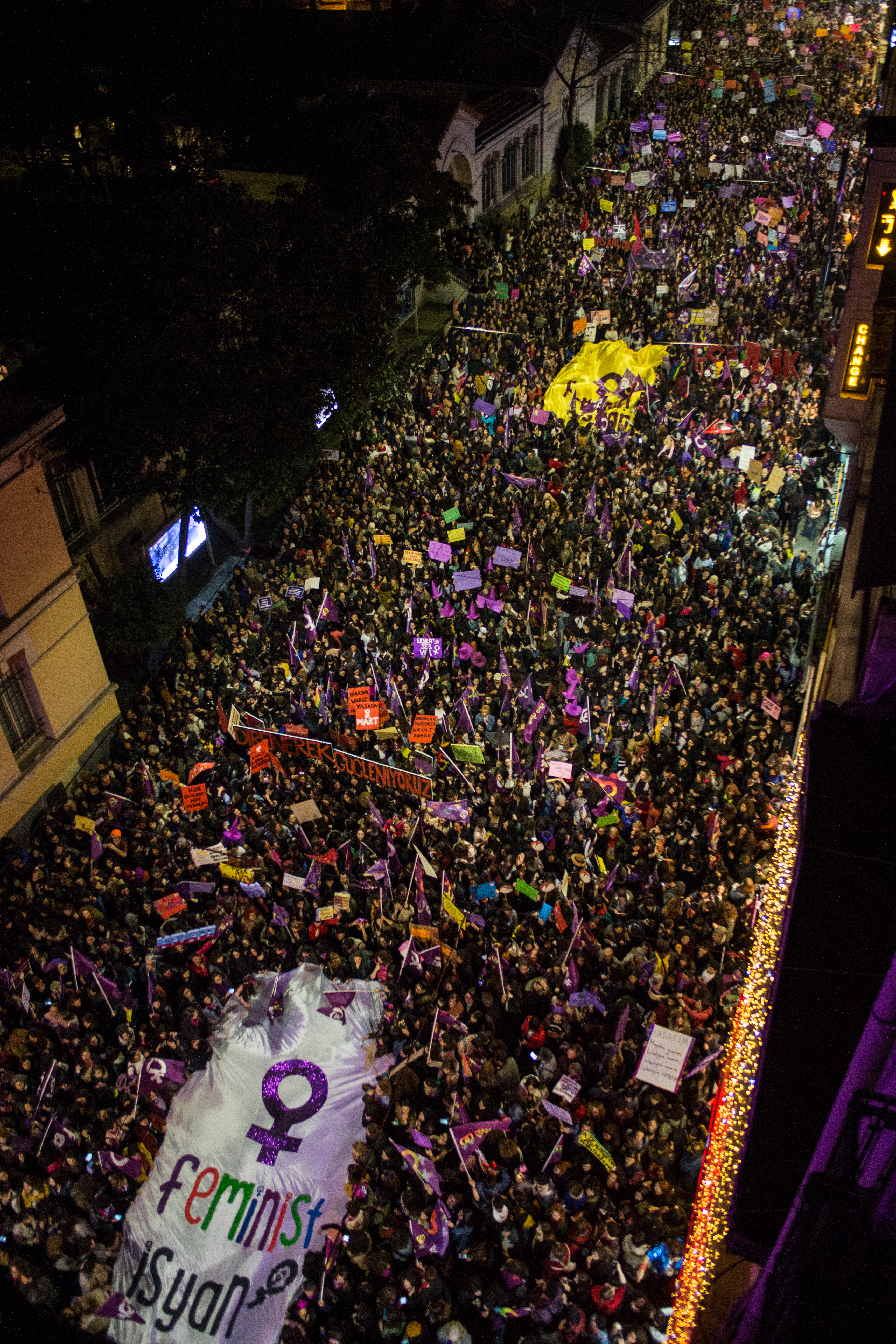
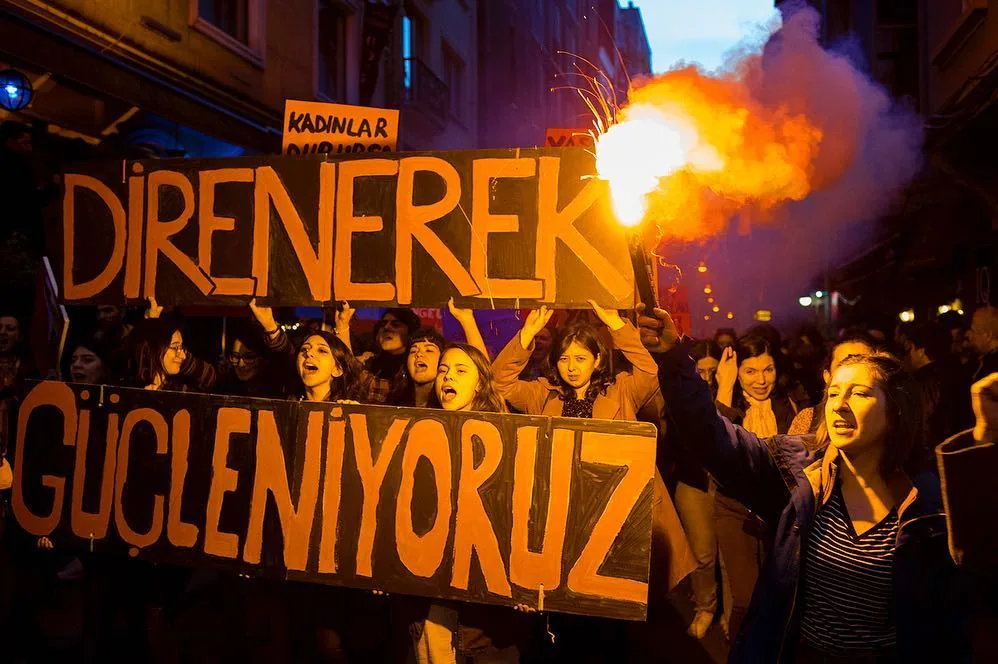
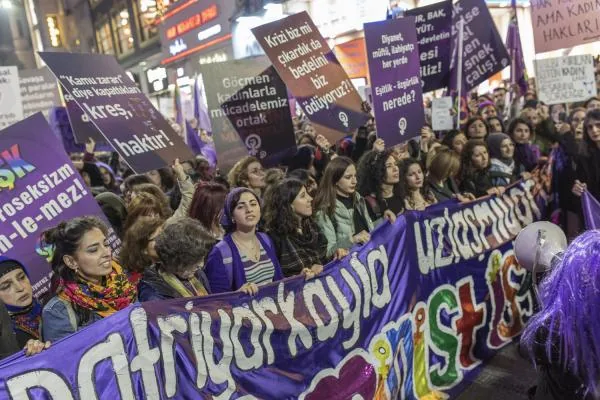
When deciding which materials to use at the march, it was agreed to cut out the 'feminism' section of the previous year's banner and use it separately. Given the size of the crowd, additional banners were prepared to carry the march's energy throughout the procession. Their wording, 'feminist revolt', echoed the main banner.
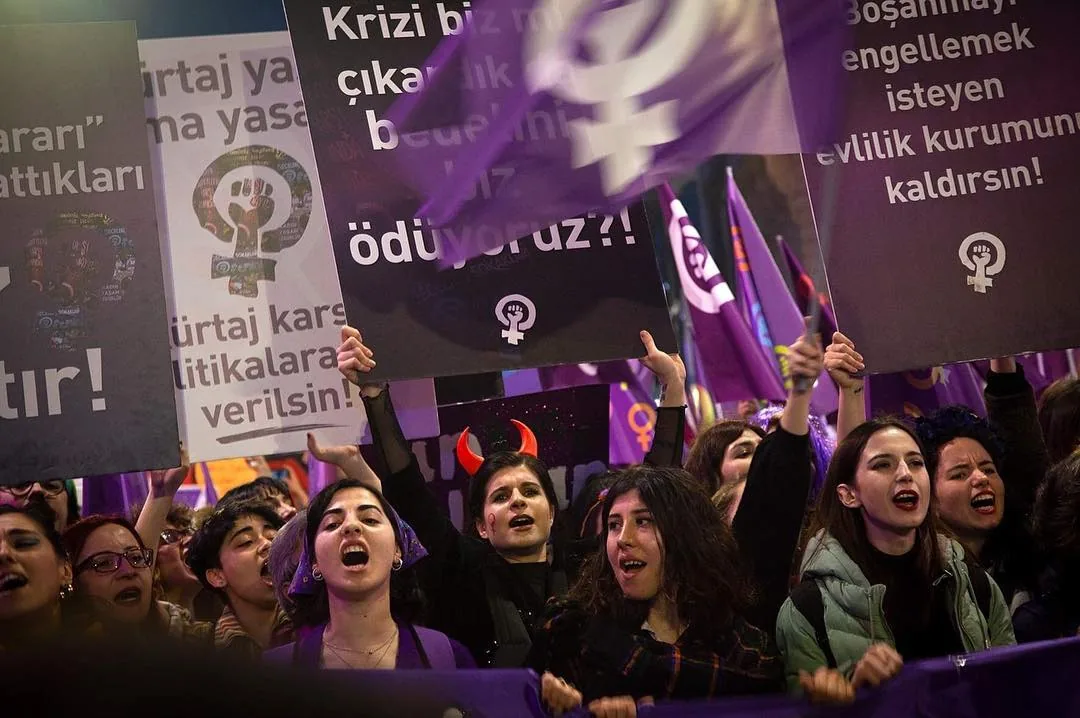
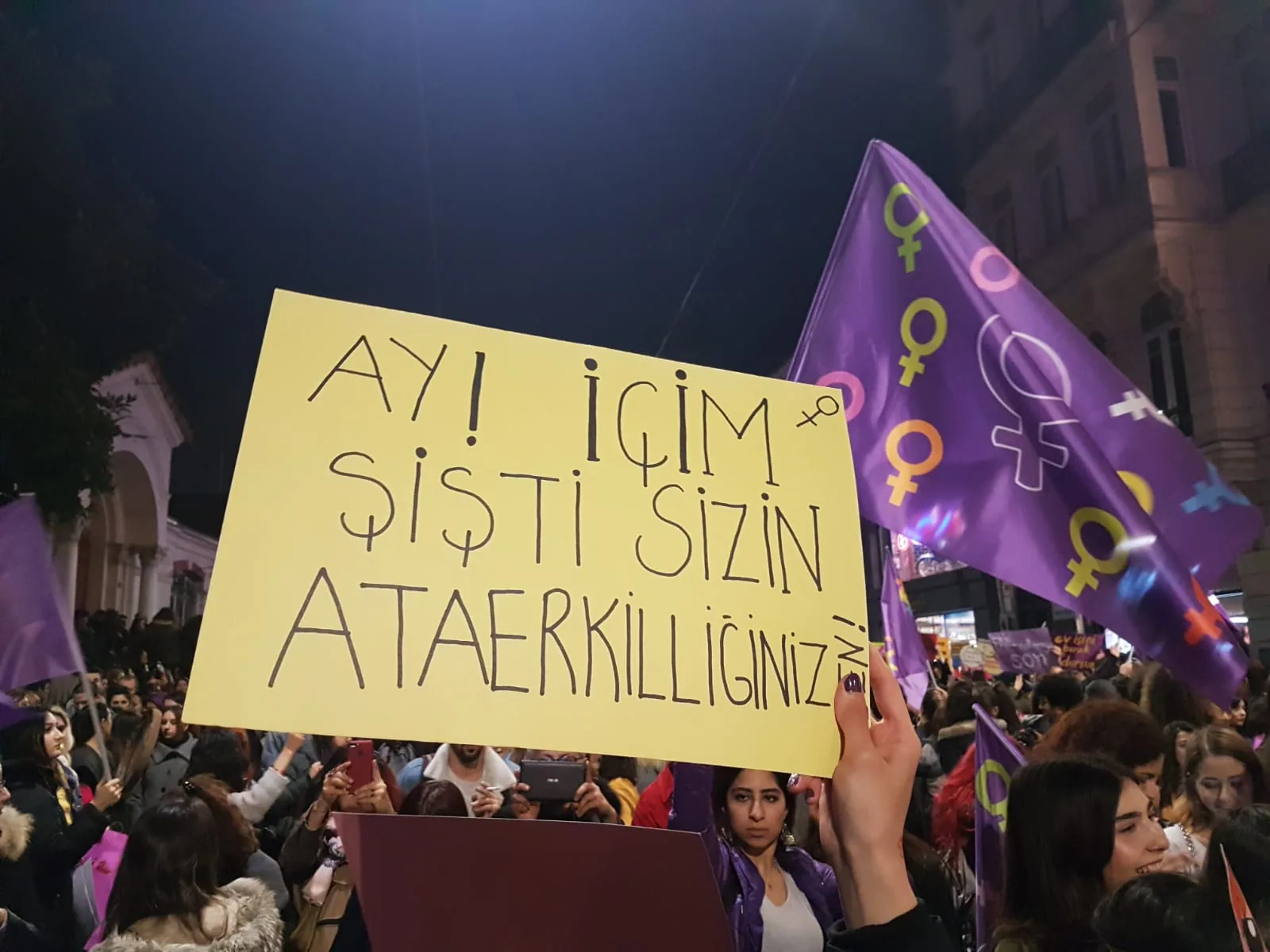
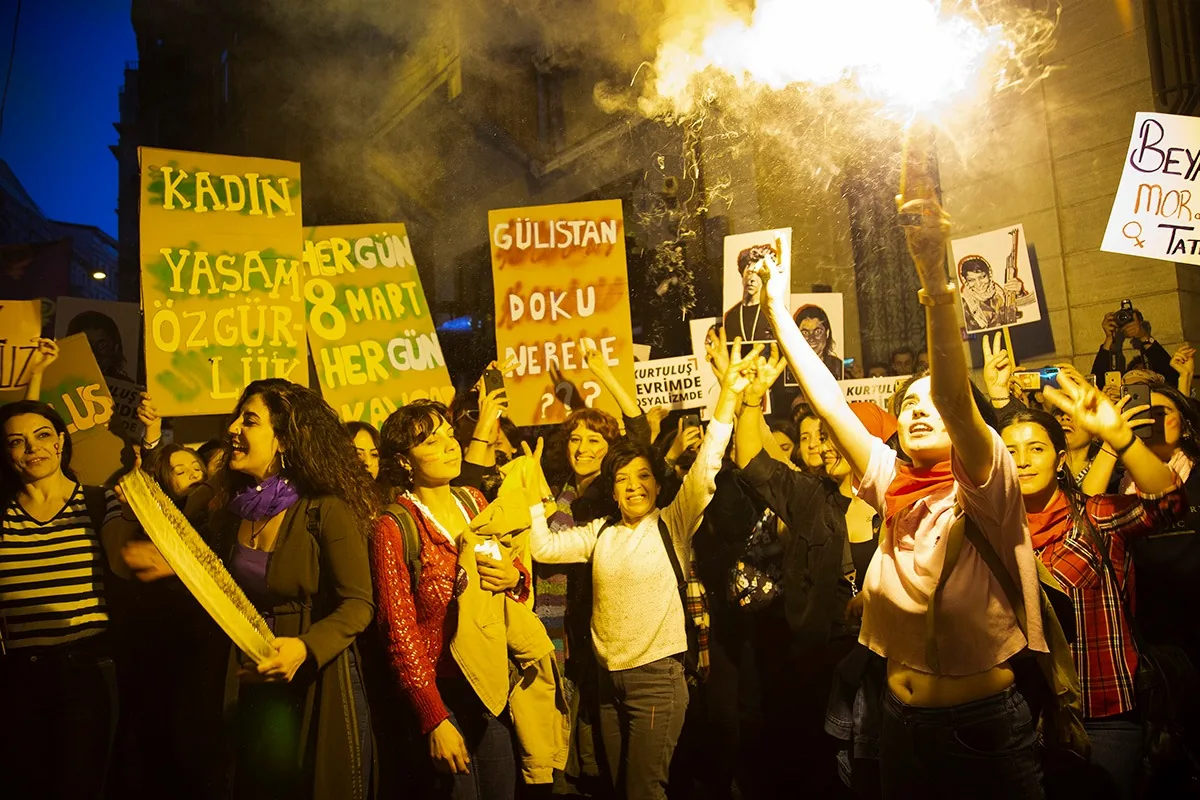
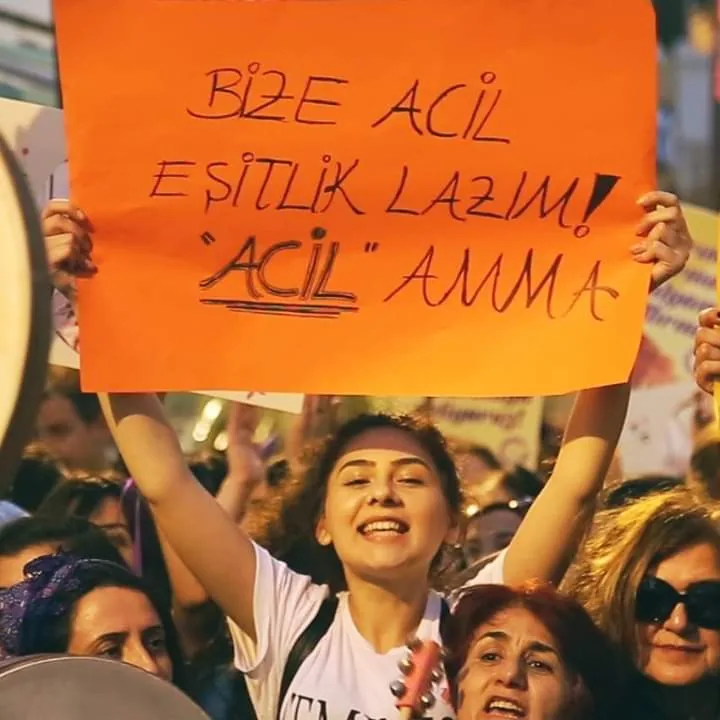
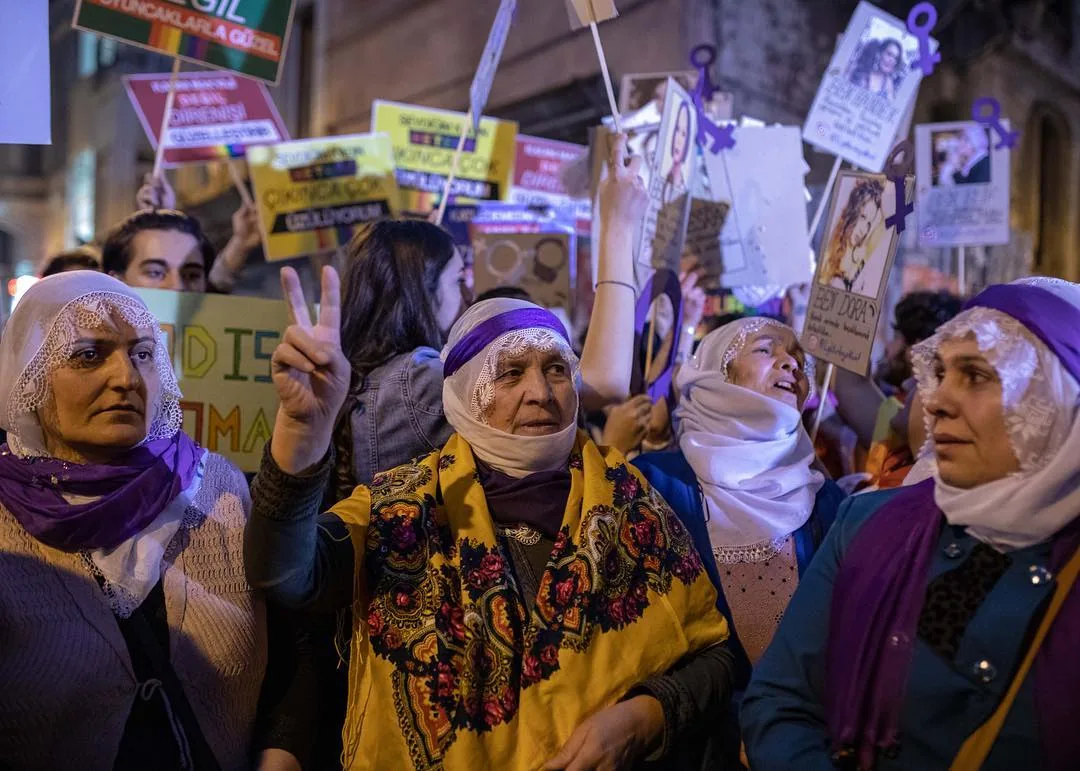
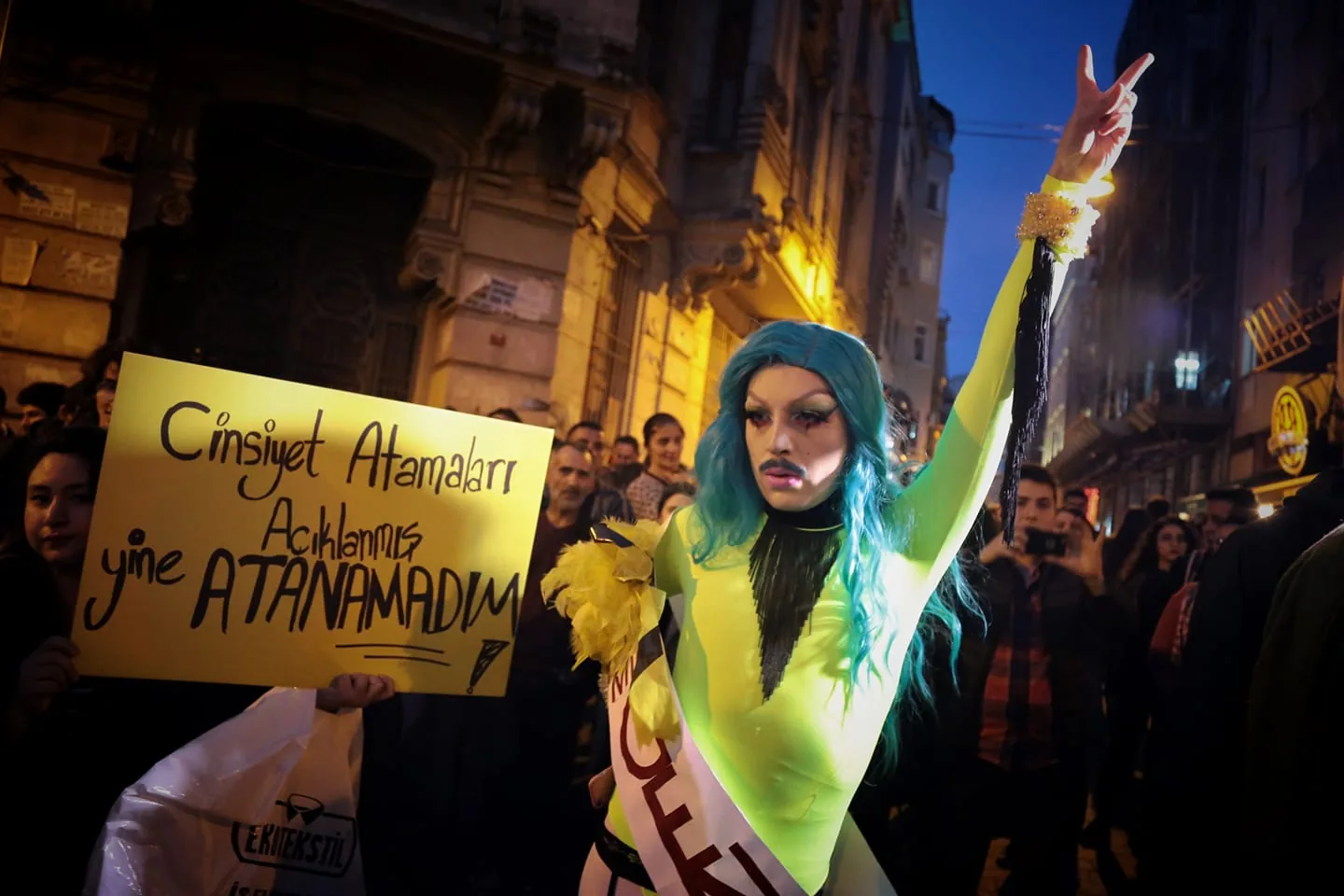
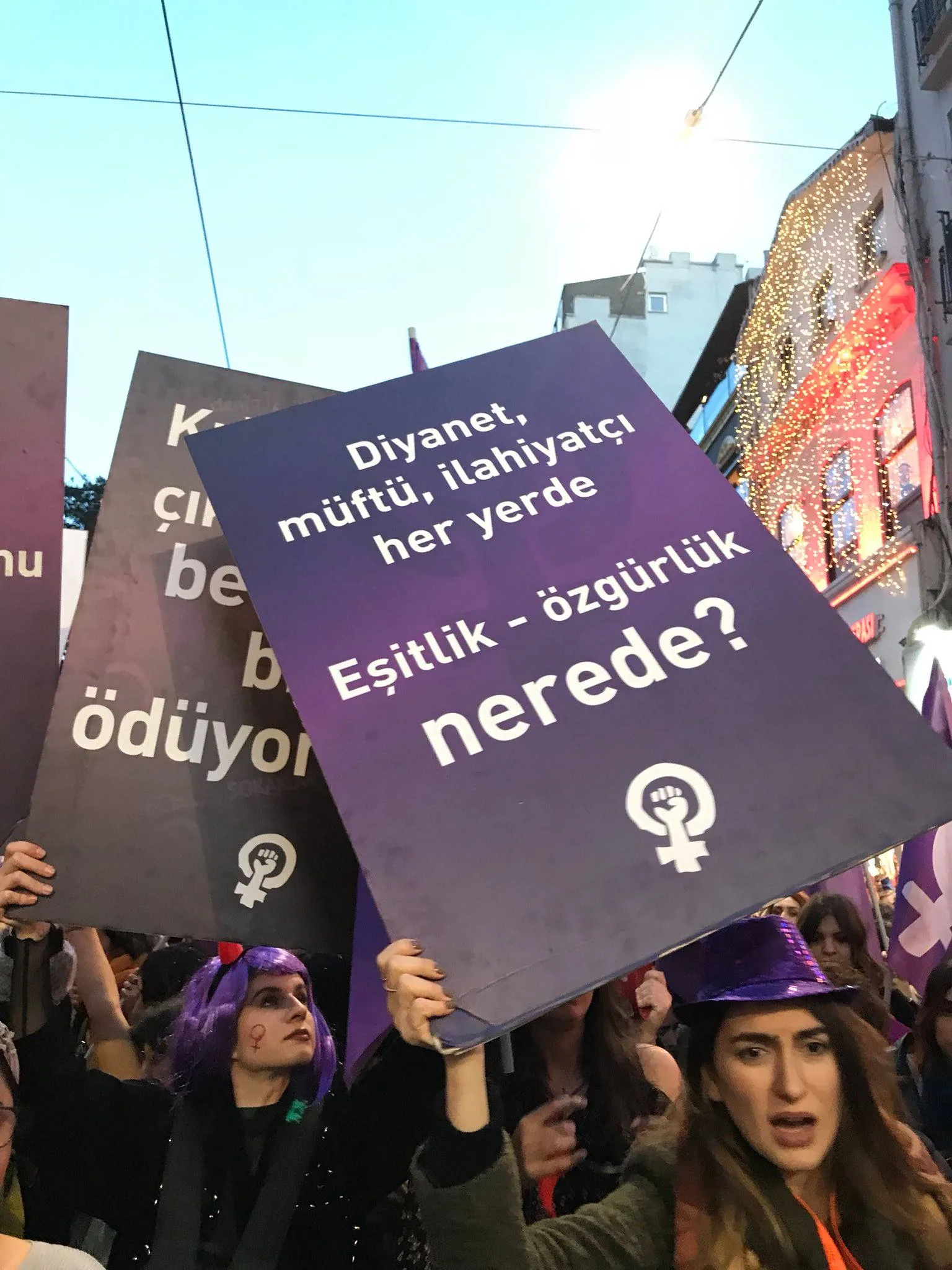
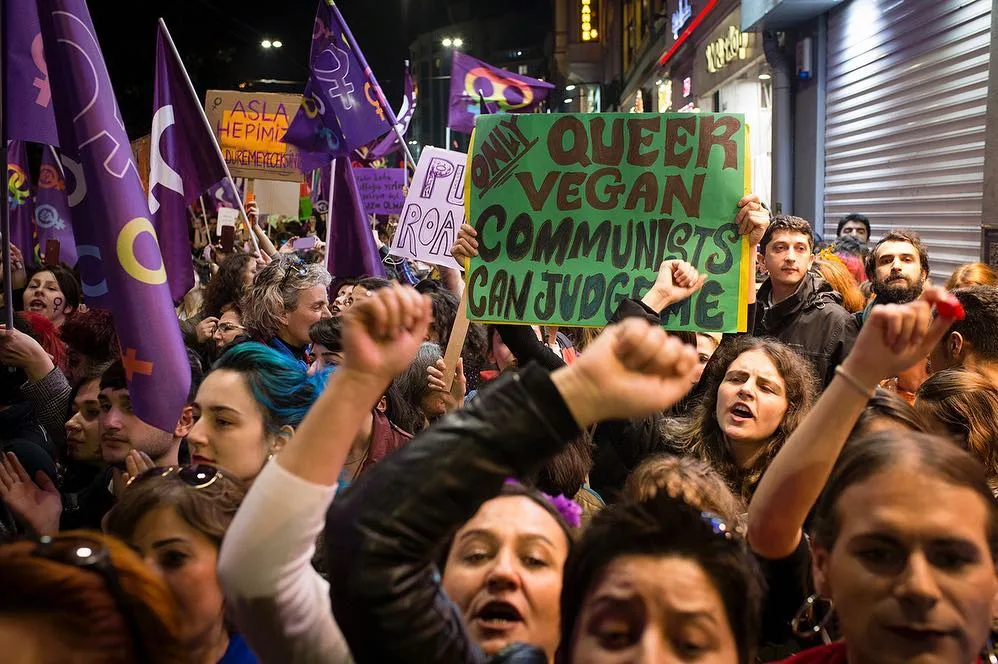
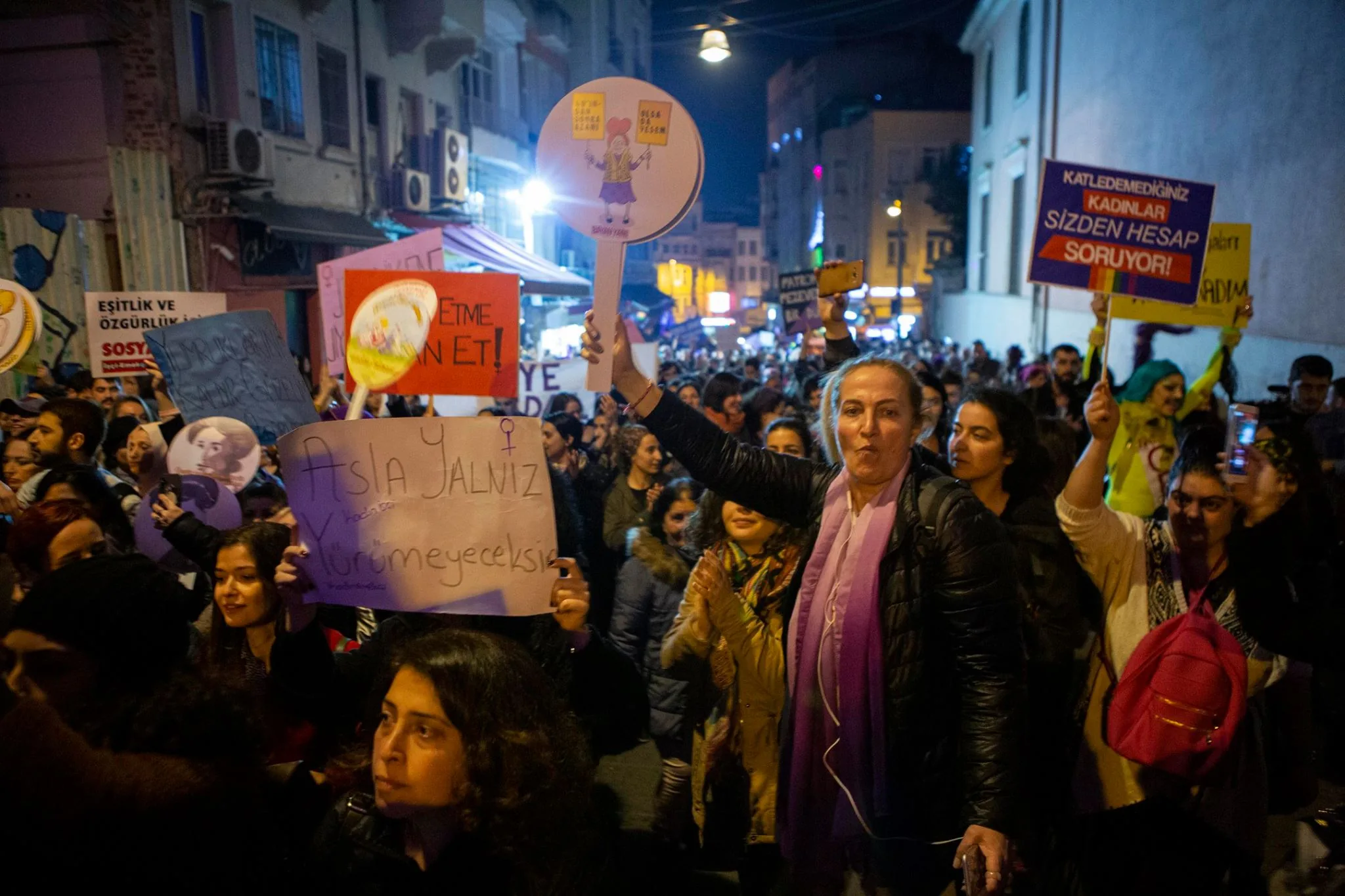
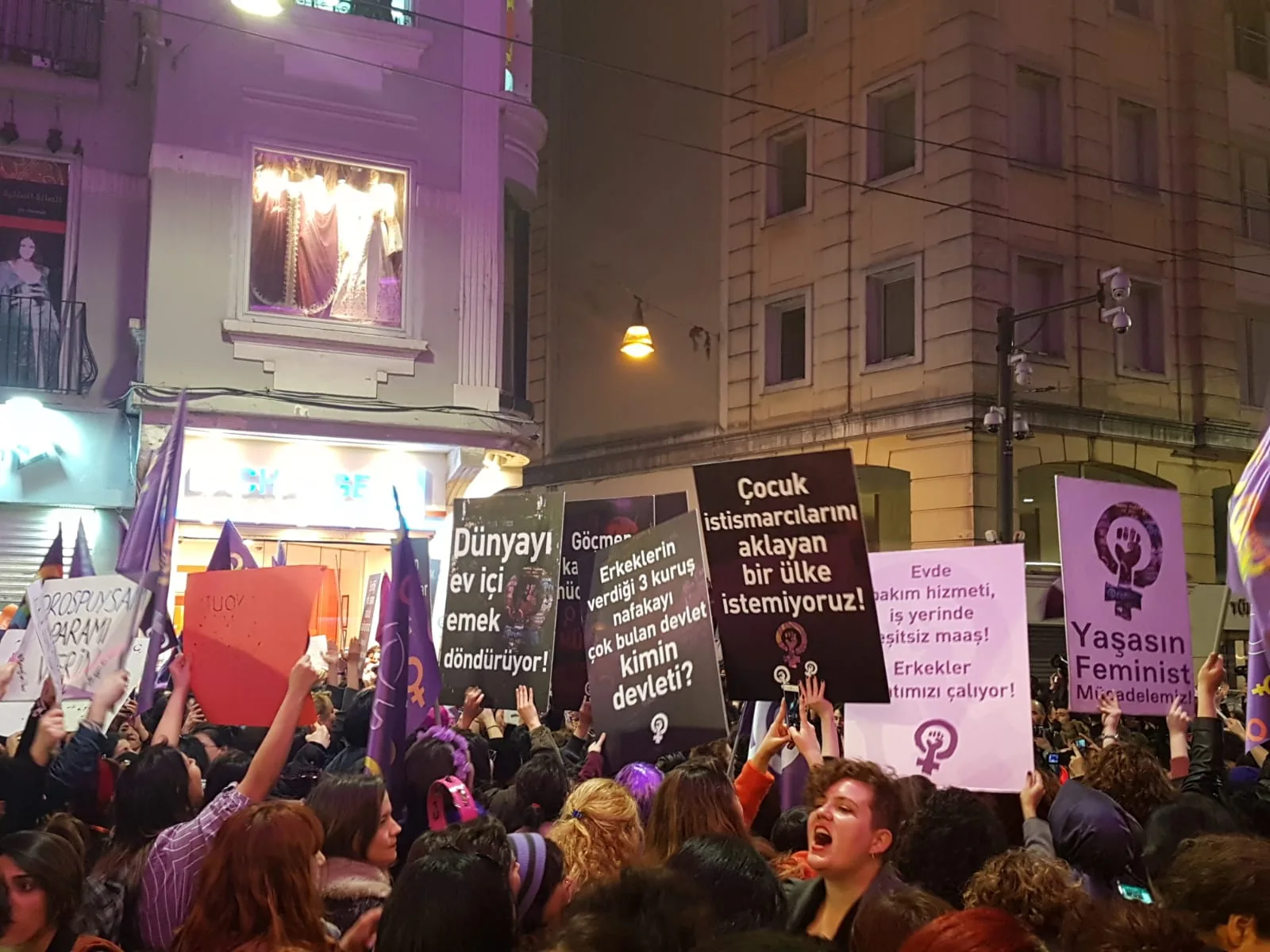
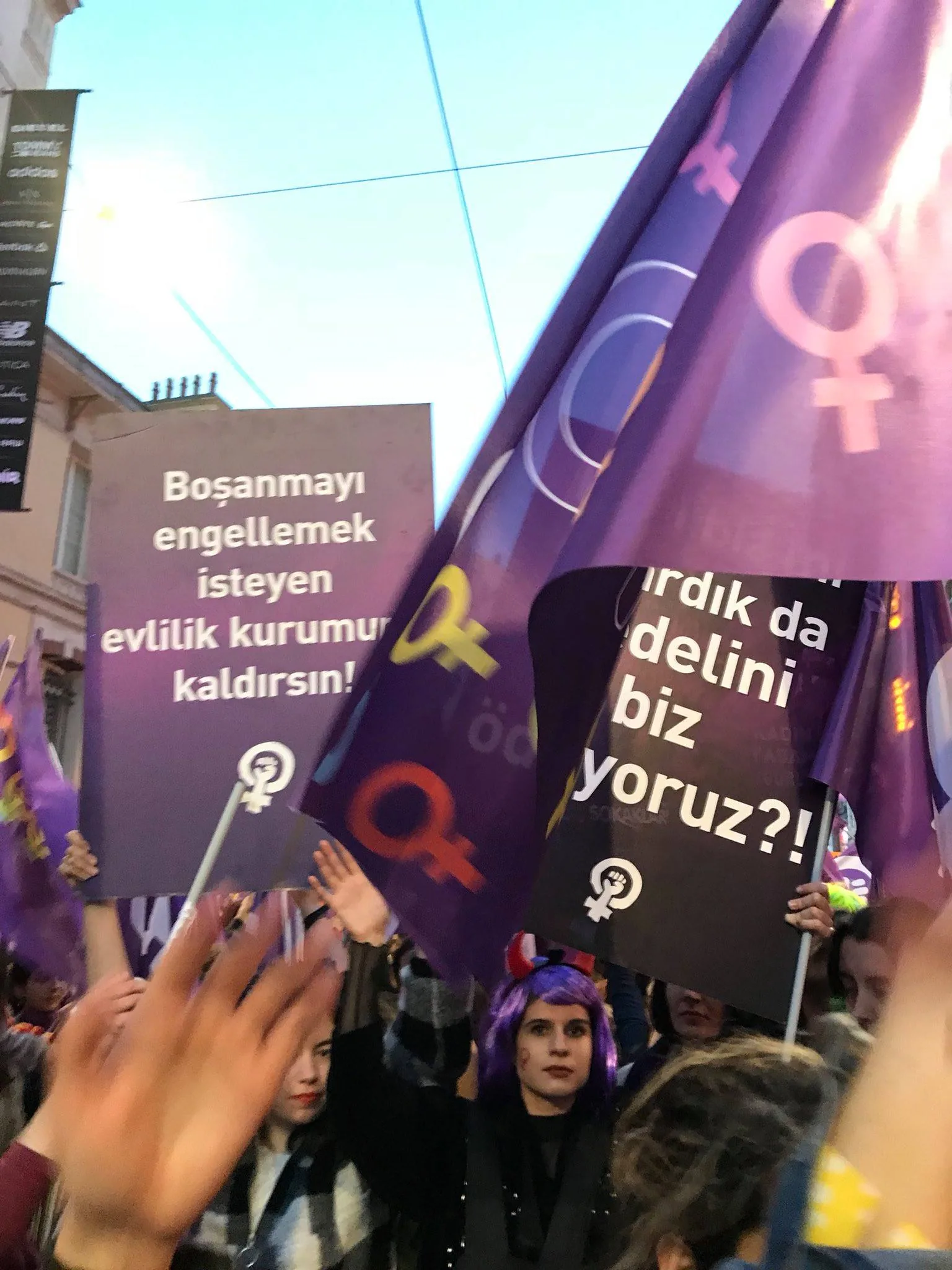
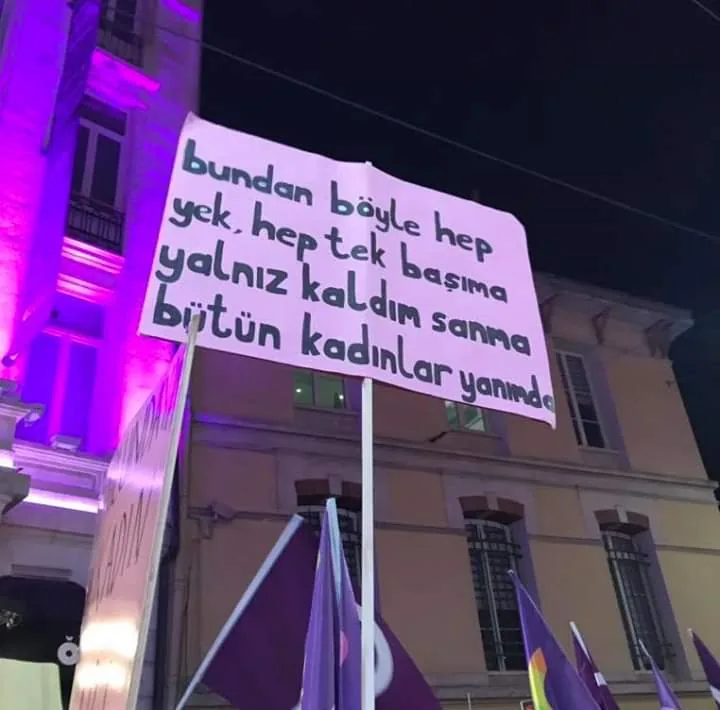
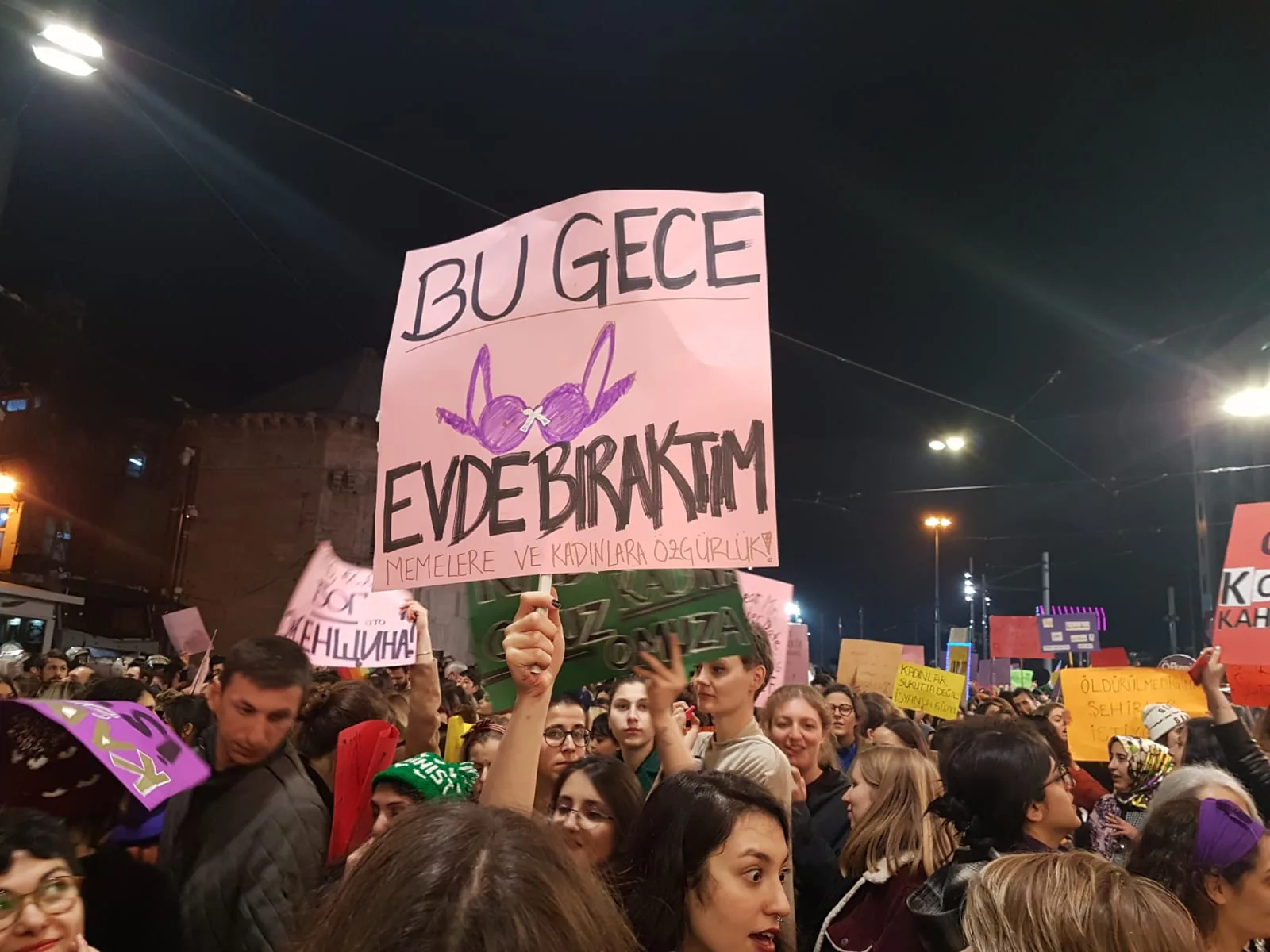
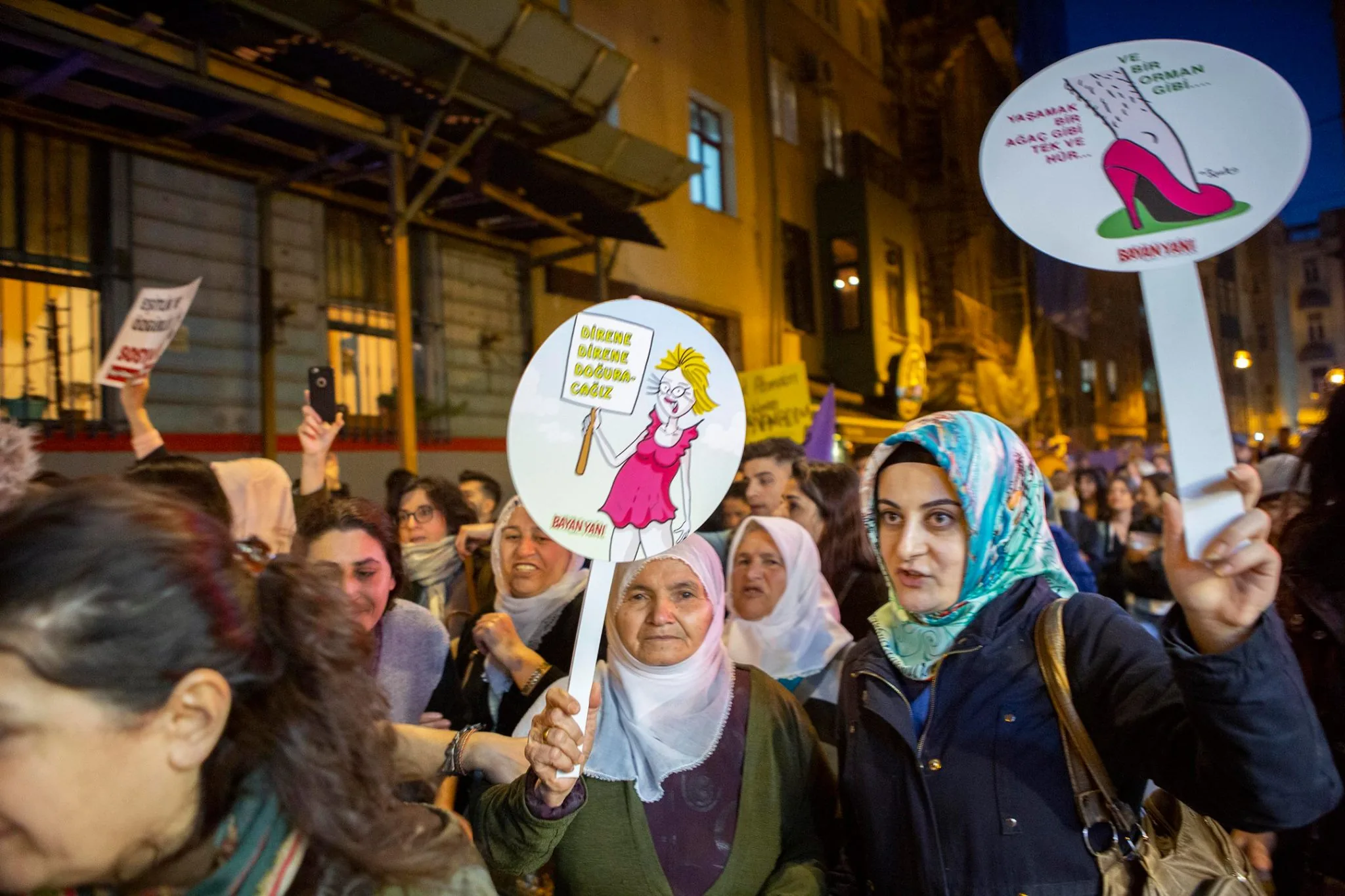
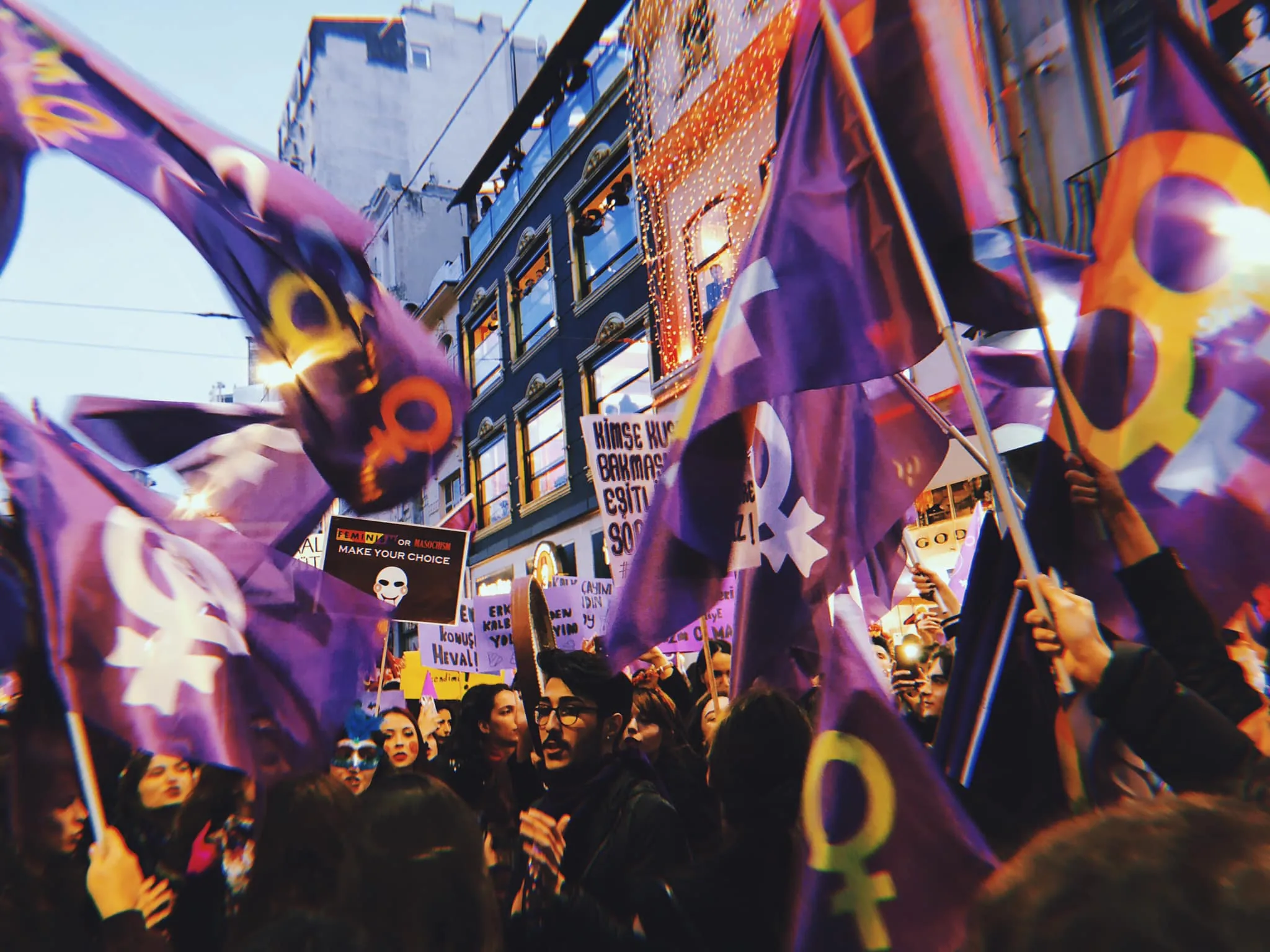
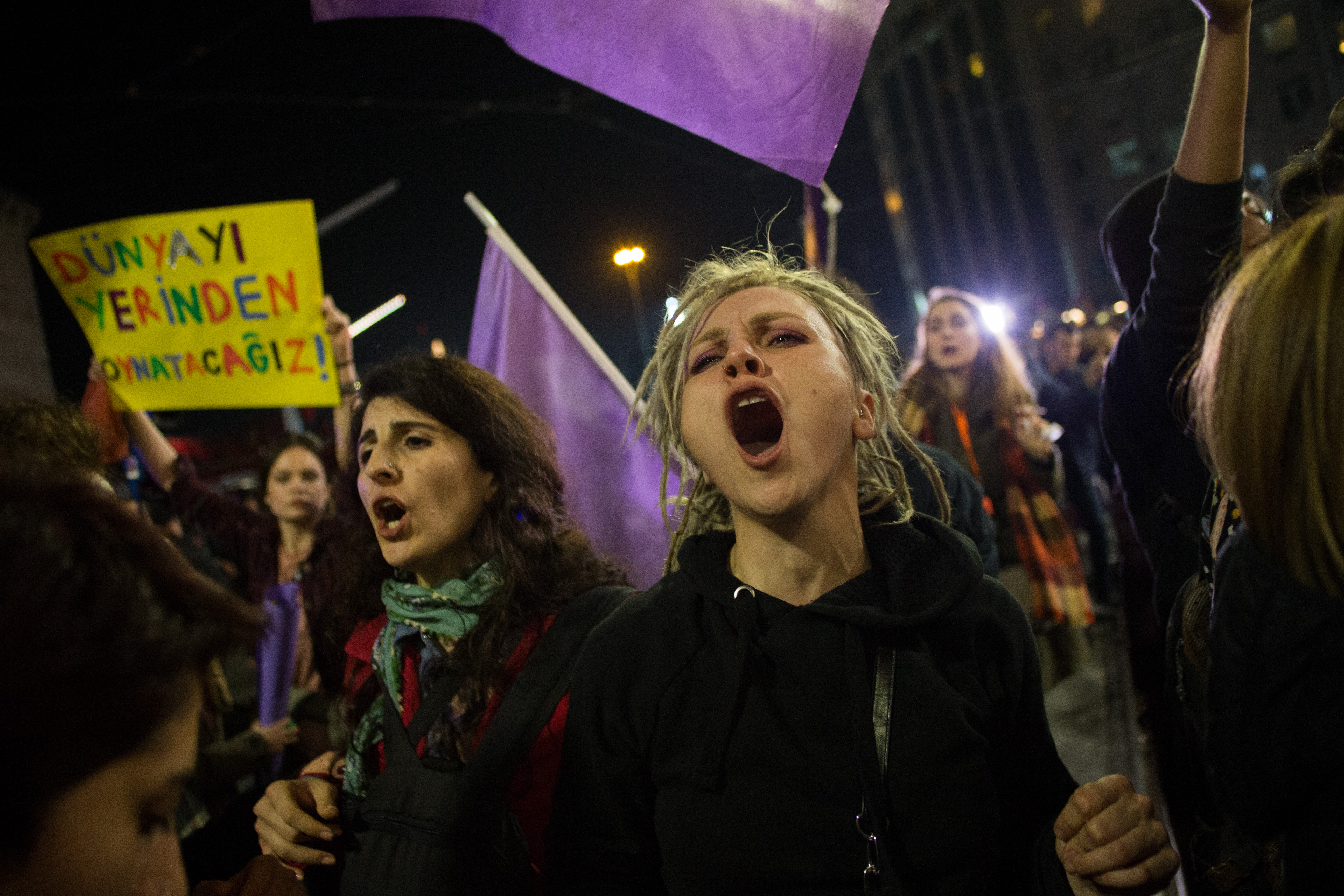
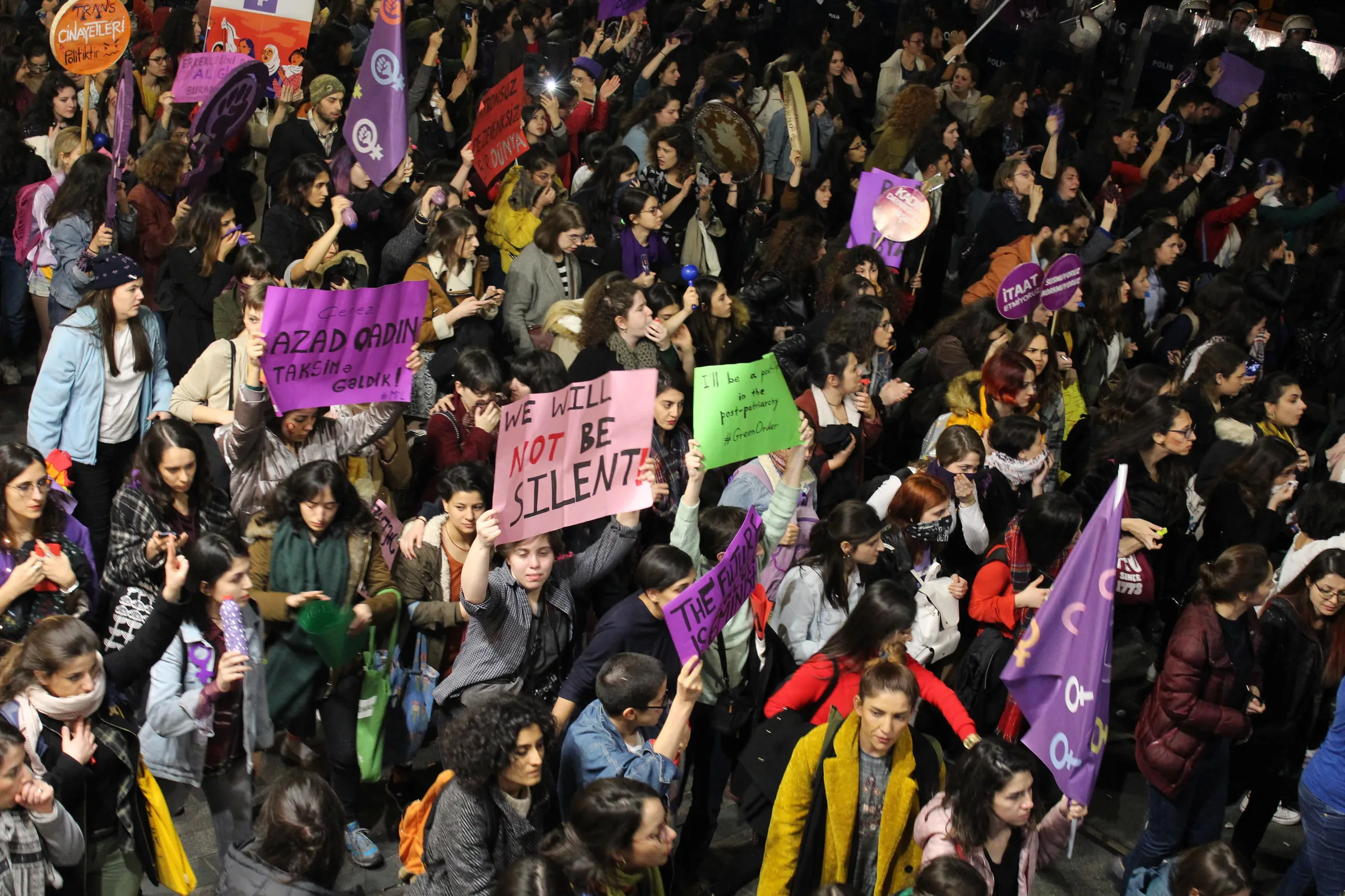
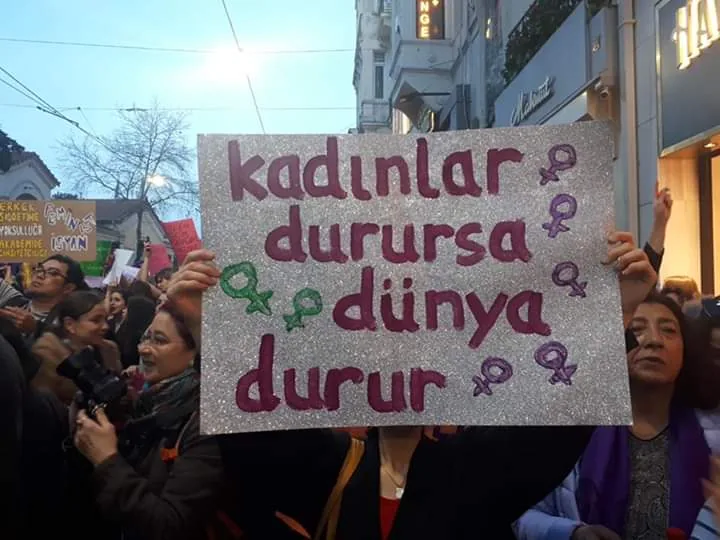
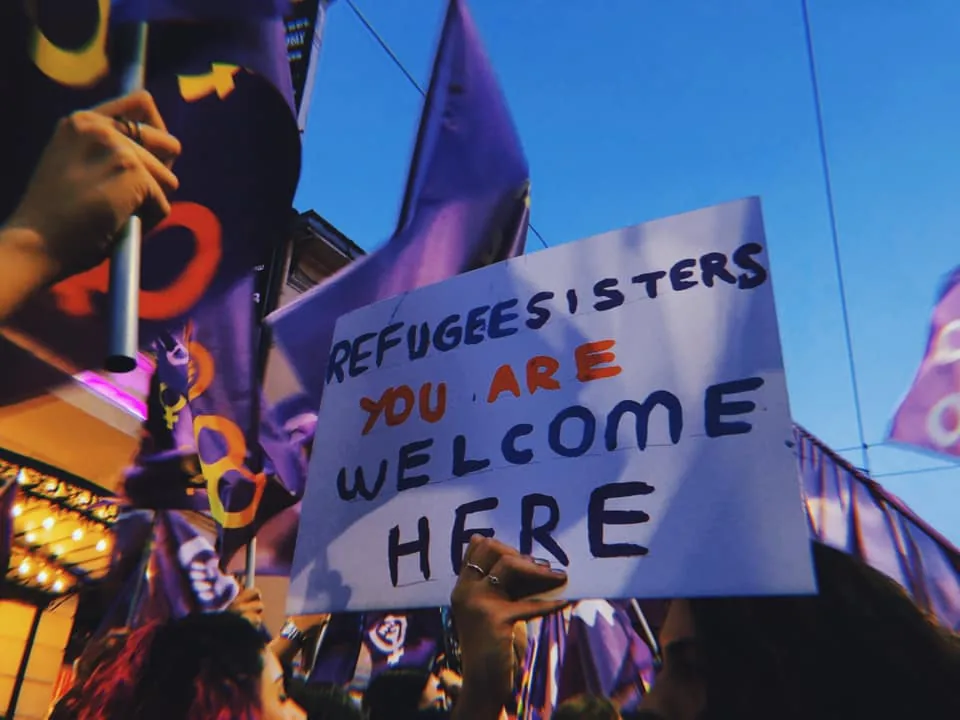
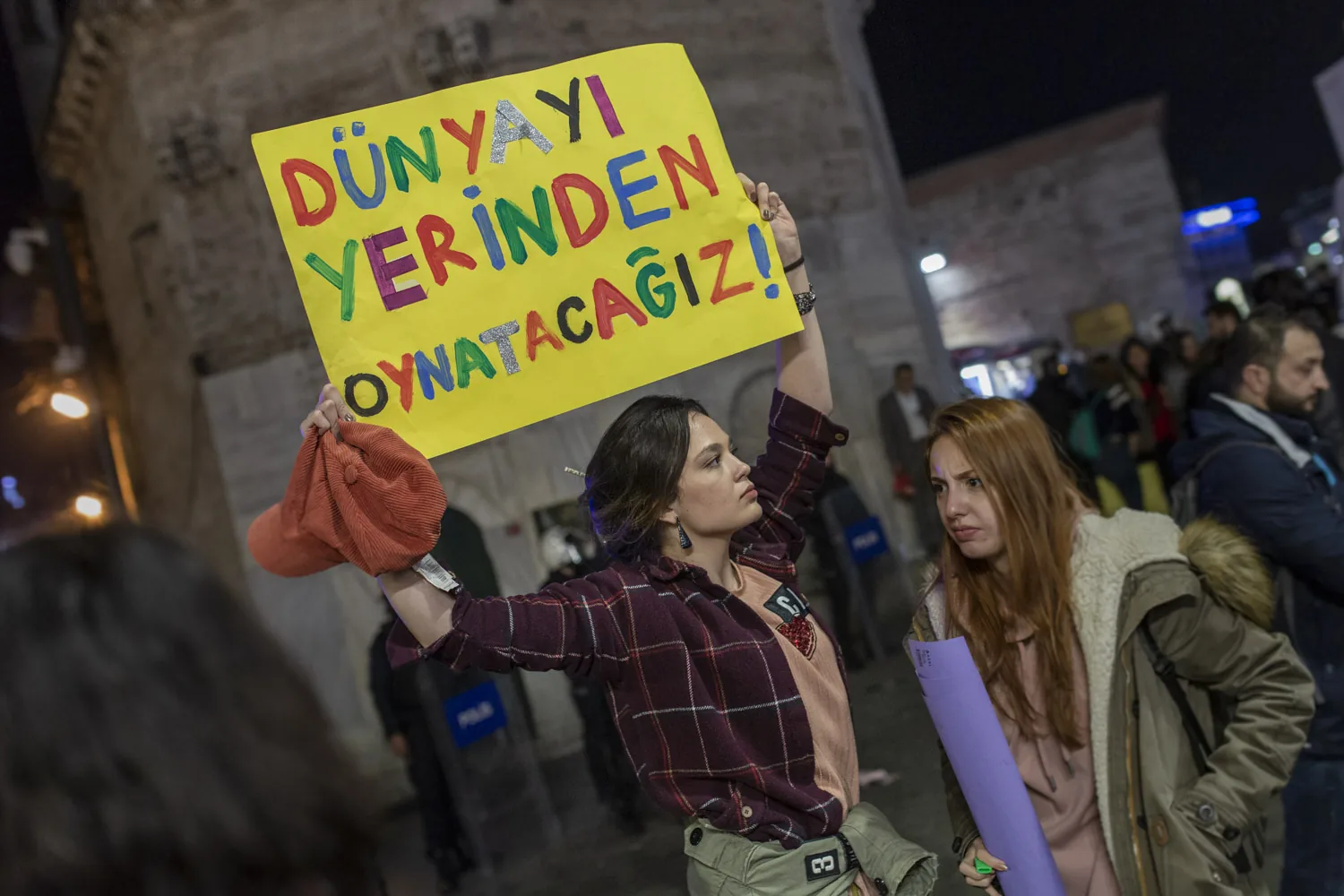
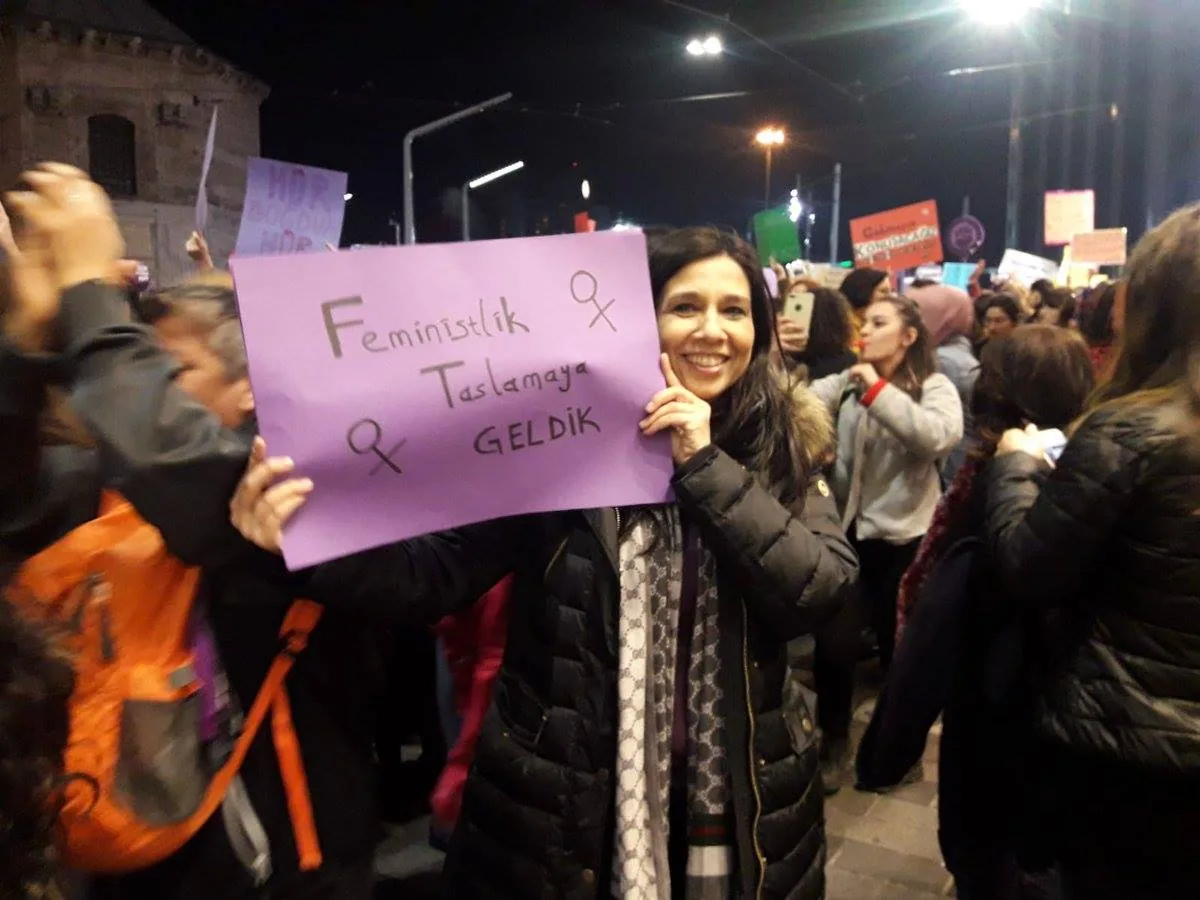
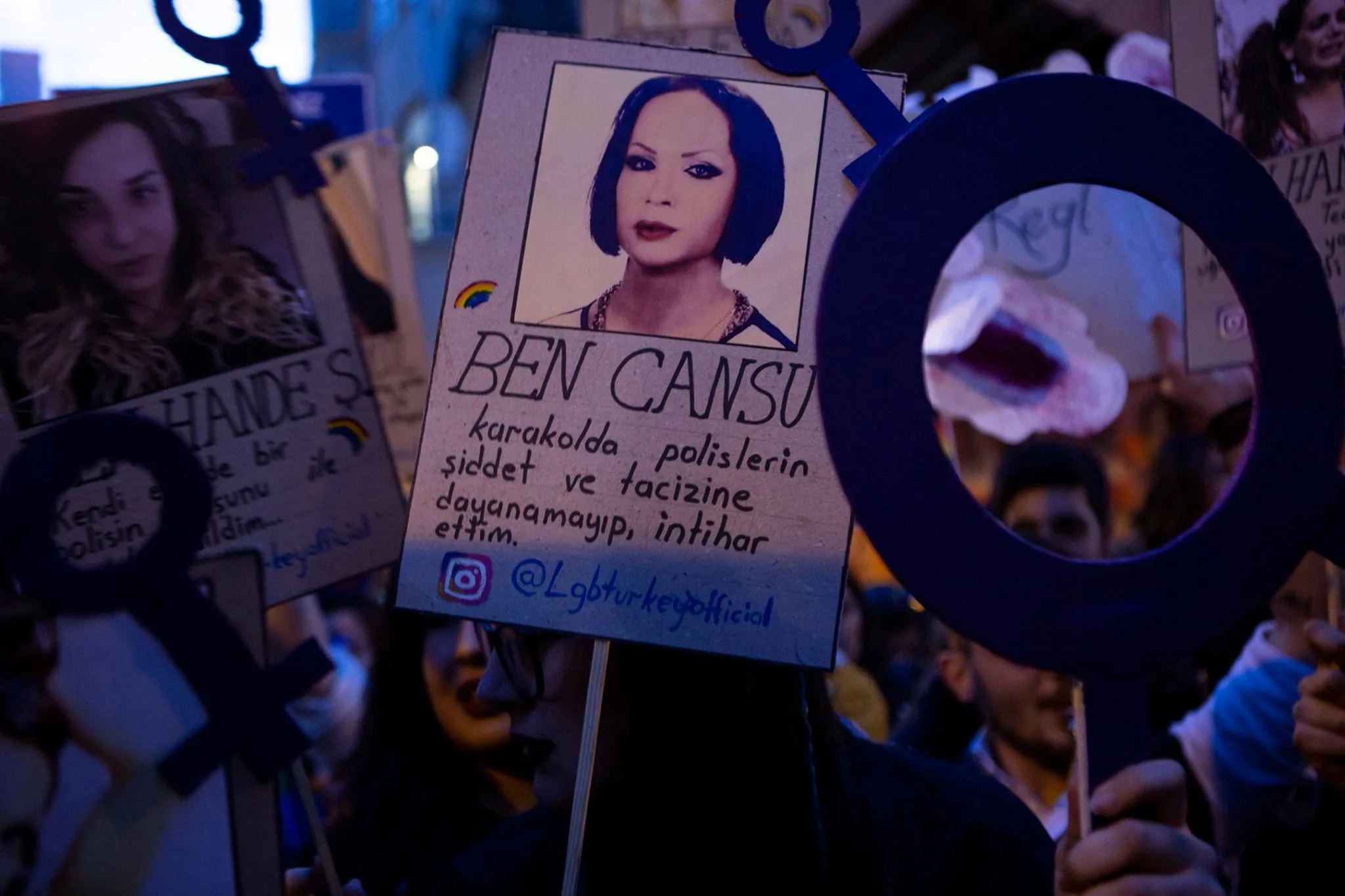
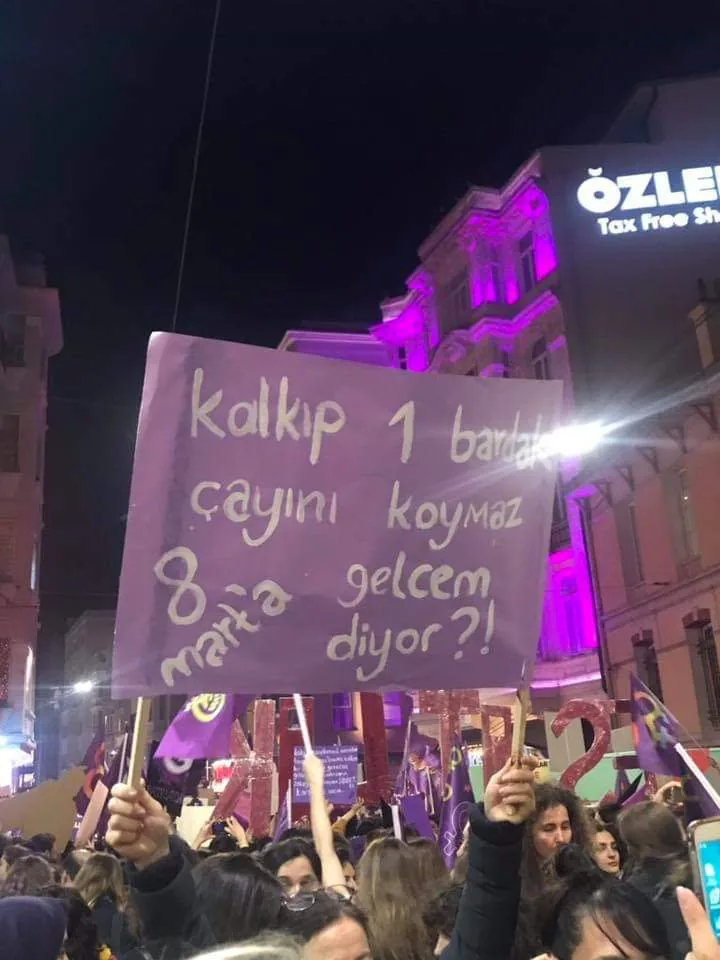
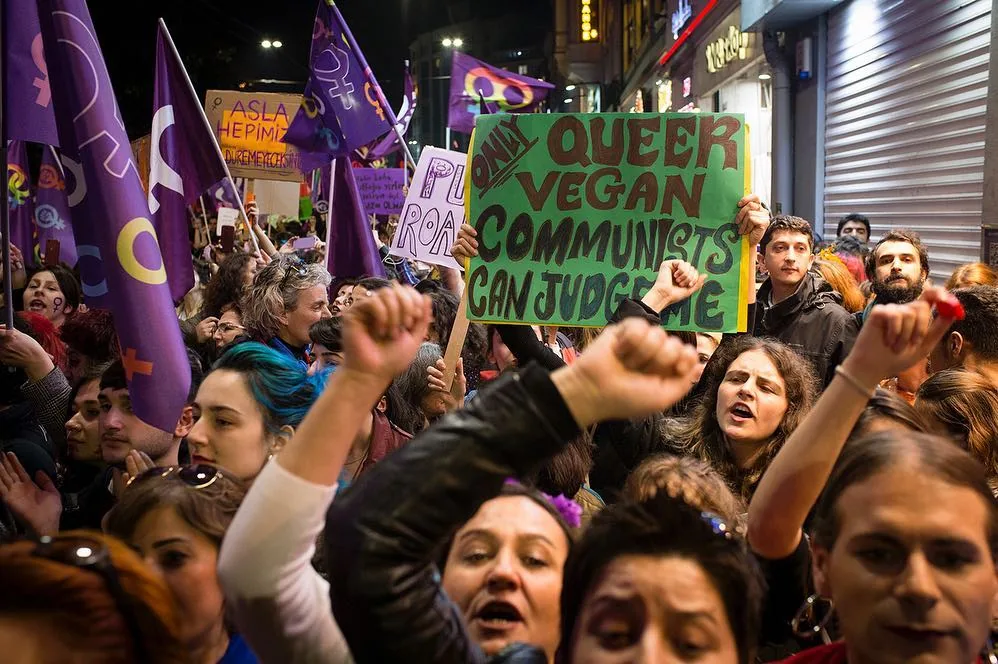
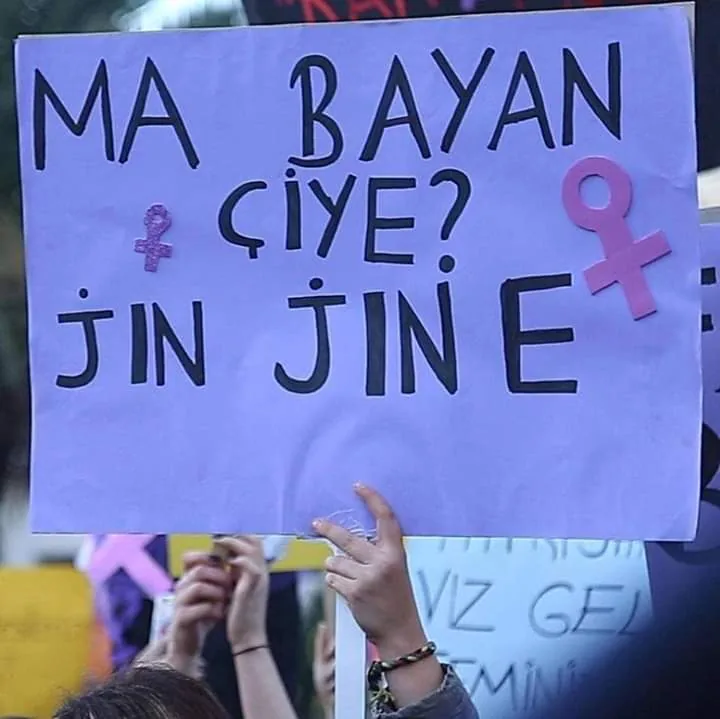
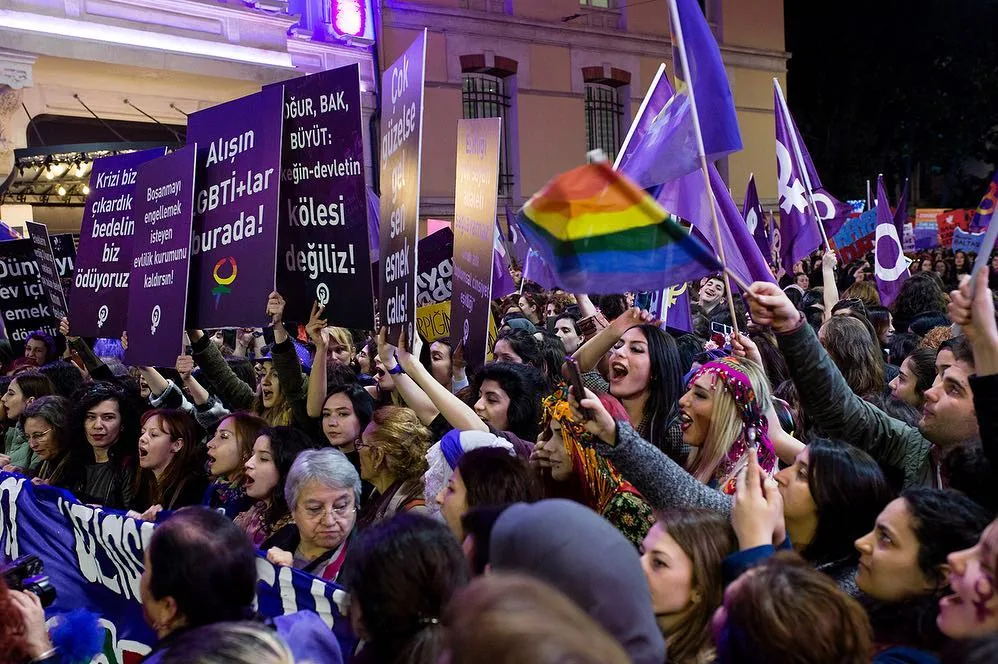
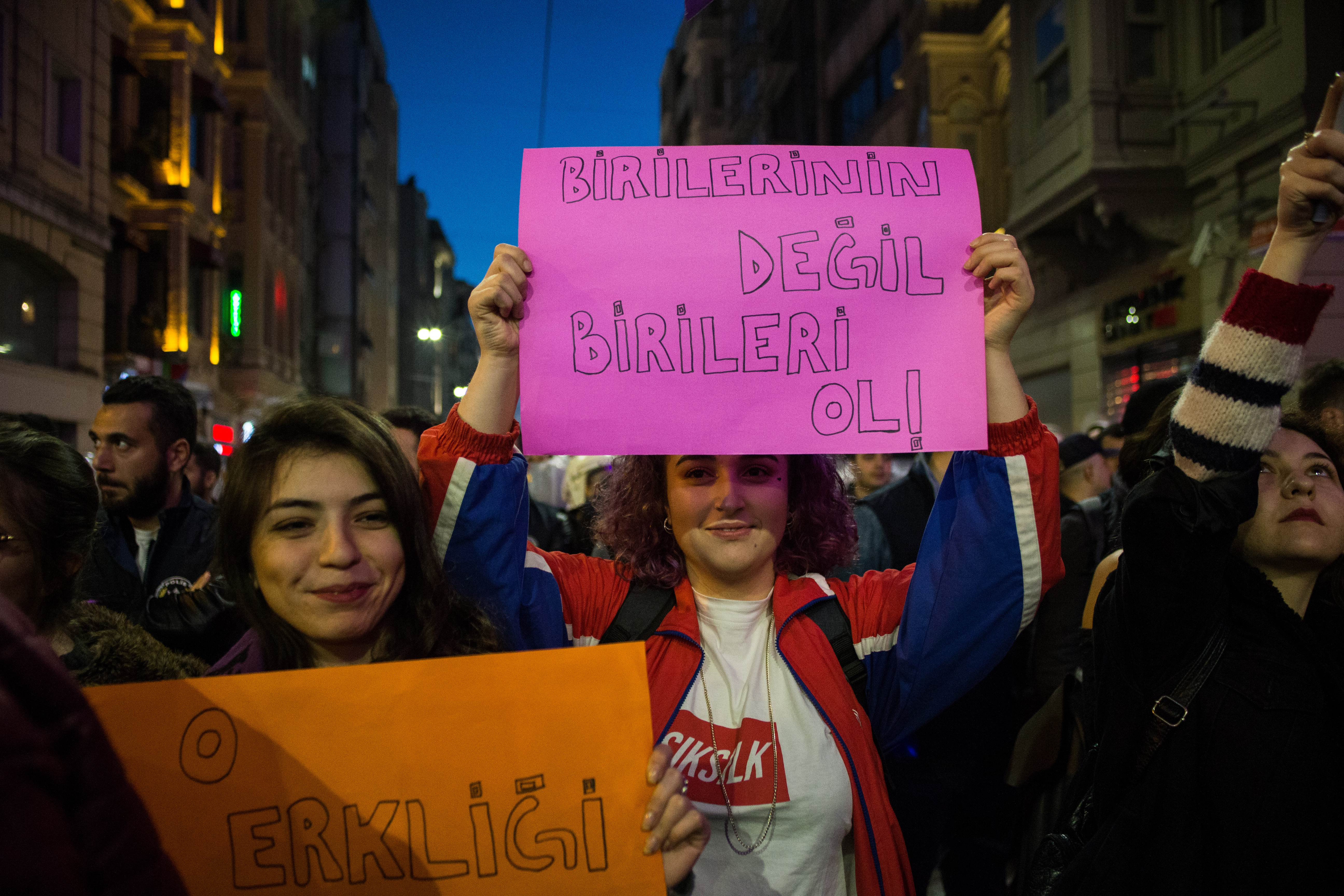
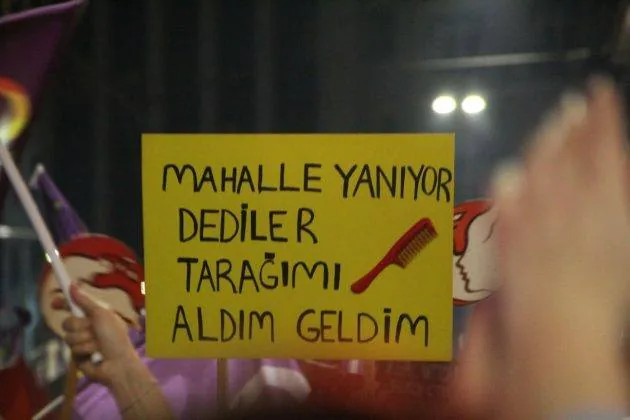
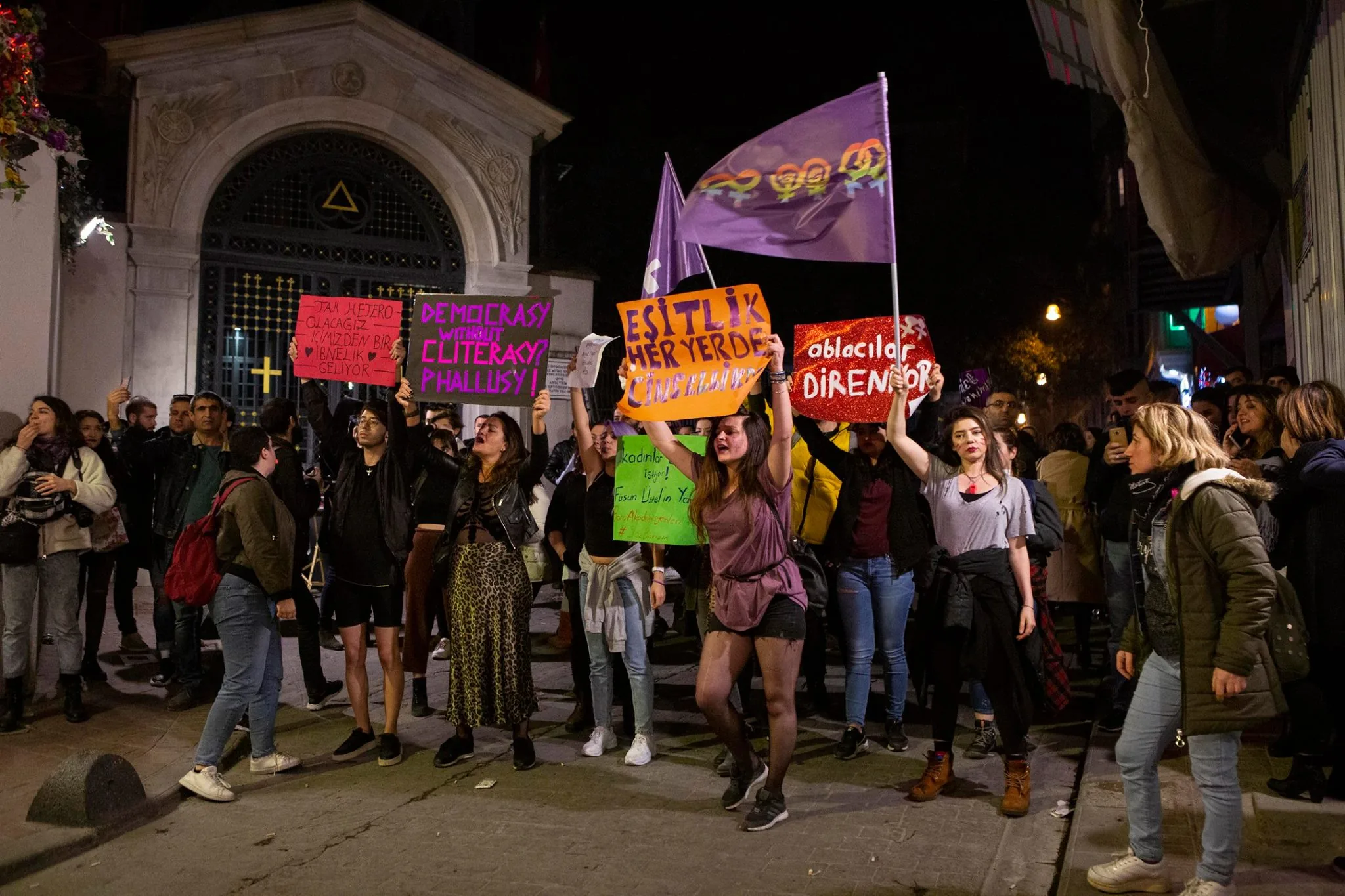
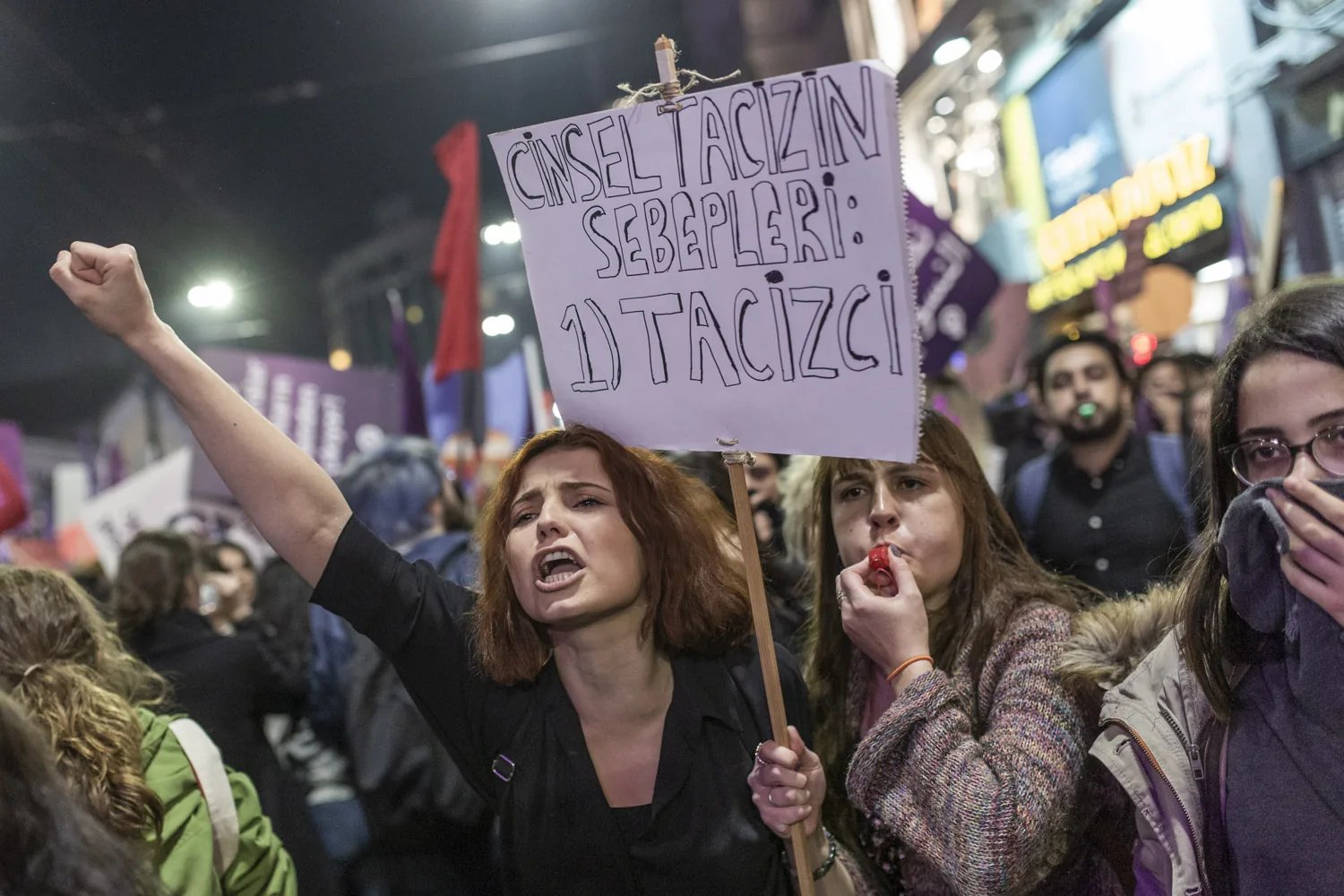
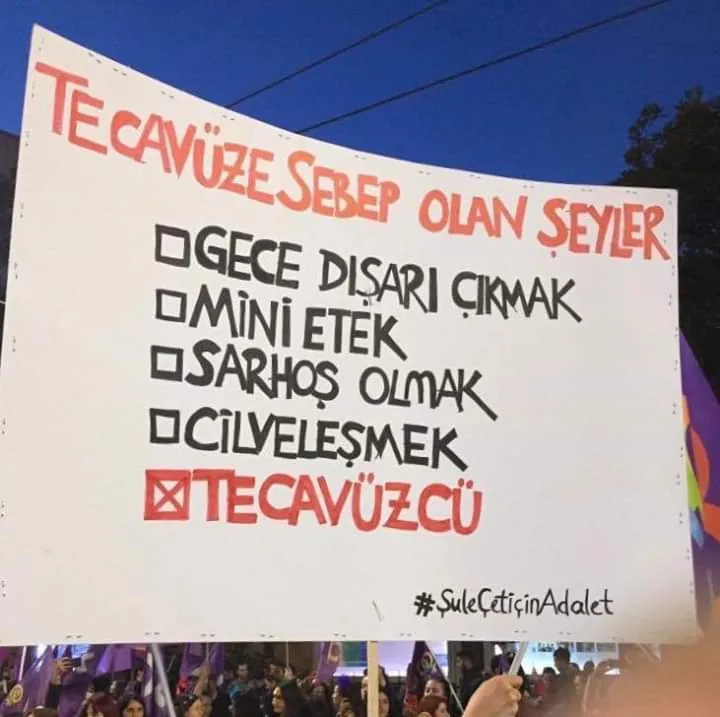
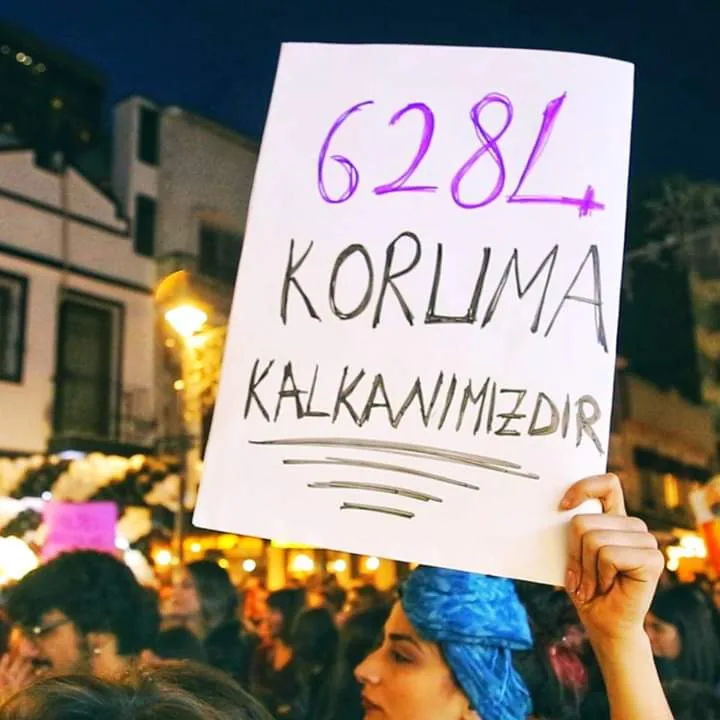
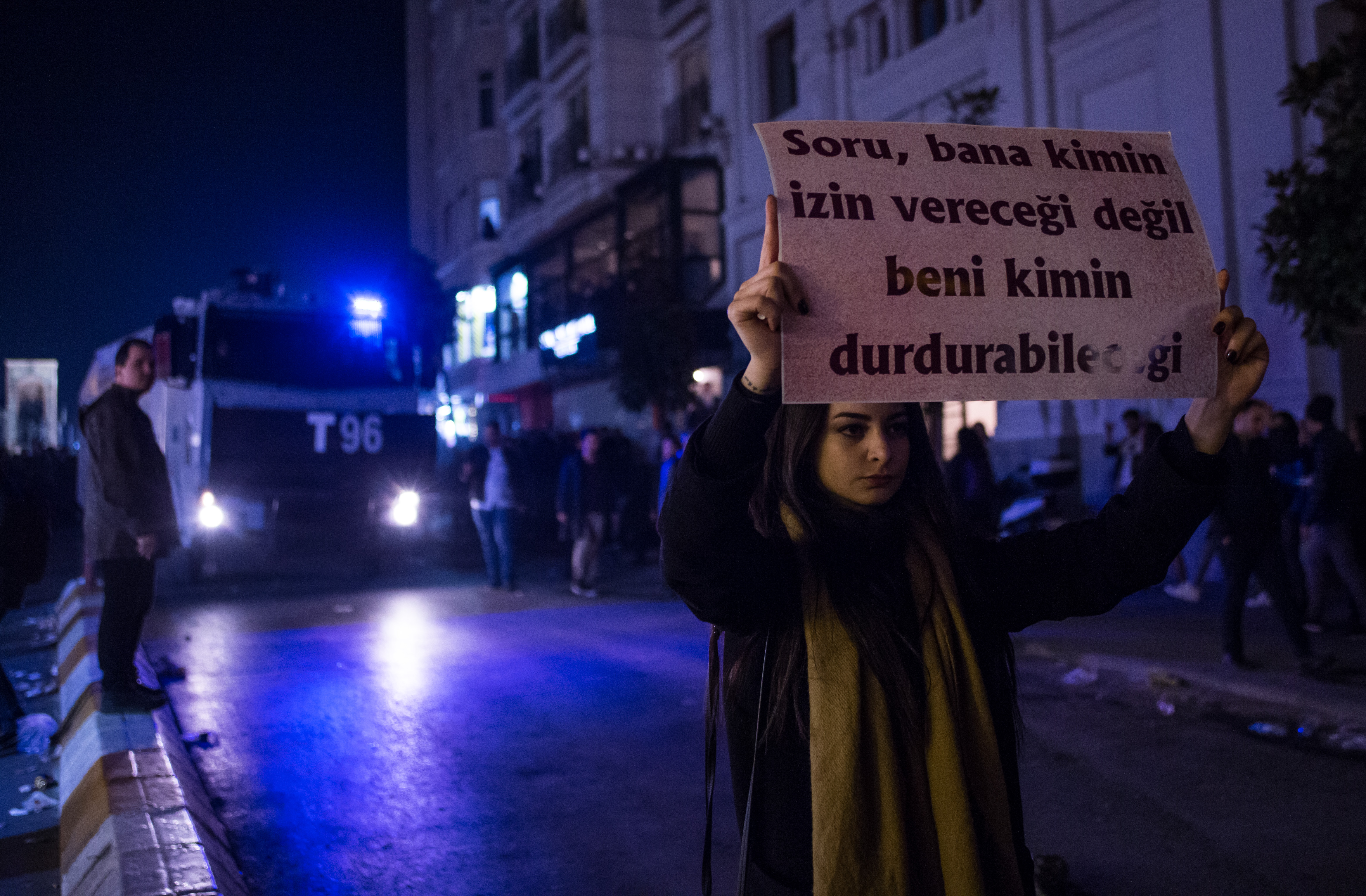
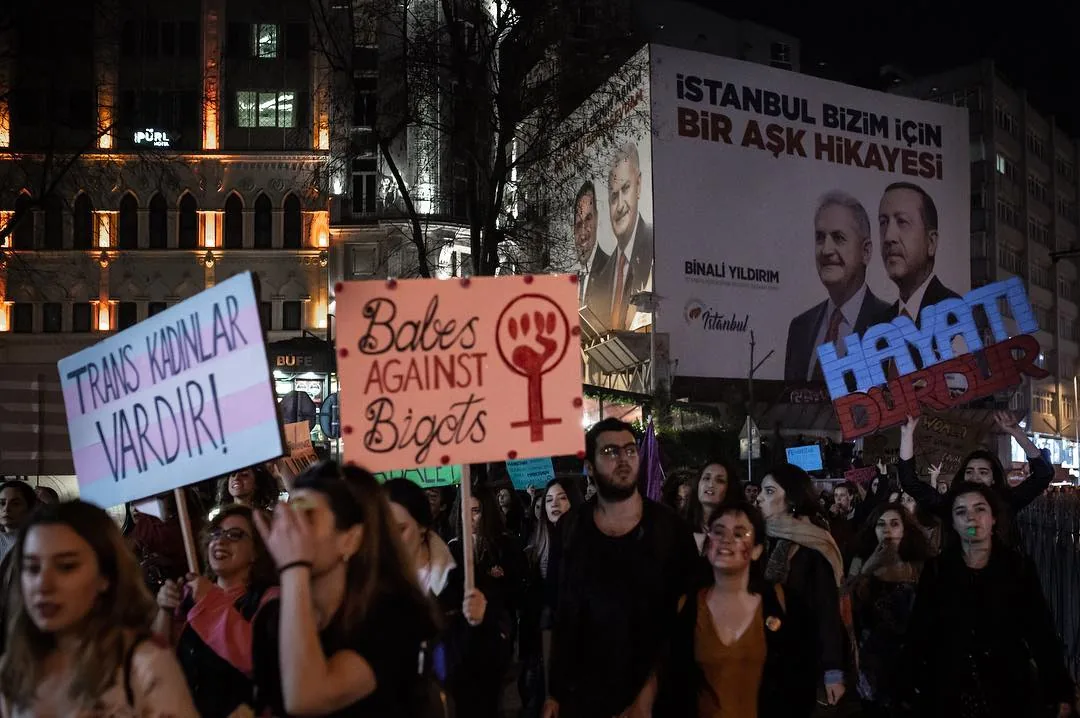
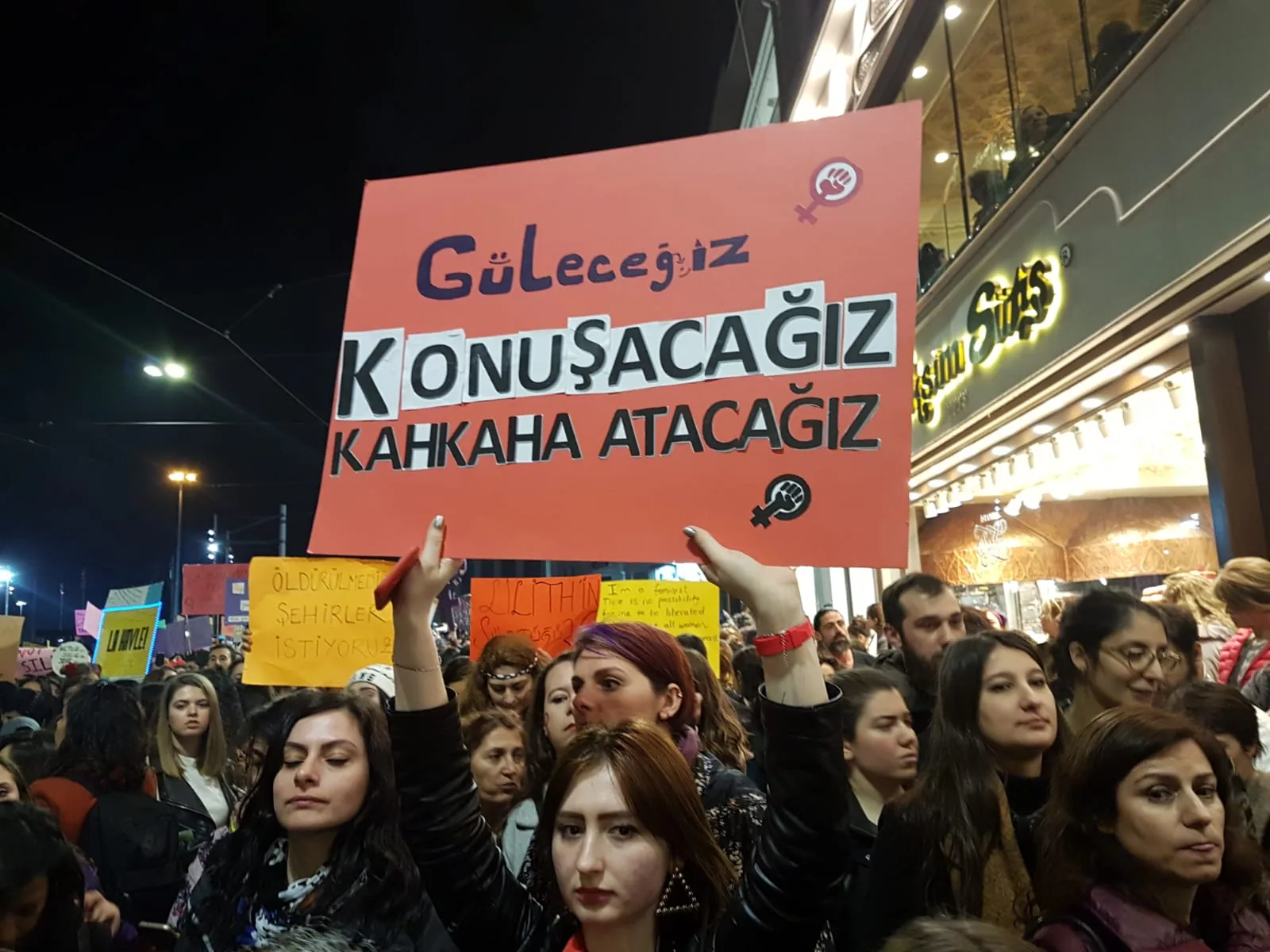
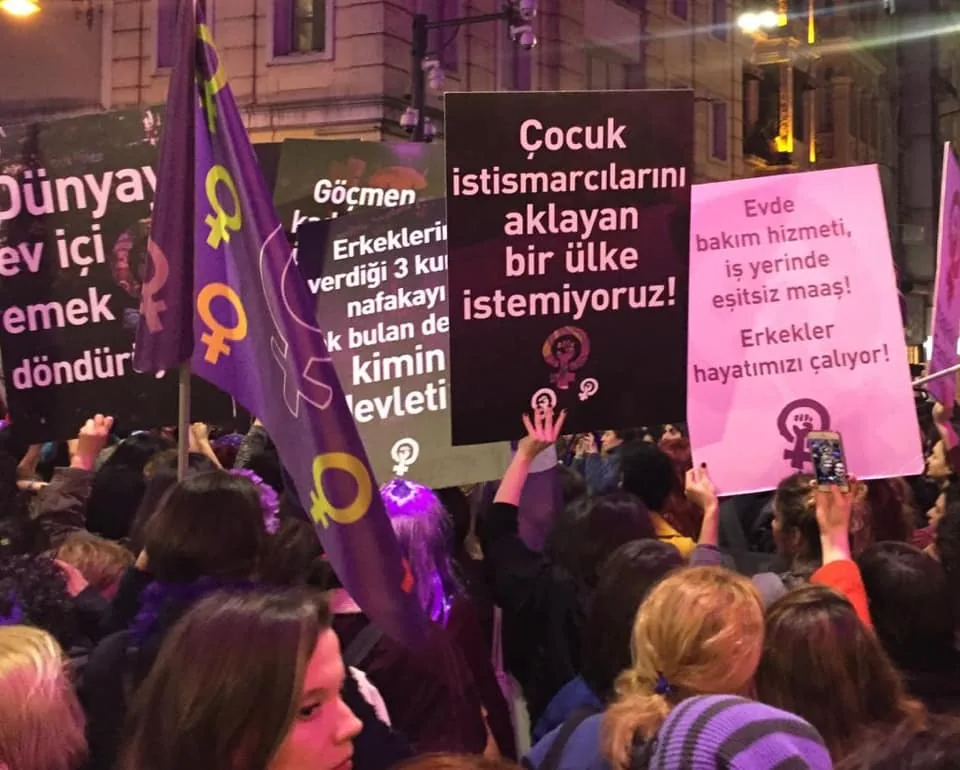
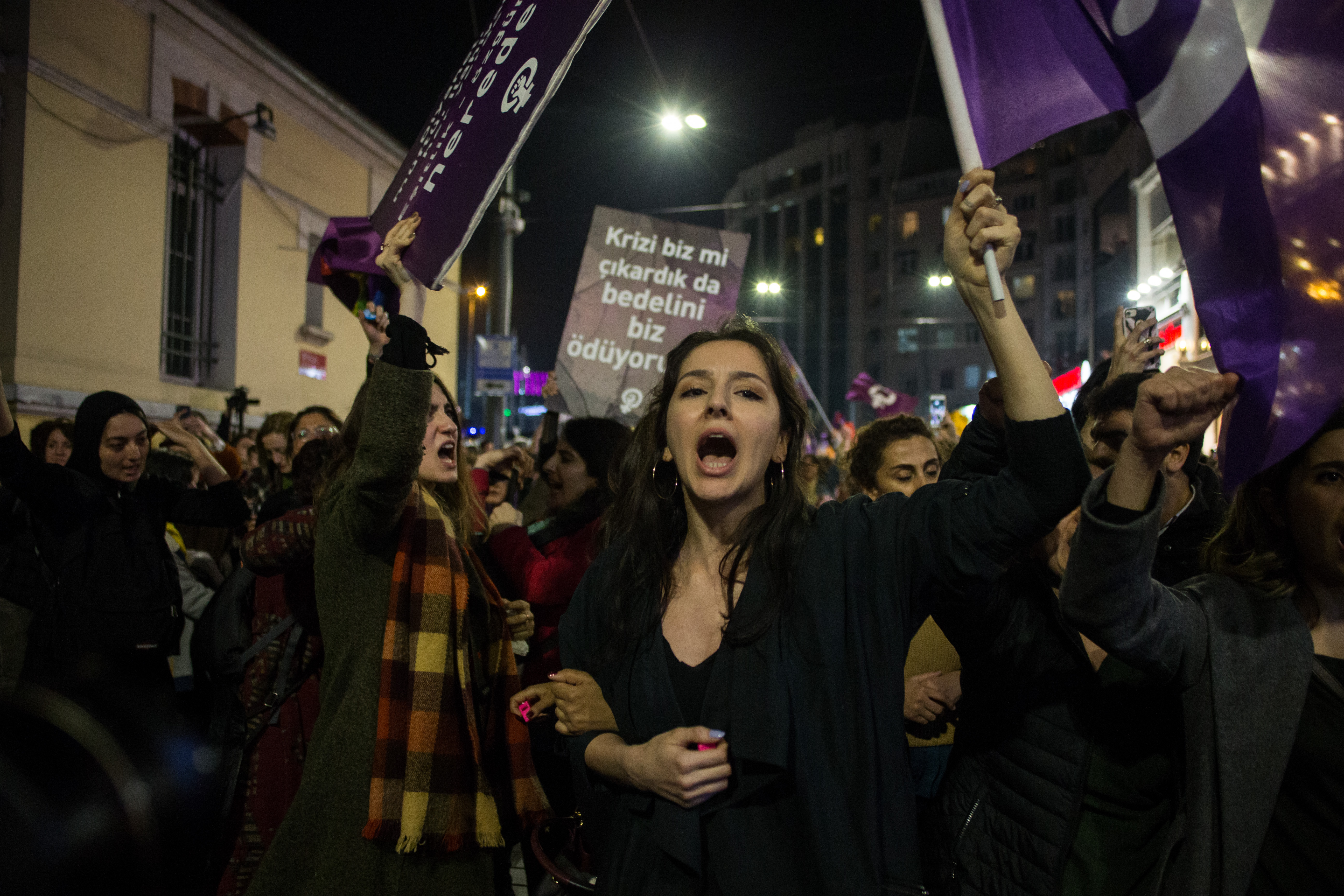
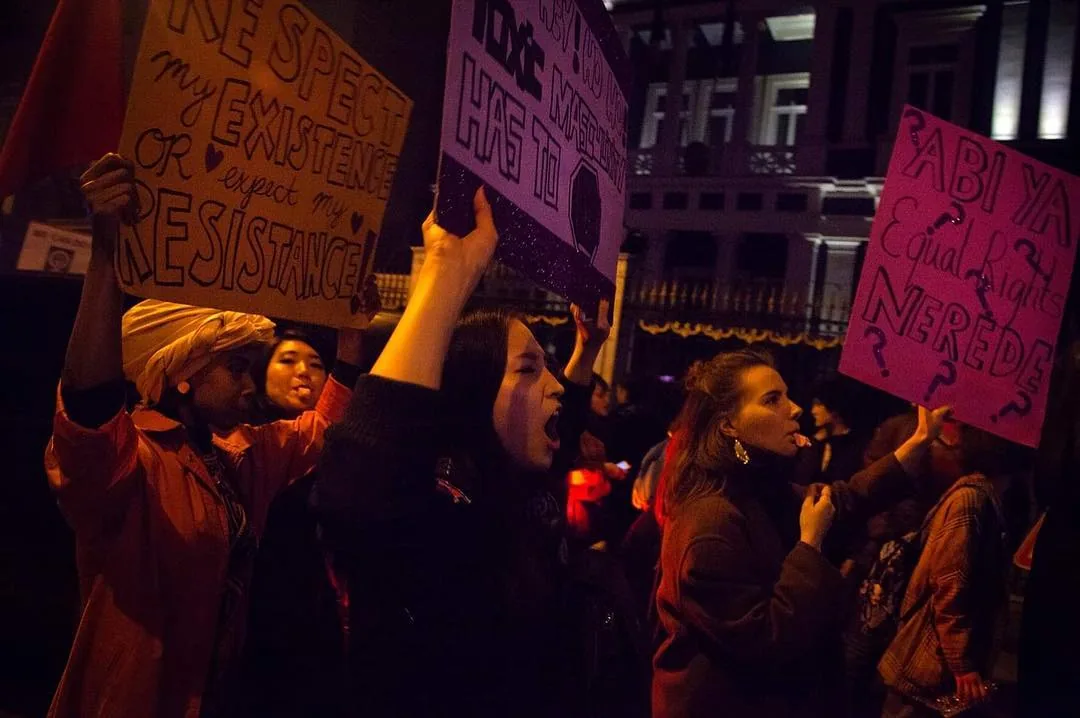
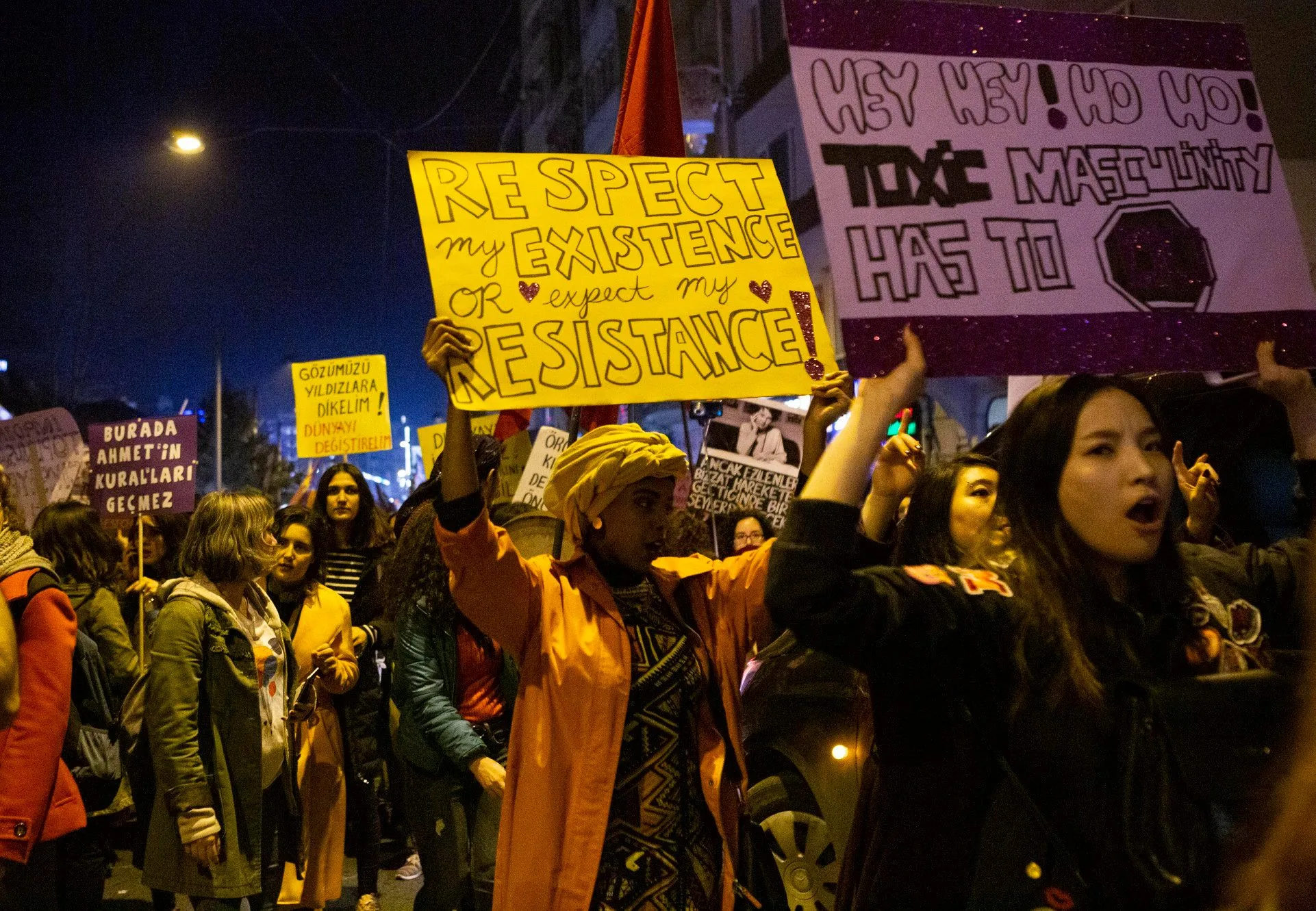
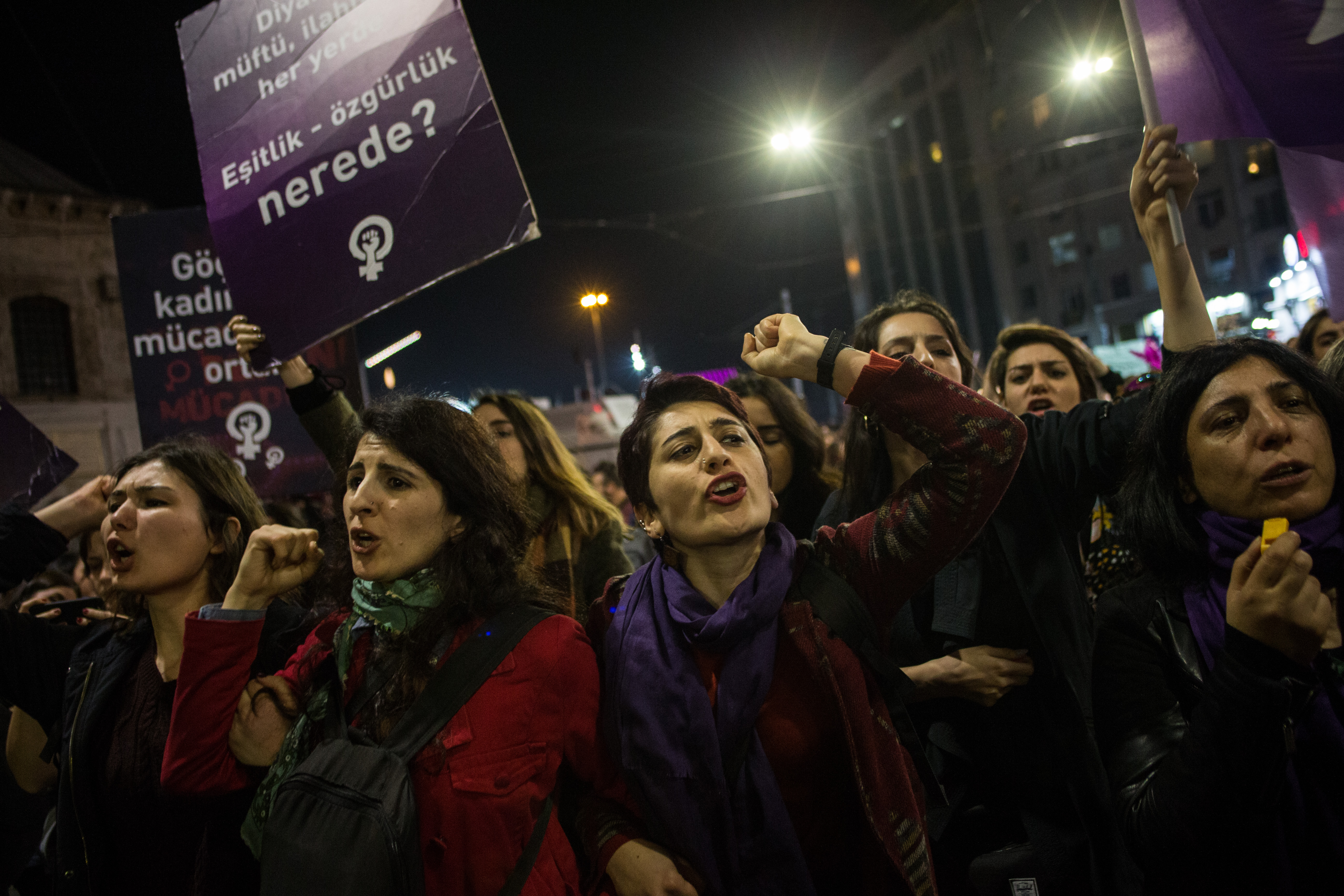
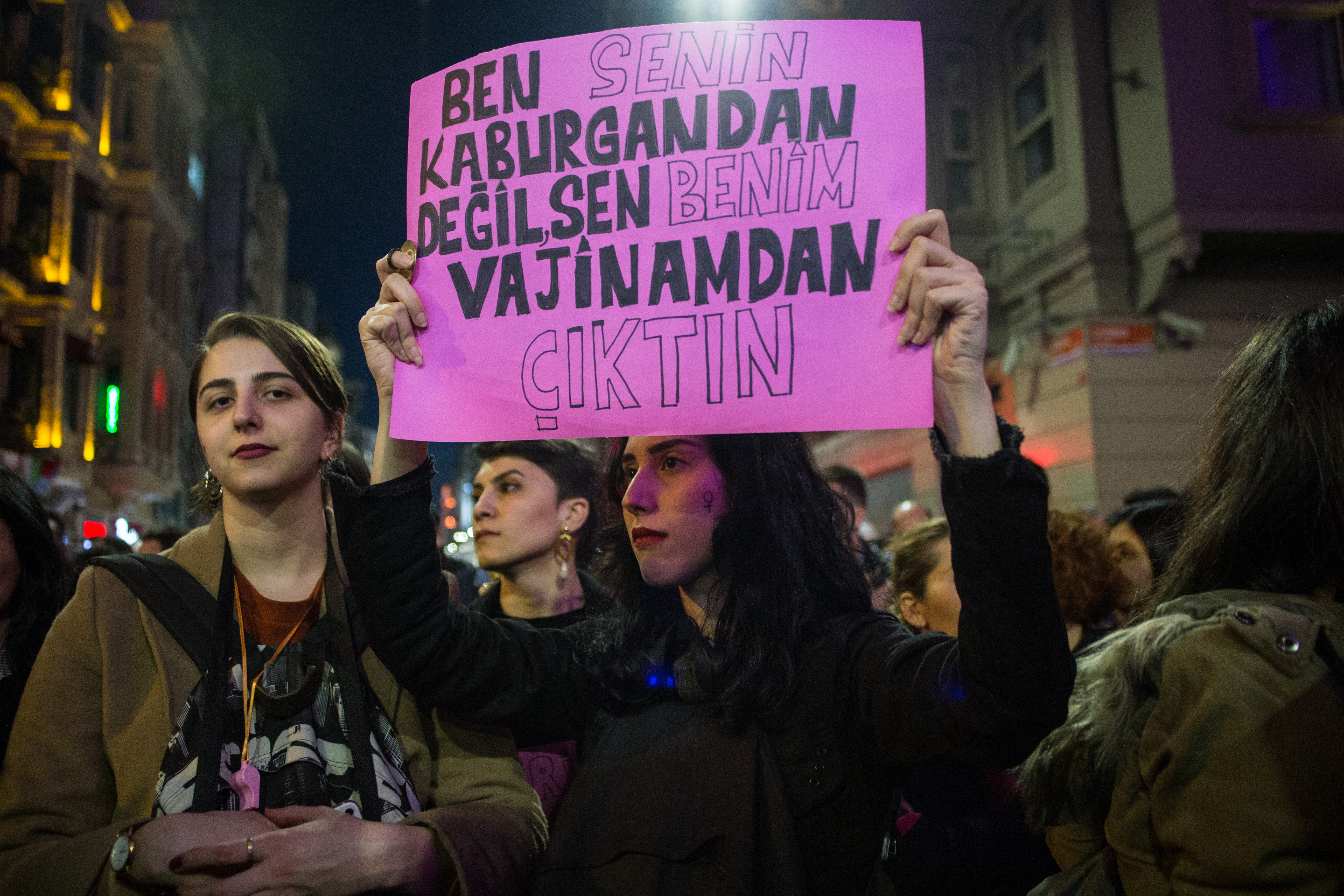
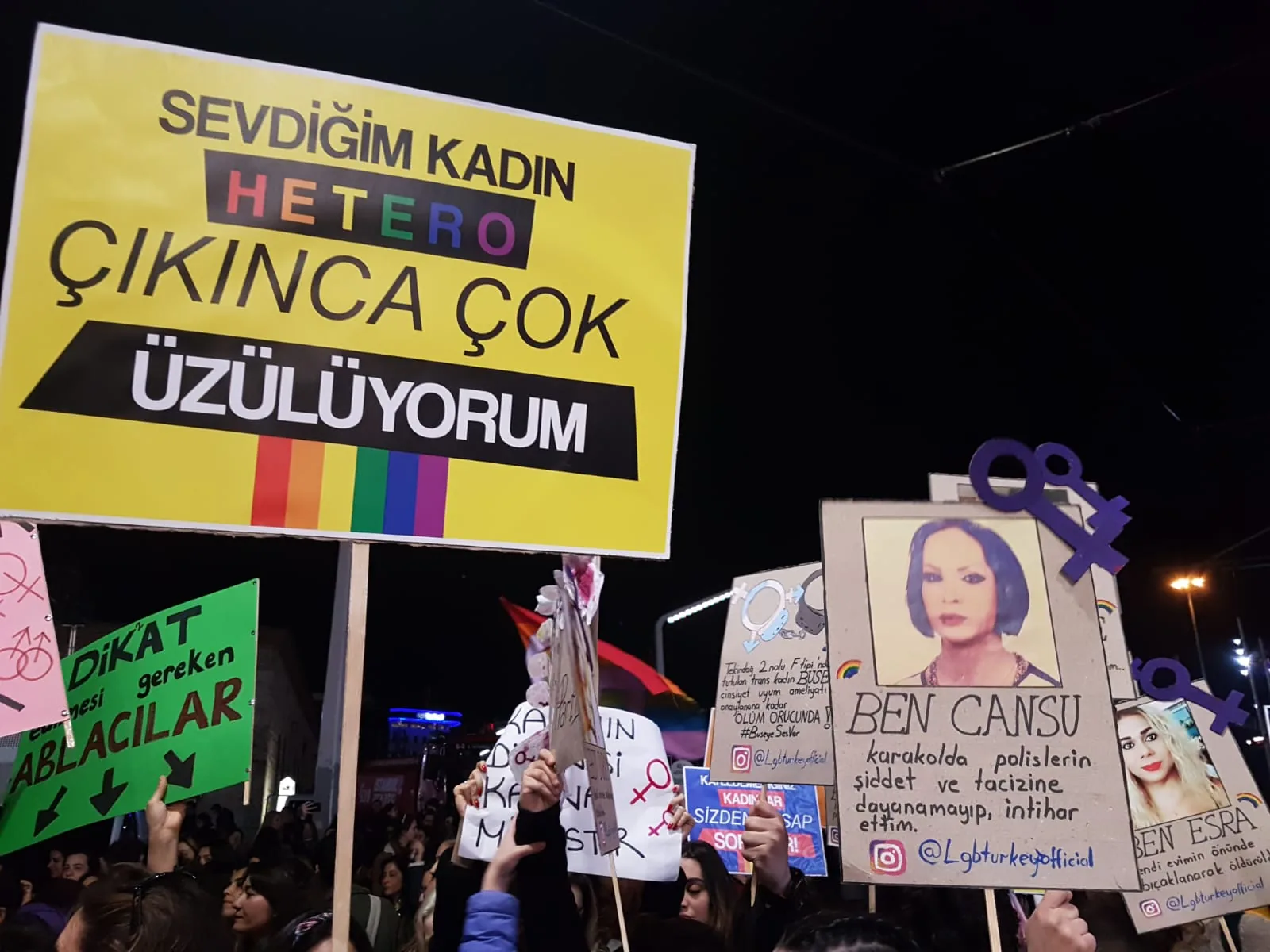
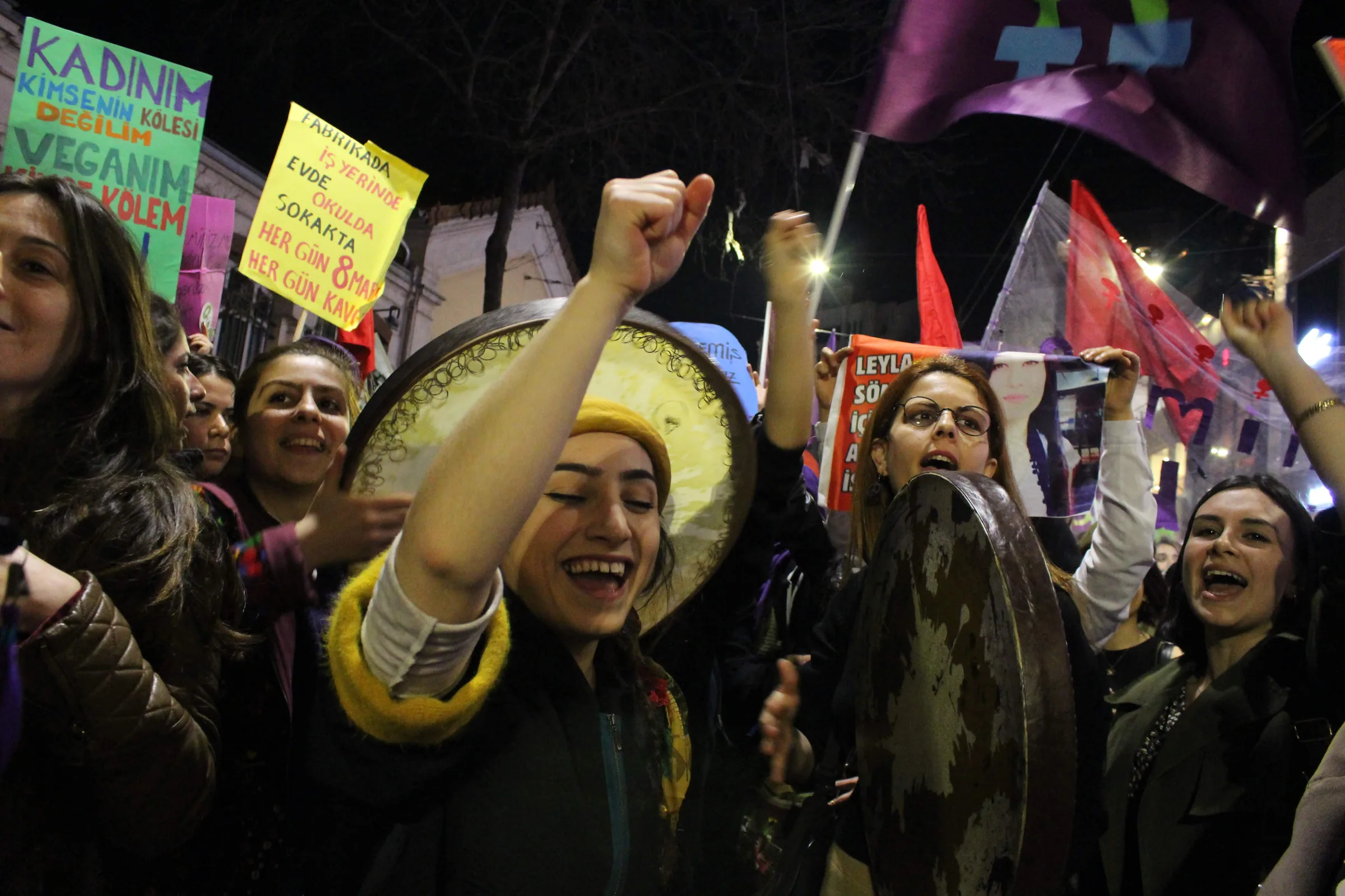
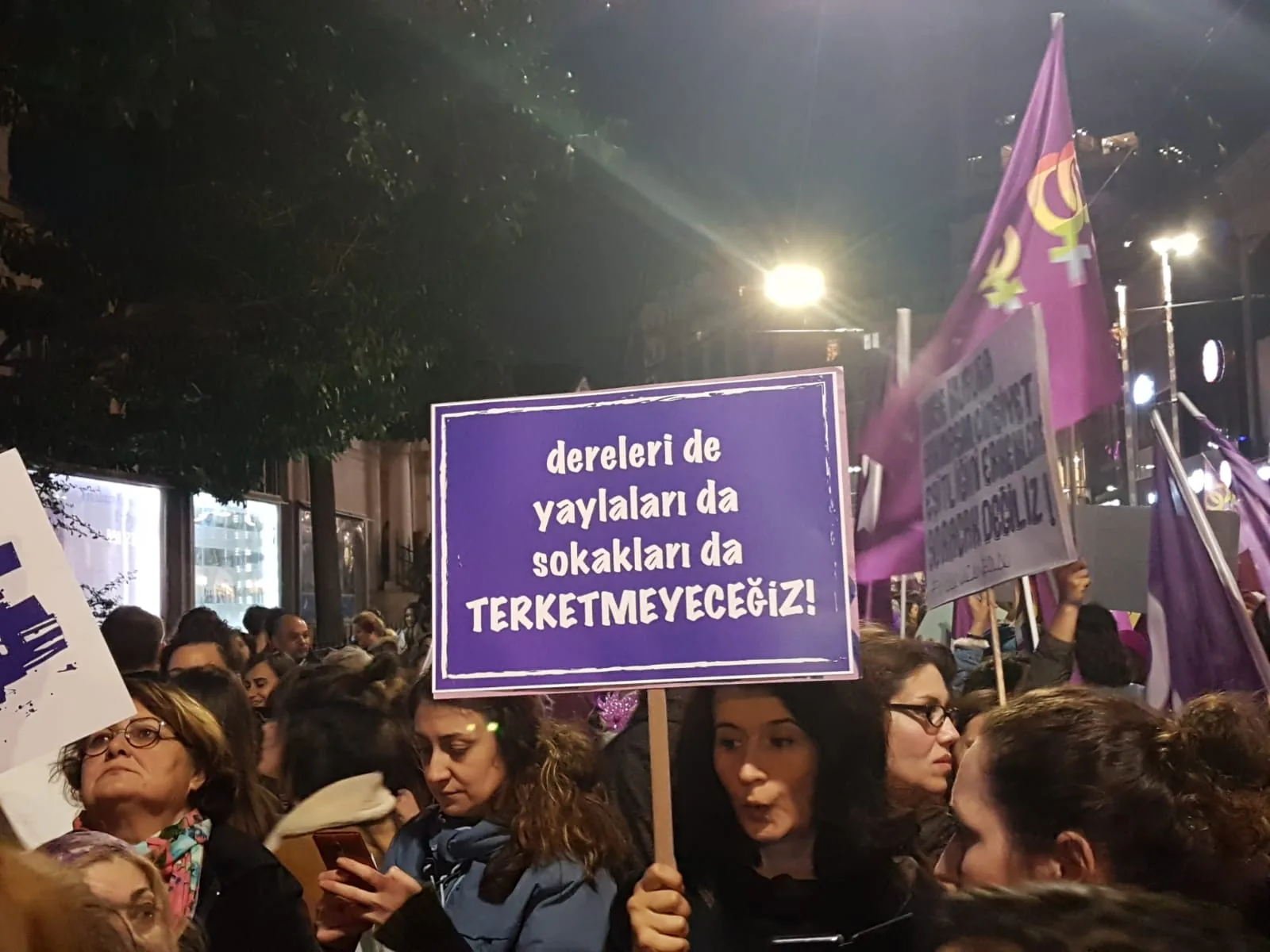
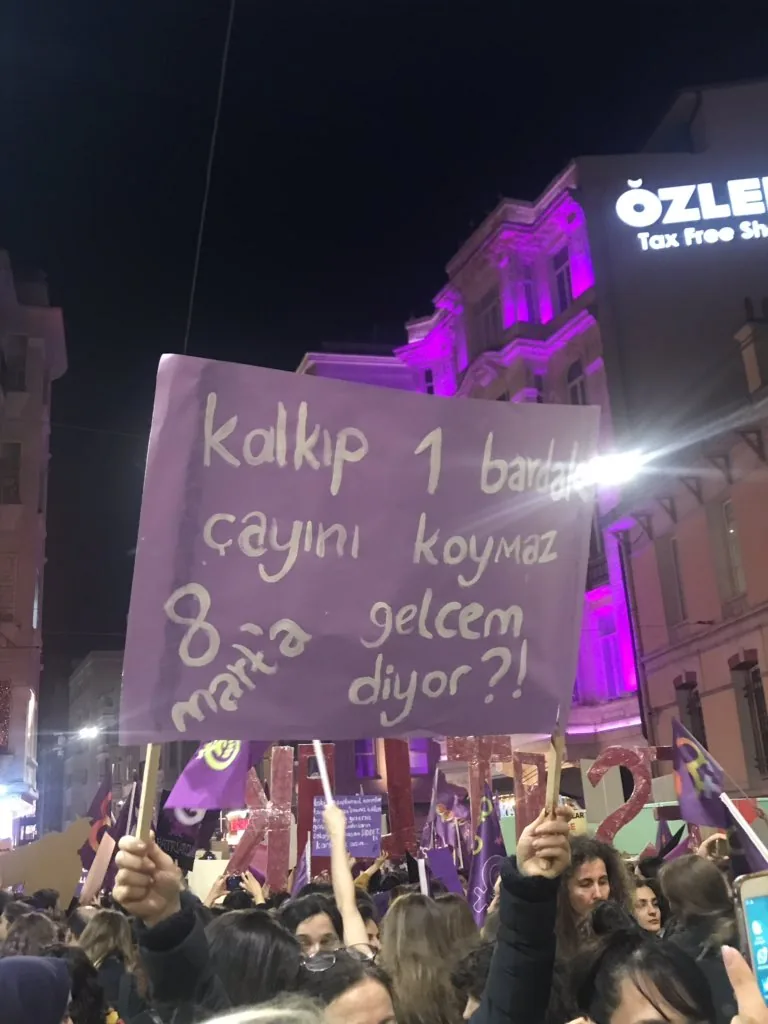
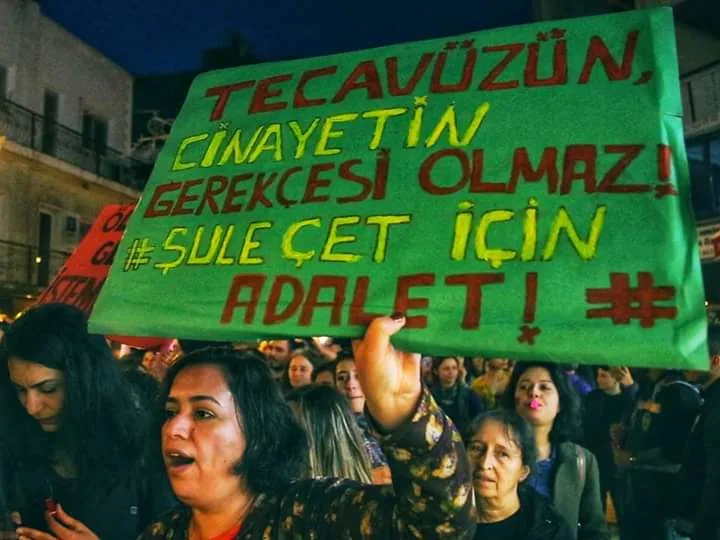
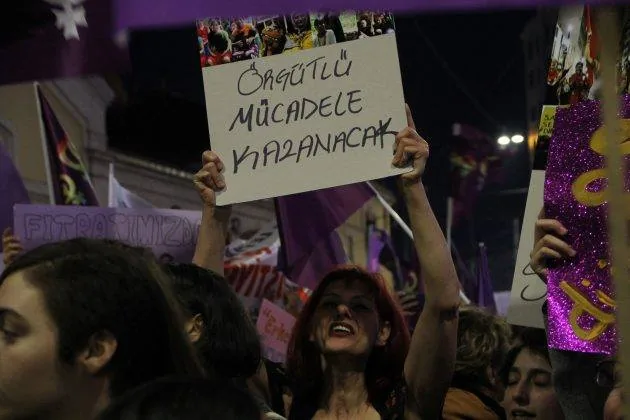
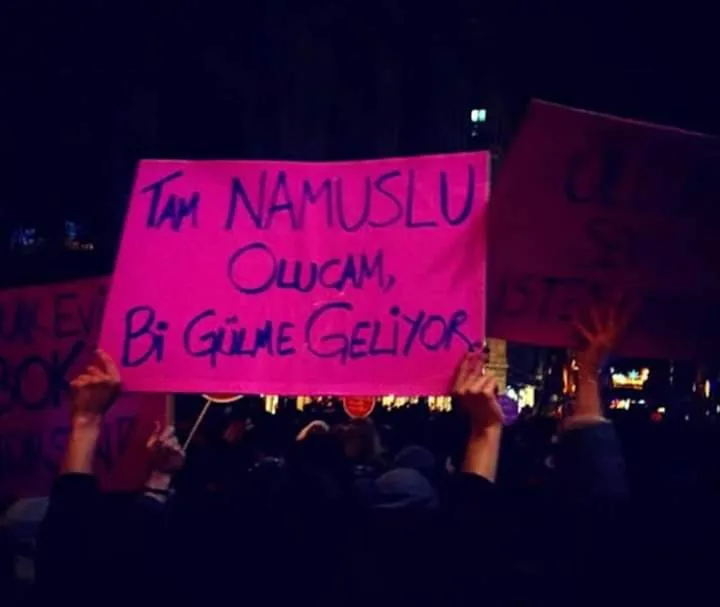
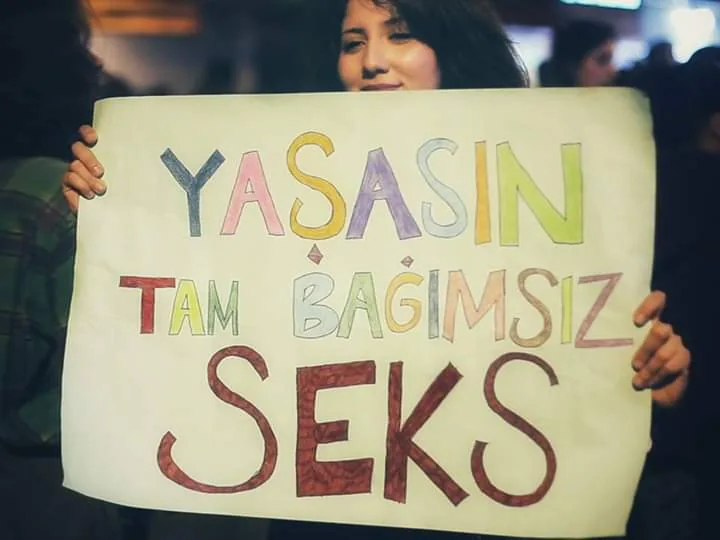
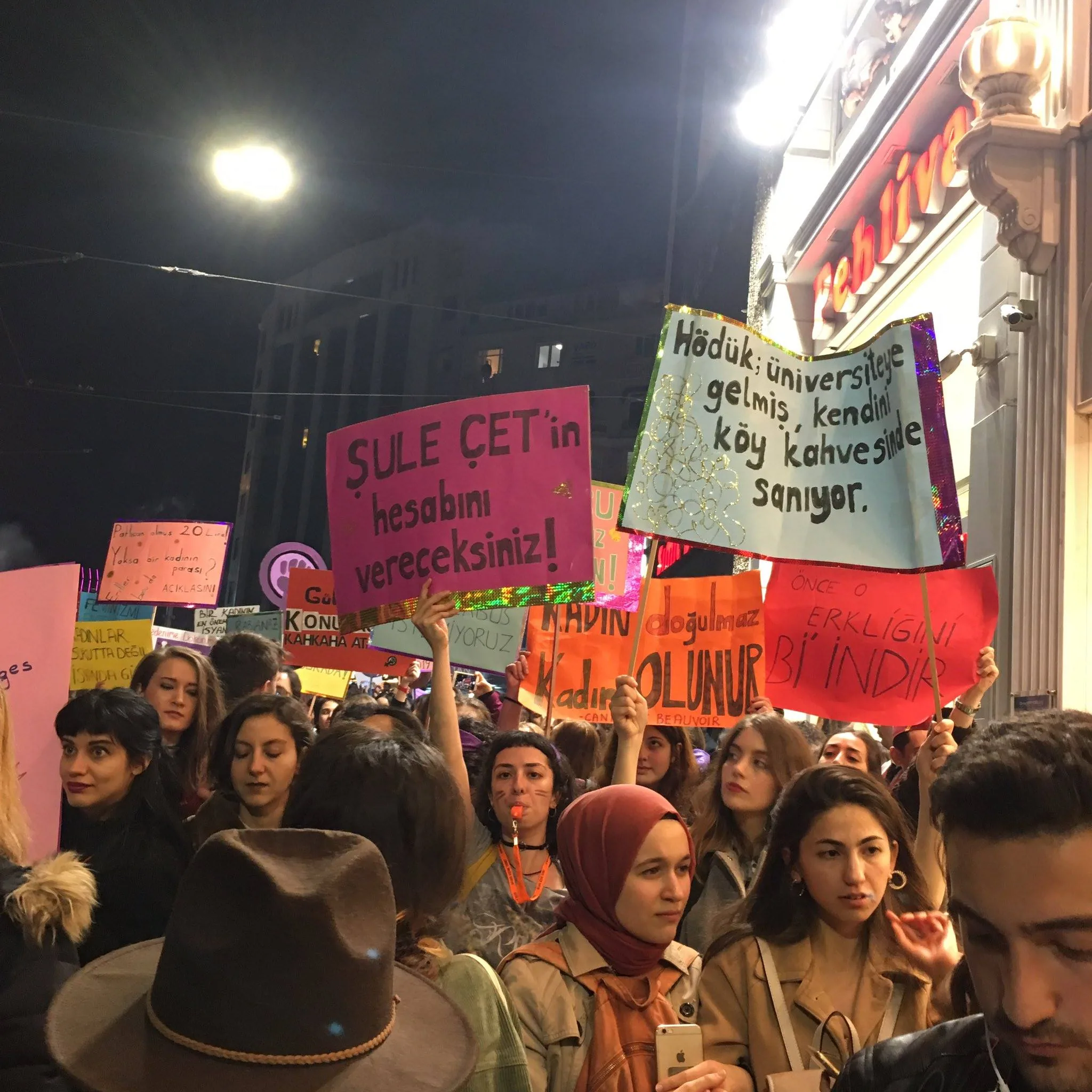
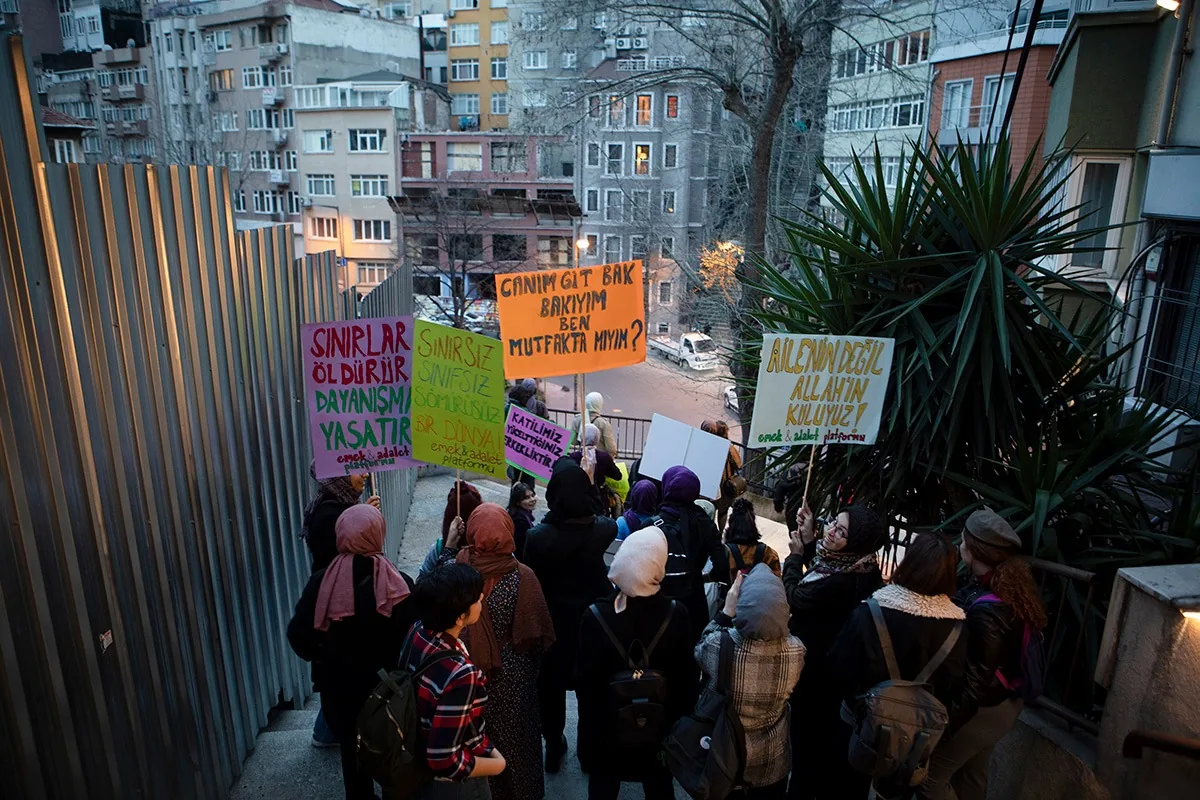
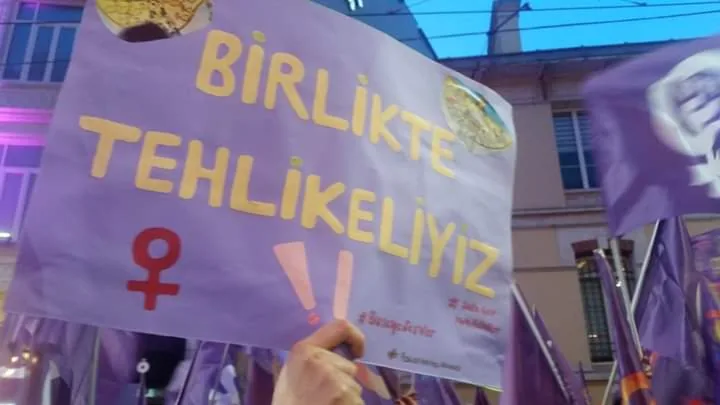
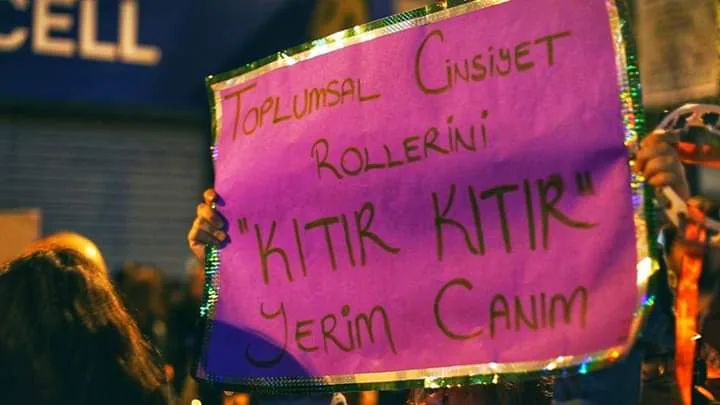
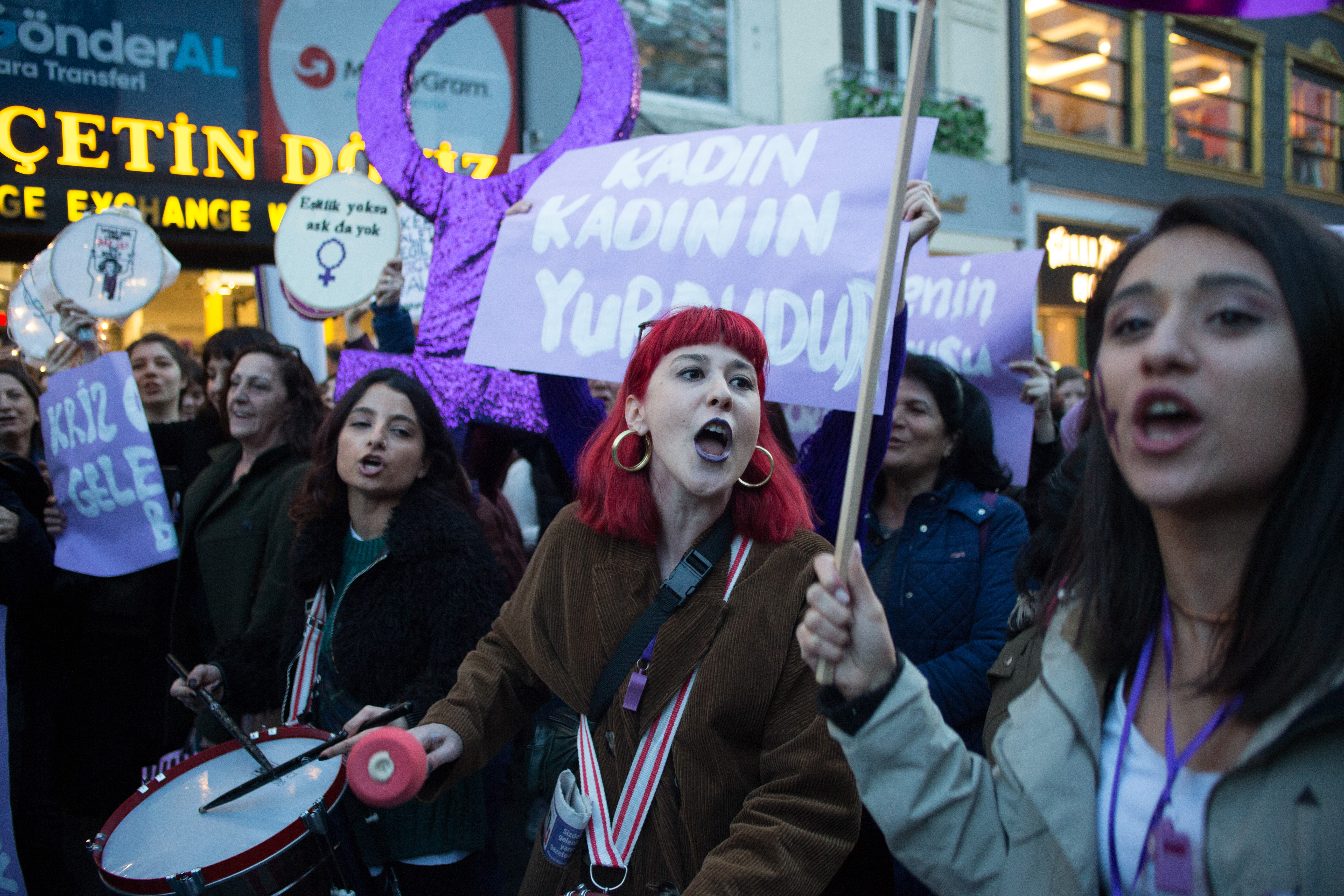
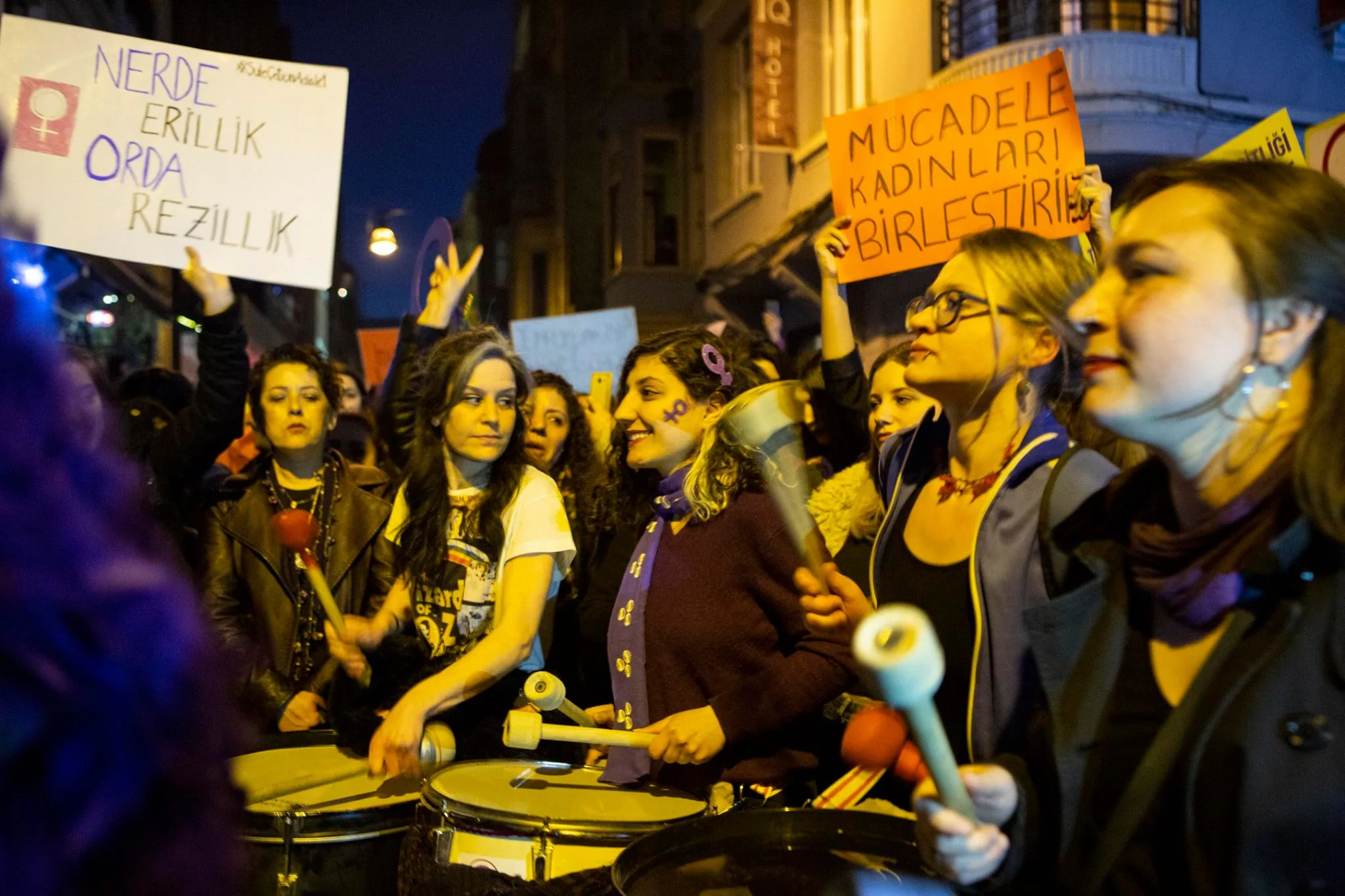
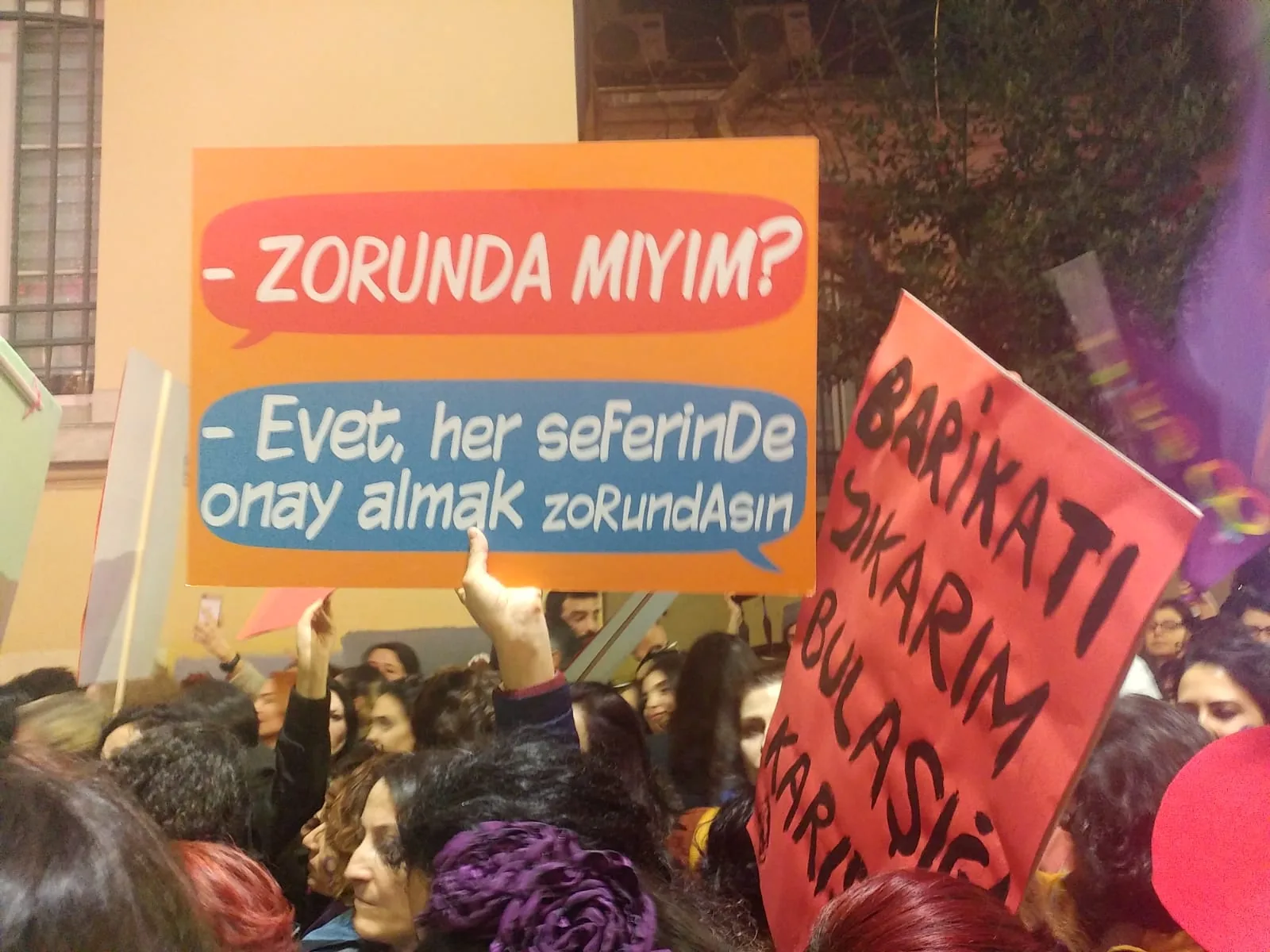
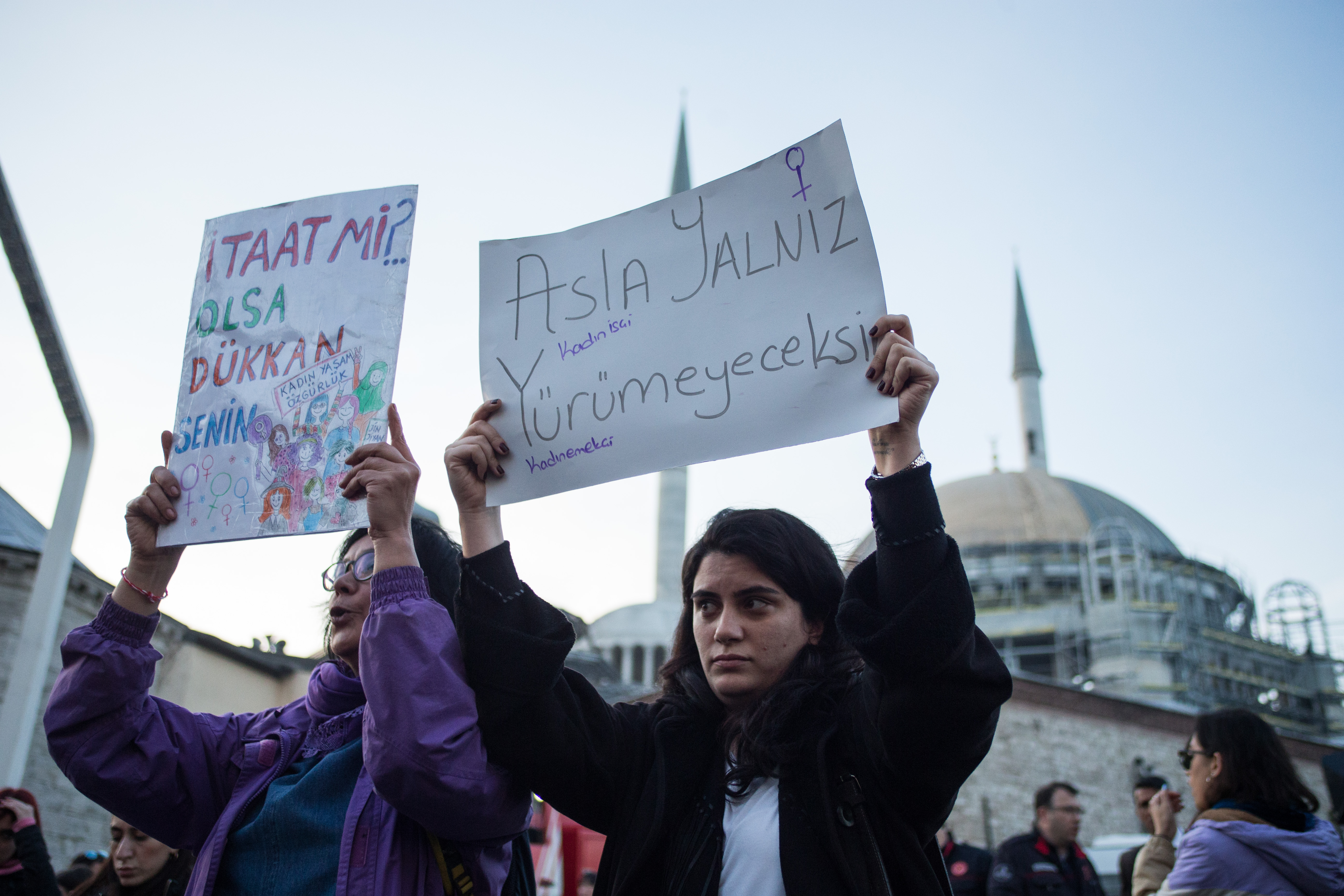
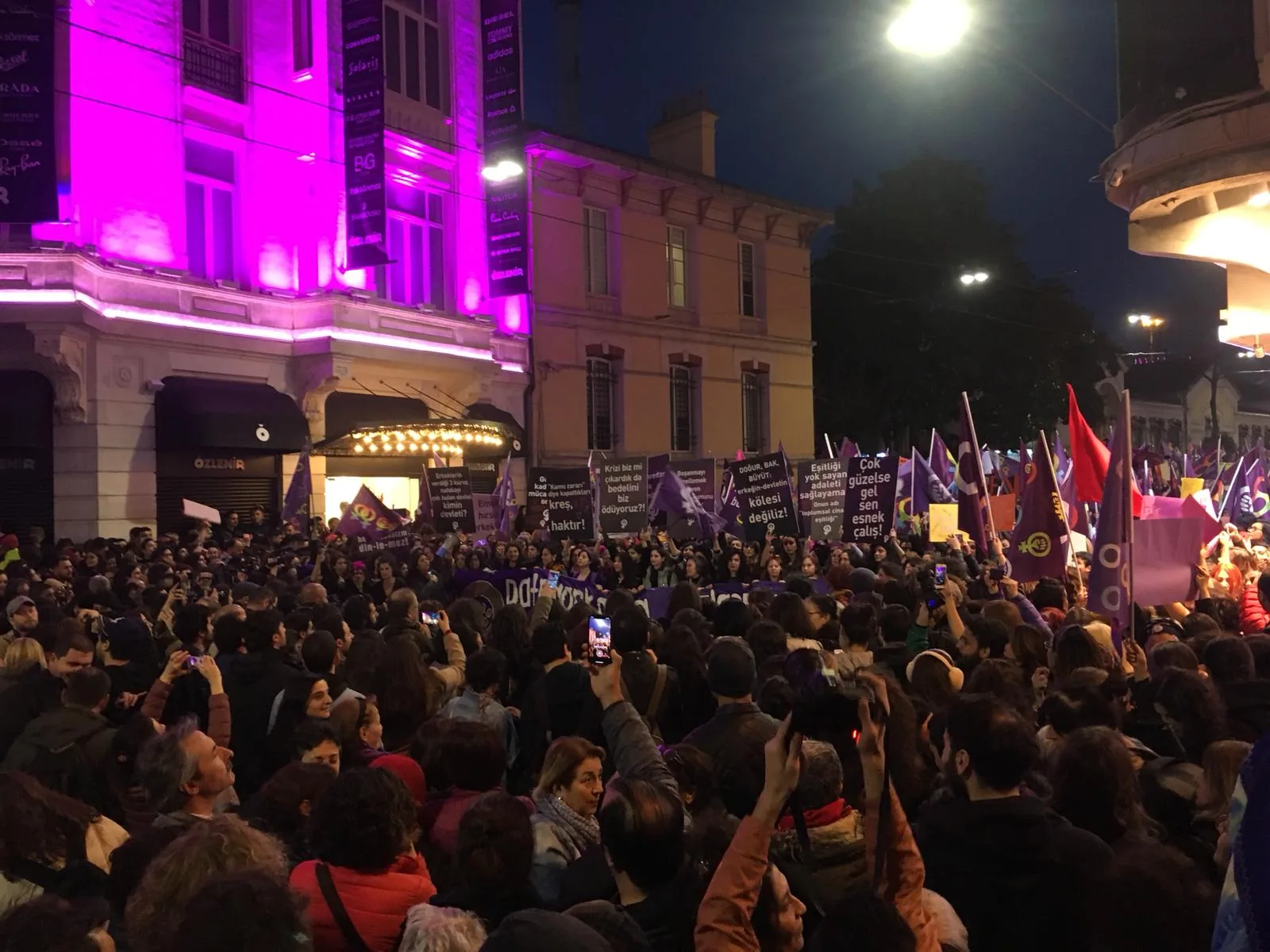
The foam-board placard texts addressed the issues of the moment. In response to the government's and its institutions' efforts to replace equality with an emphasis on justice and to remove the term gender from public use, one read: 'Those who deny equality cannot deliver justice! It is called gender equality.' Others addressed shared struggle with migrant women, the economic crisis, alimony, unpaid care work and flexible employment. Although discussions about closing nurseries on the grounds that they caused 'public losses' had begun in 2018, childcare was again highlighted on this year's placards. Finally, the message 'Domestic labour keeps the world turning', also referring to the international strike, was included.
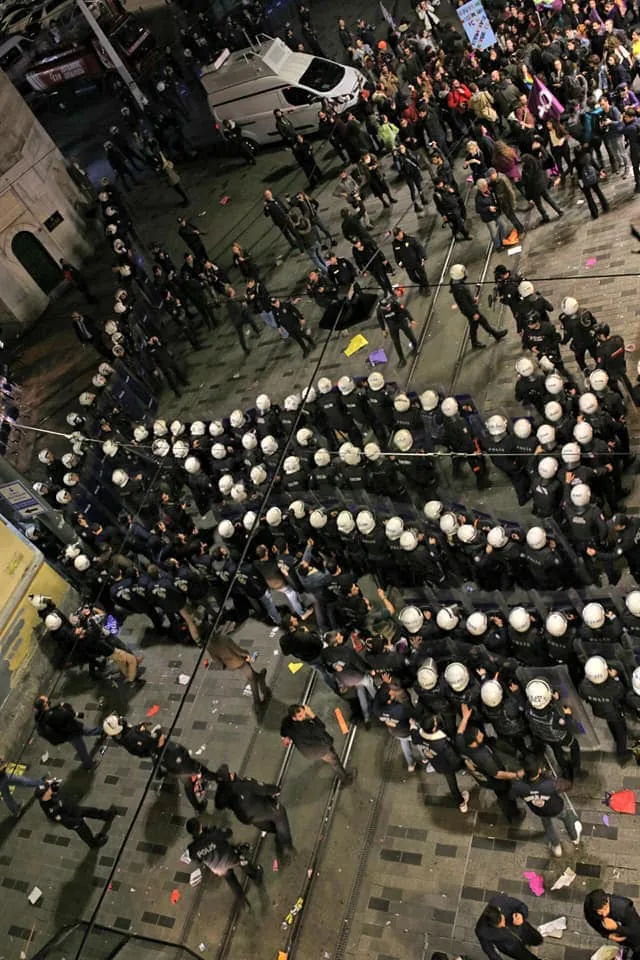
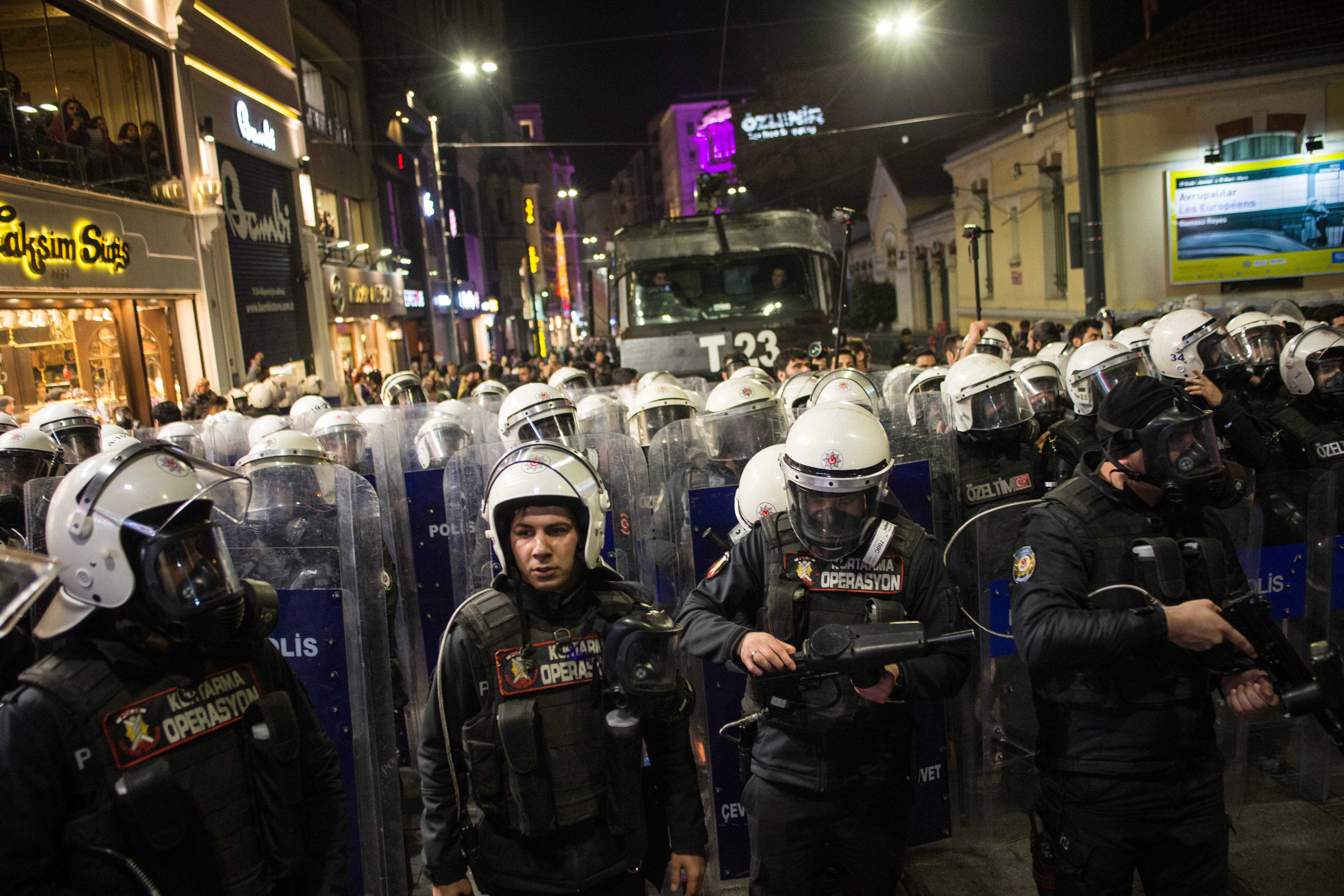
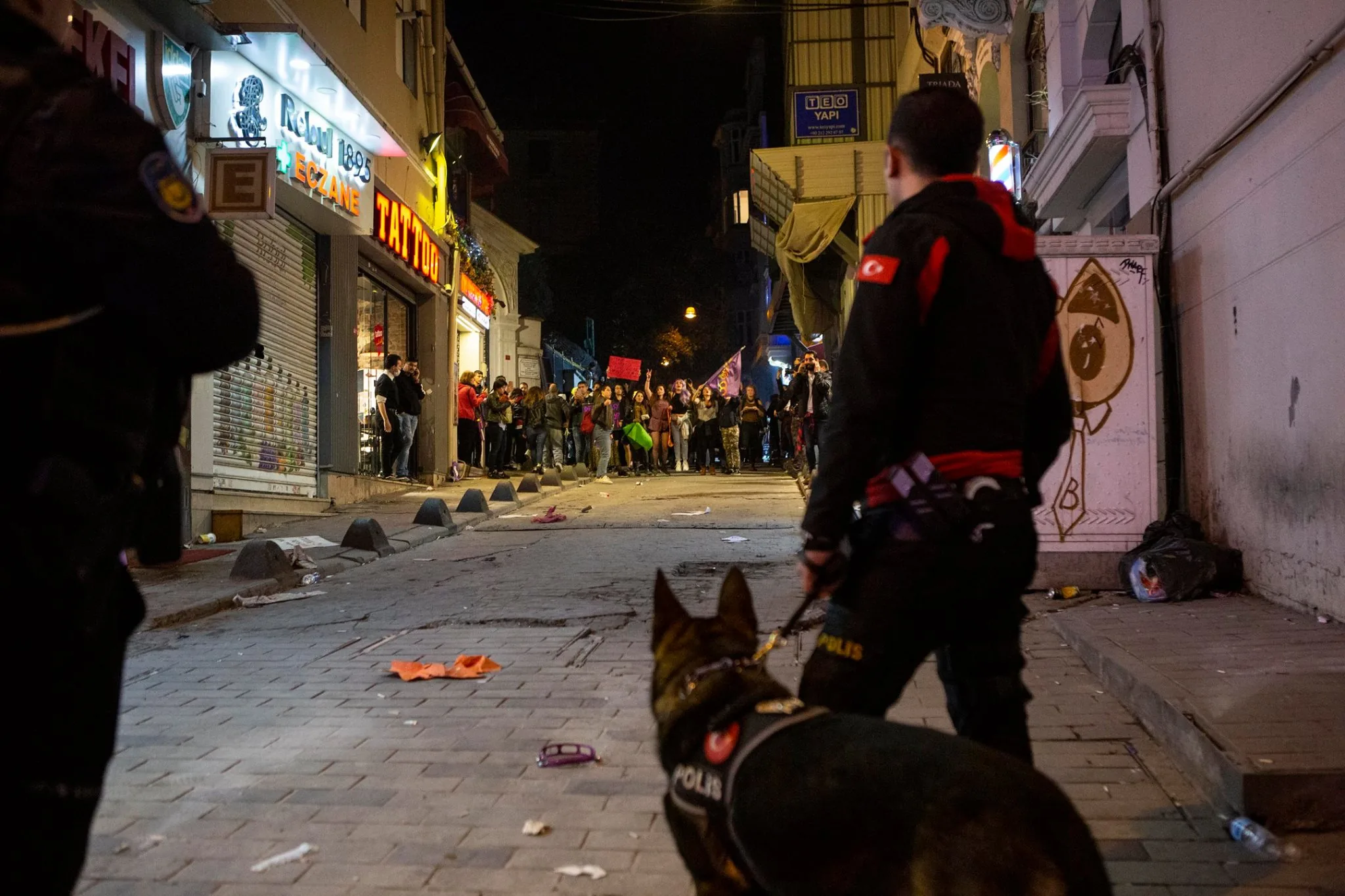
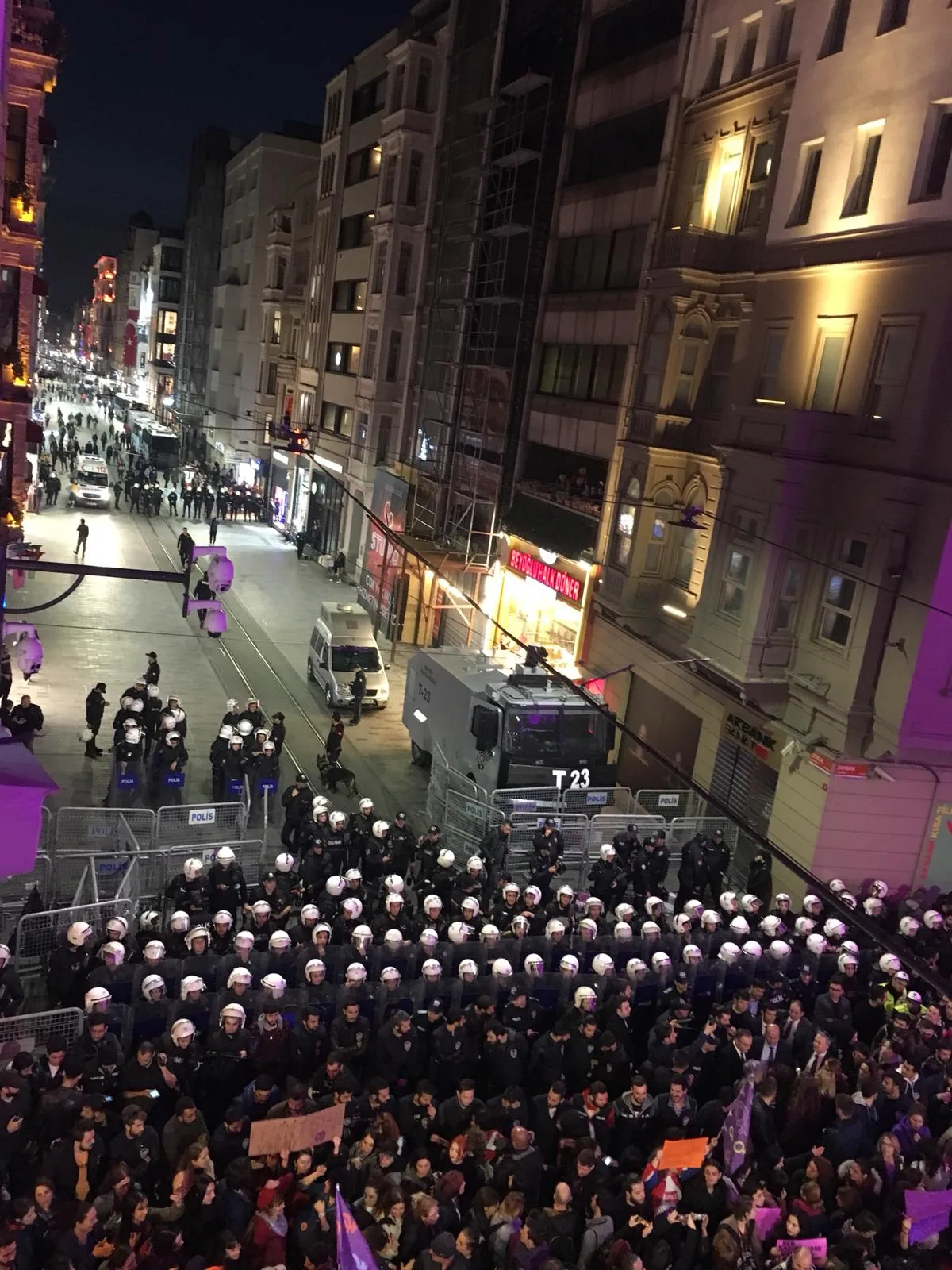
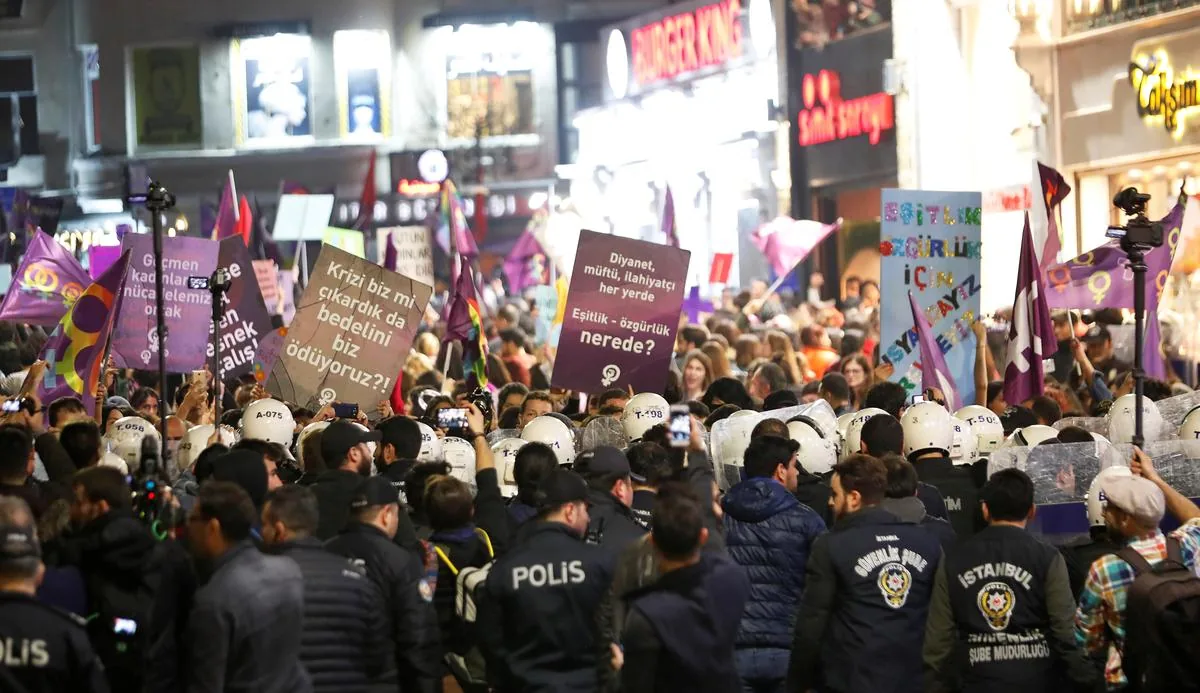
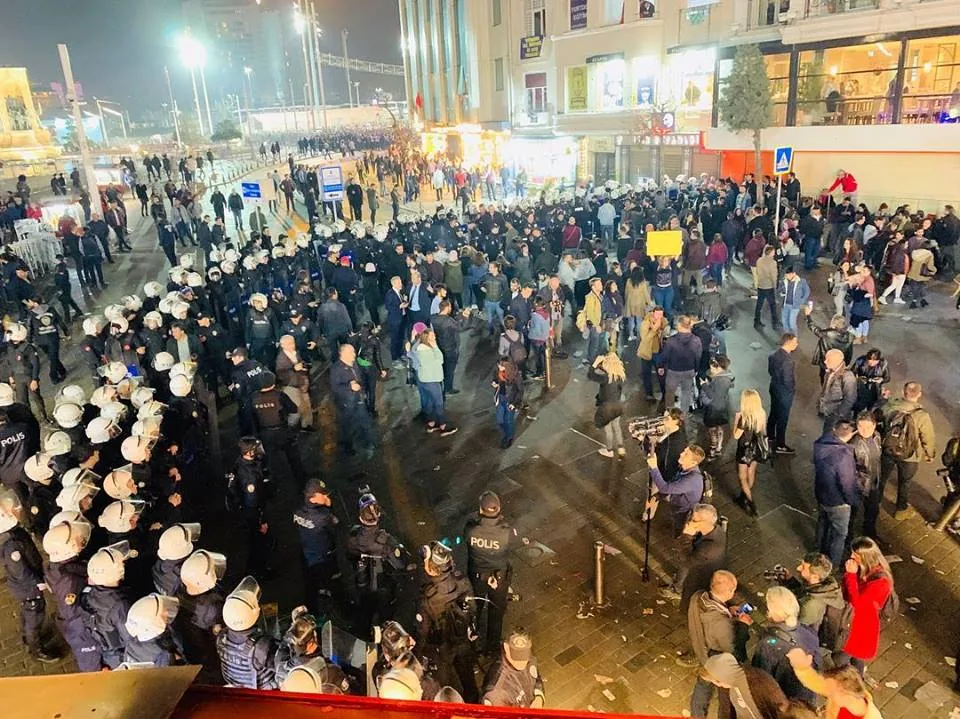
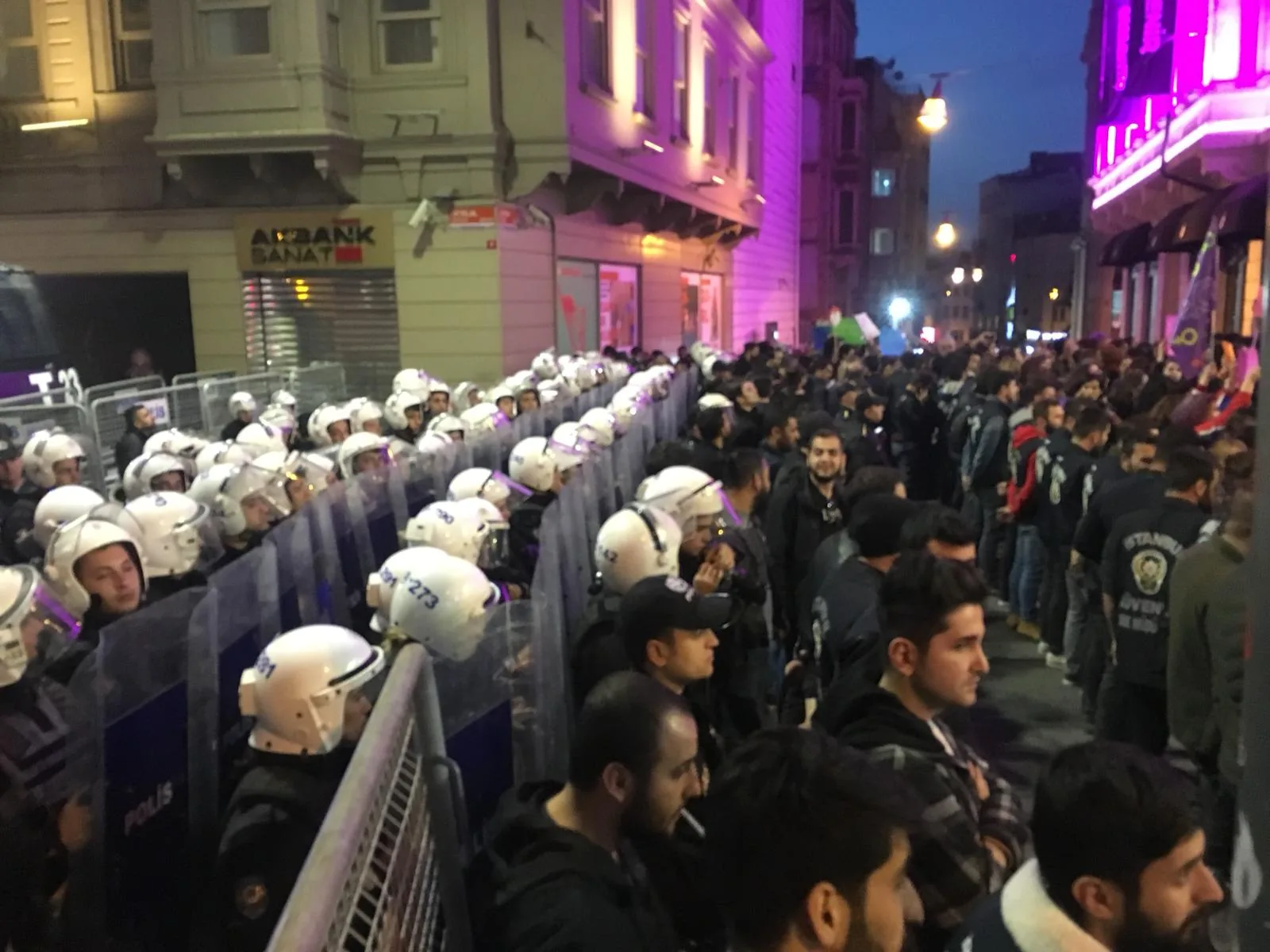
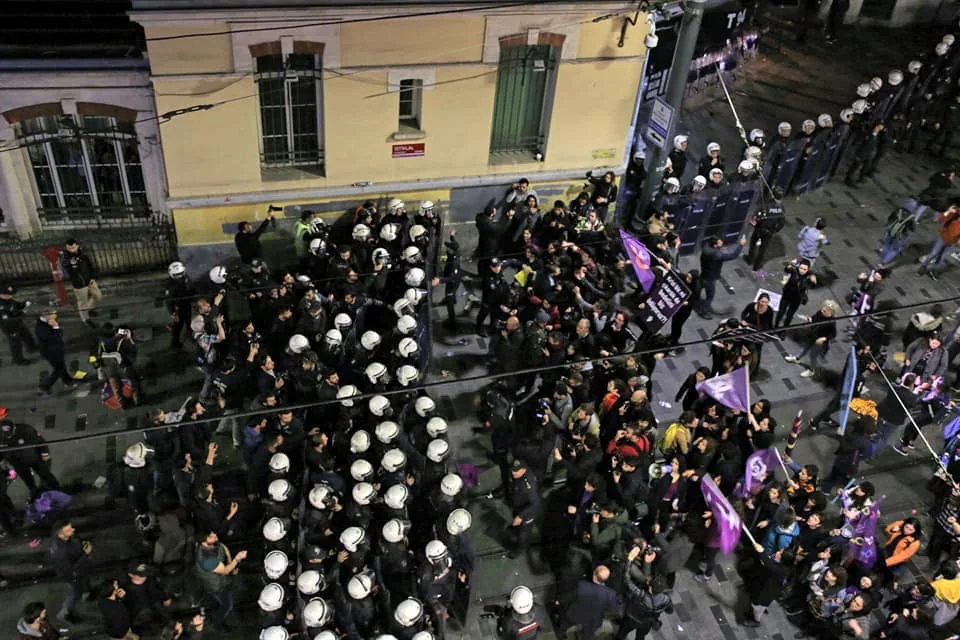
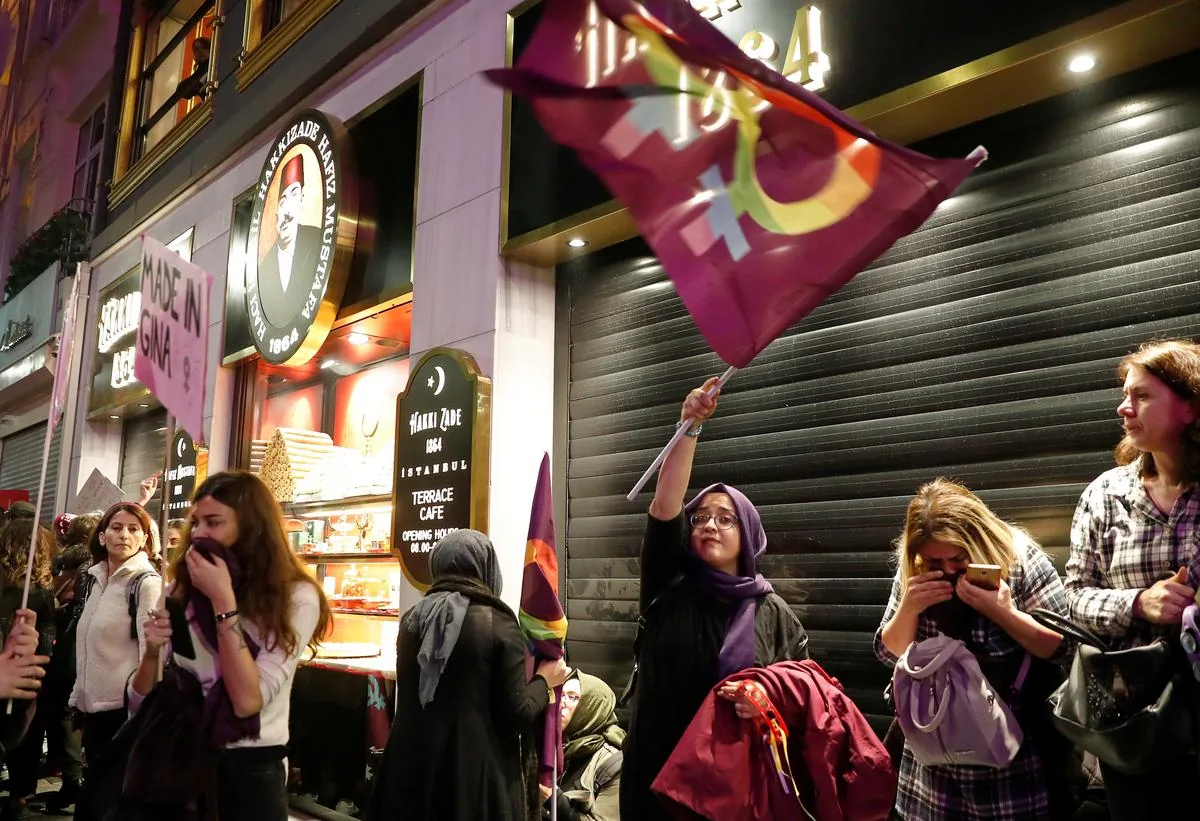
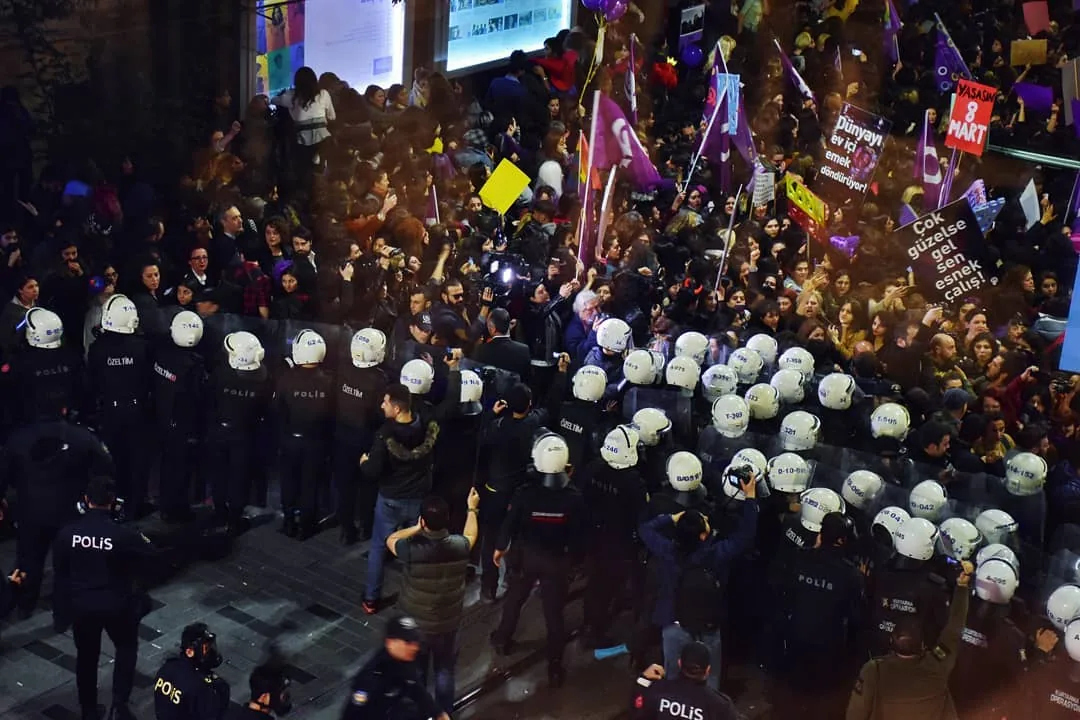
On the morning of March 8, the police announced that no events would be permitted on İstiklal Avenue and that those wishing to hold one would be directed to a side street below it. By order of the Governor's Office, roads in and around Taksim were closed to vehicles from 2 pm. Around the same time, side streets leading onto İstiklal were blocked by police and barricades as far as Tünel. As the march approached, Taksim metro station was also closed. Volunteers and members of the organising committee met to discuss how to respond to the police obstruction, seeking an approach that would allow everyone to feel safe while preserving the march's energy and broad participation.
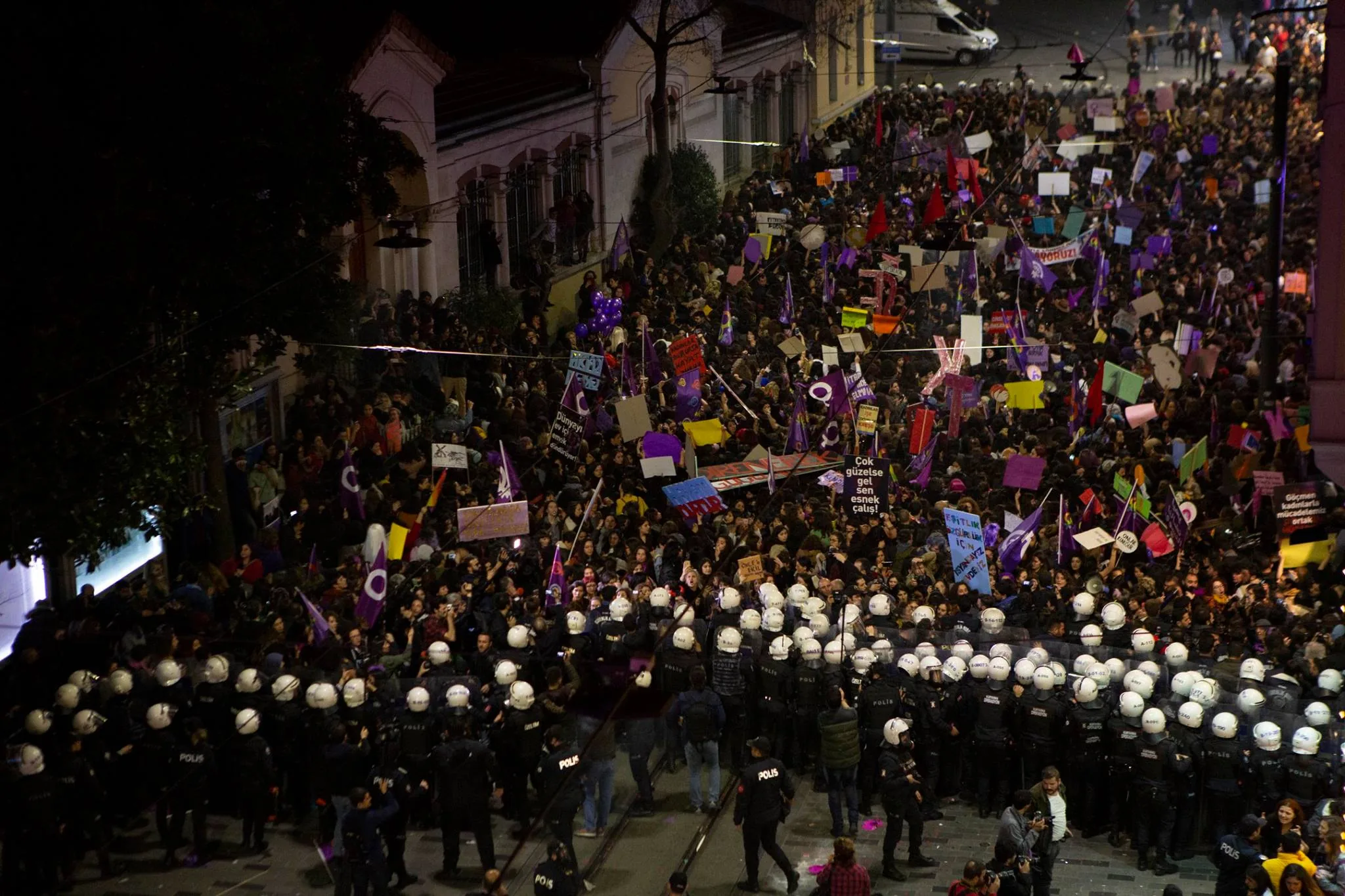
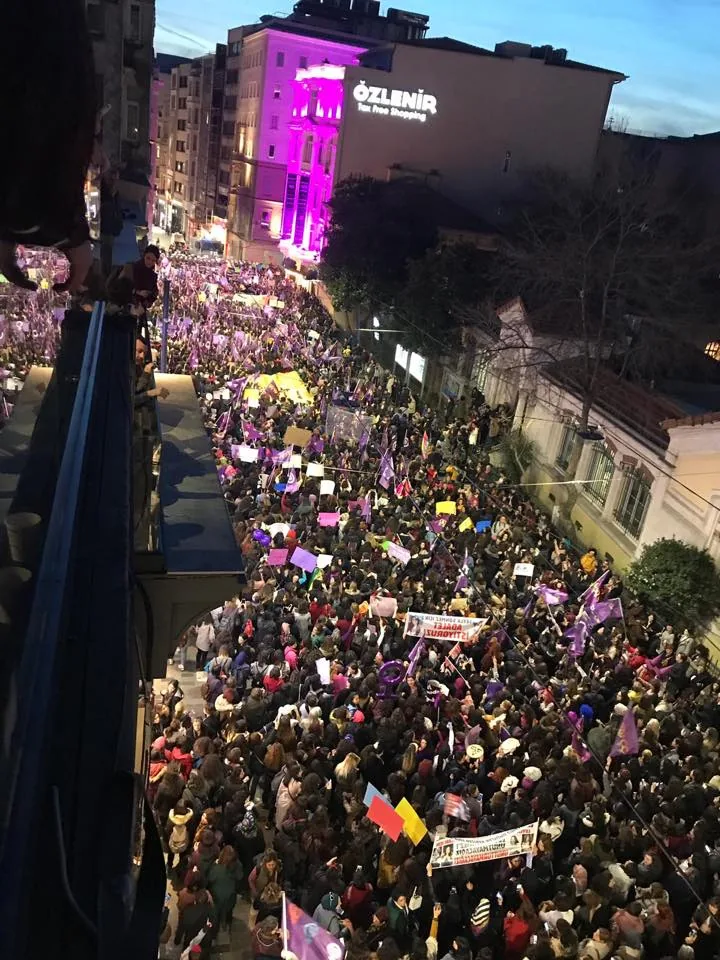
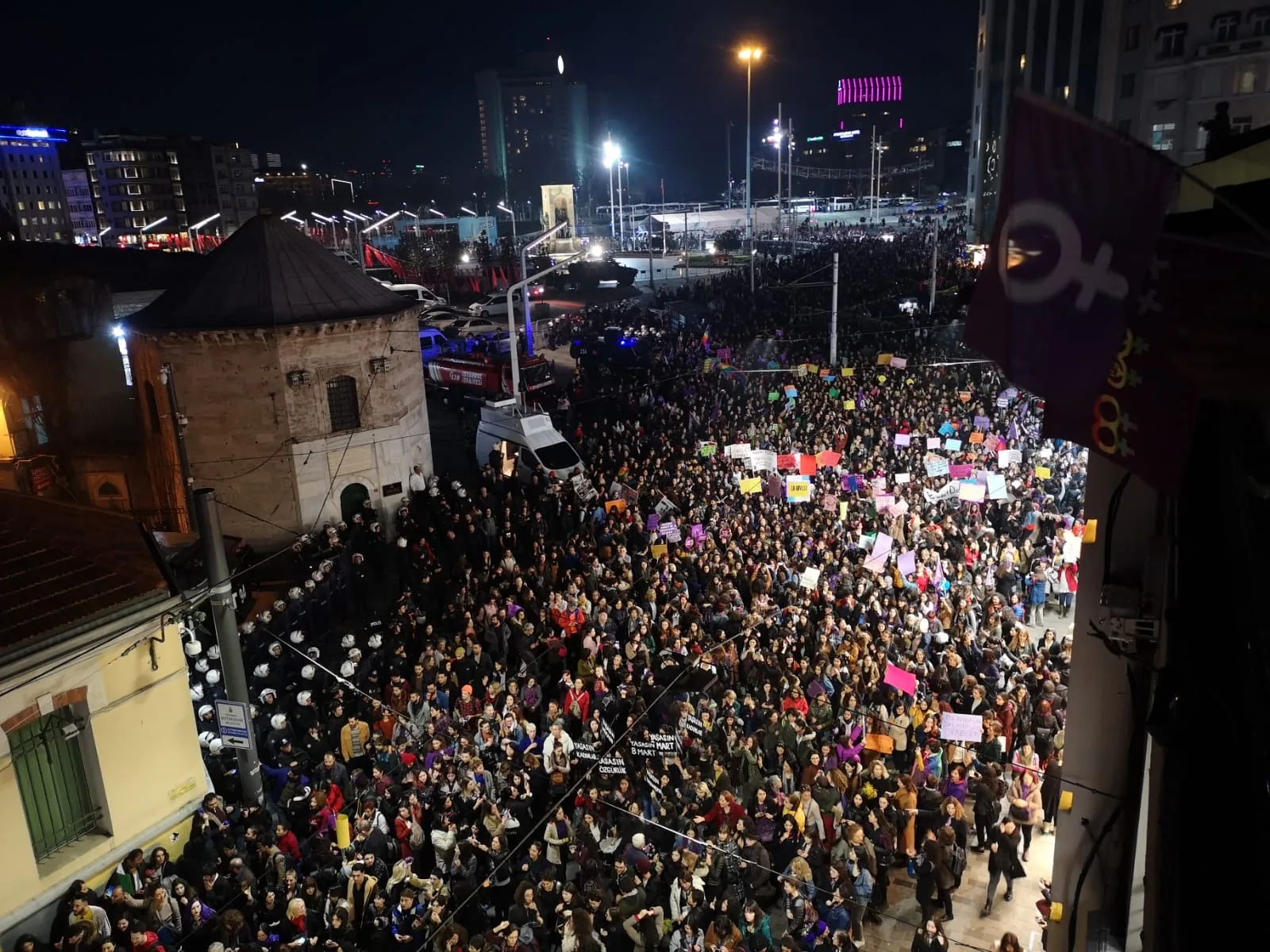
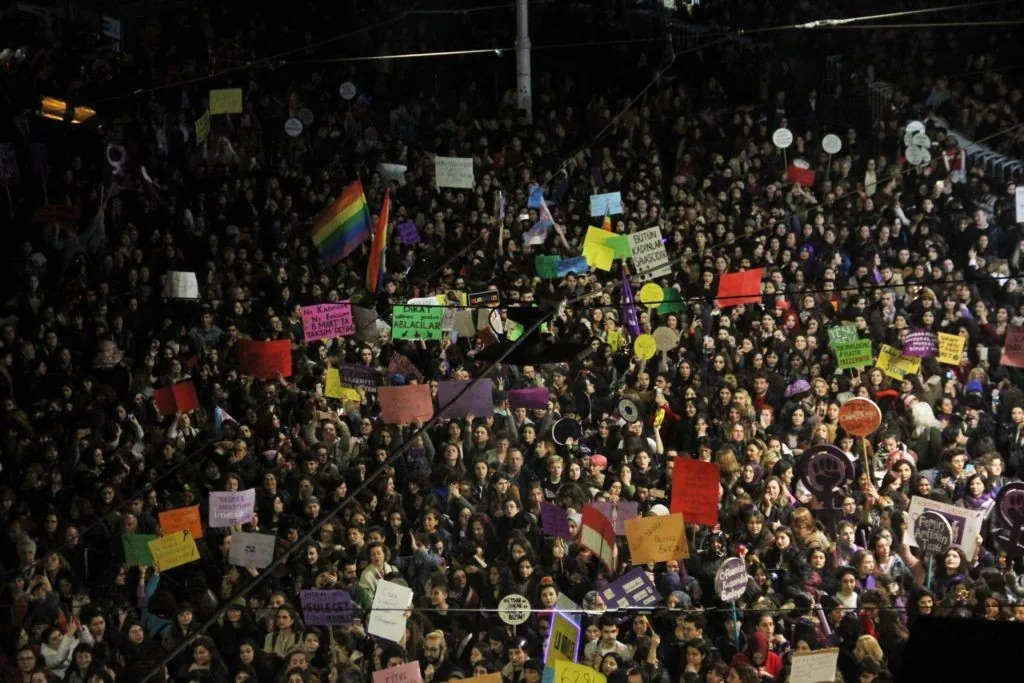
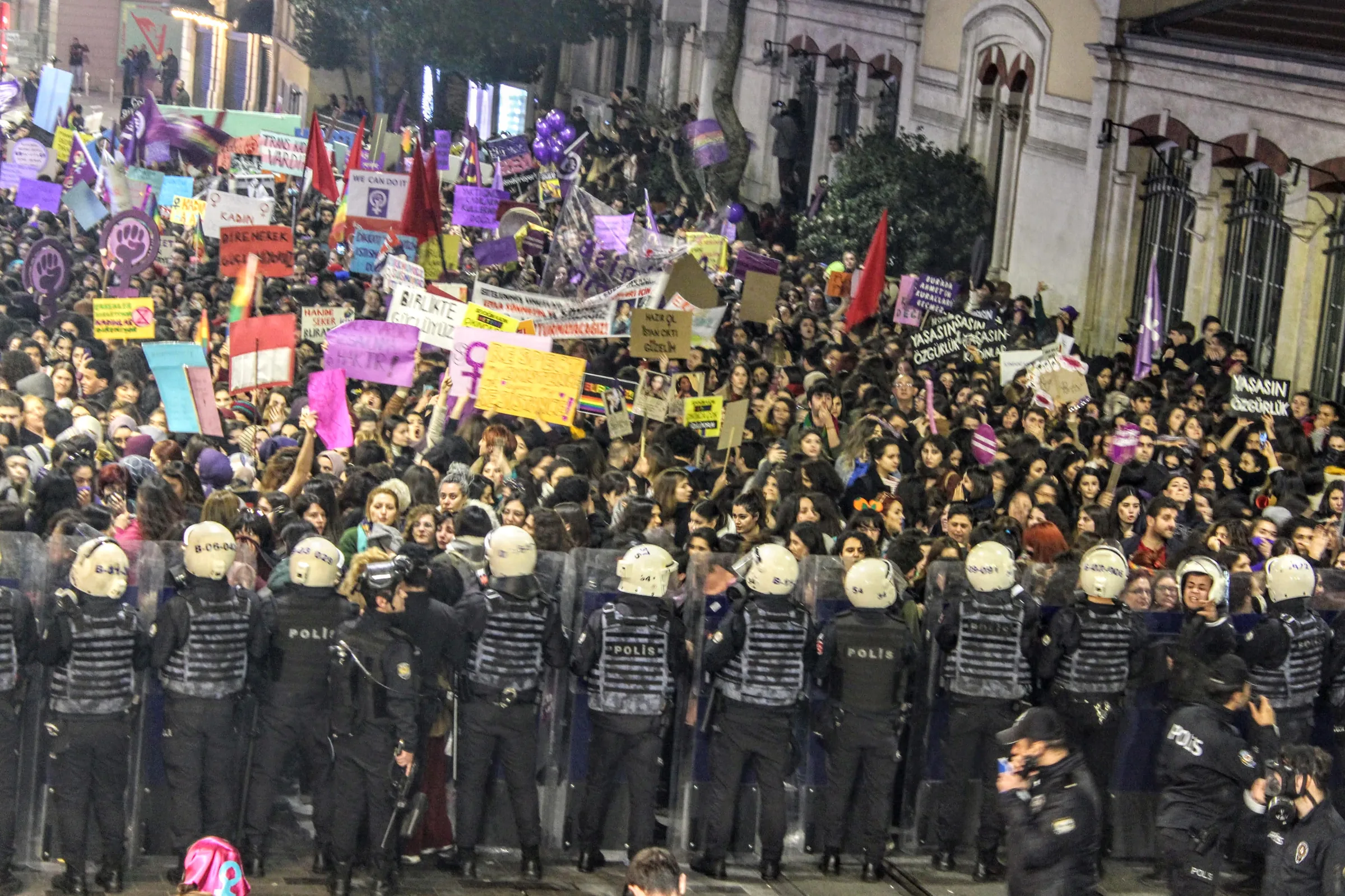
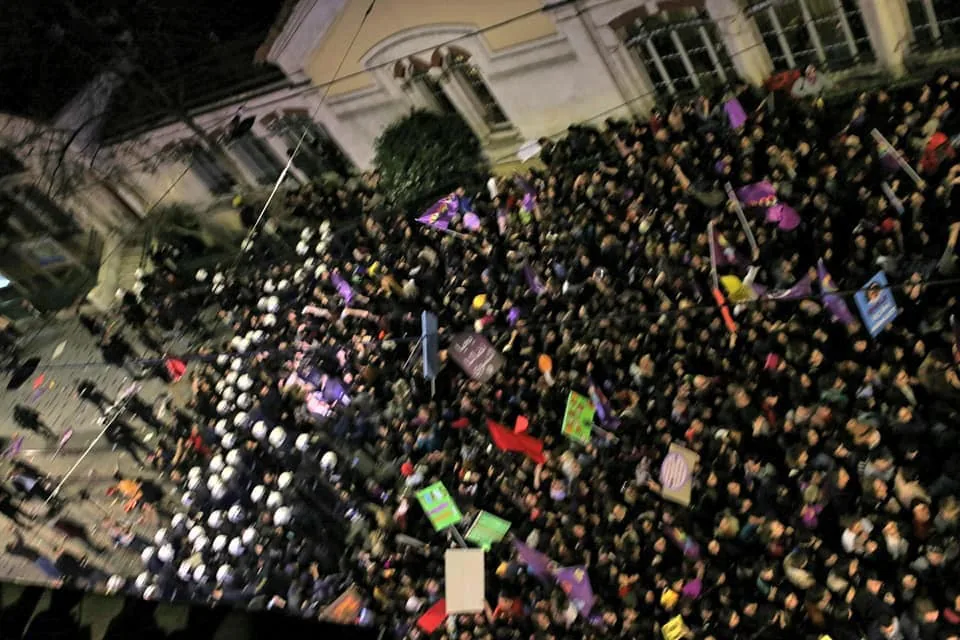
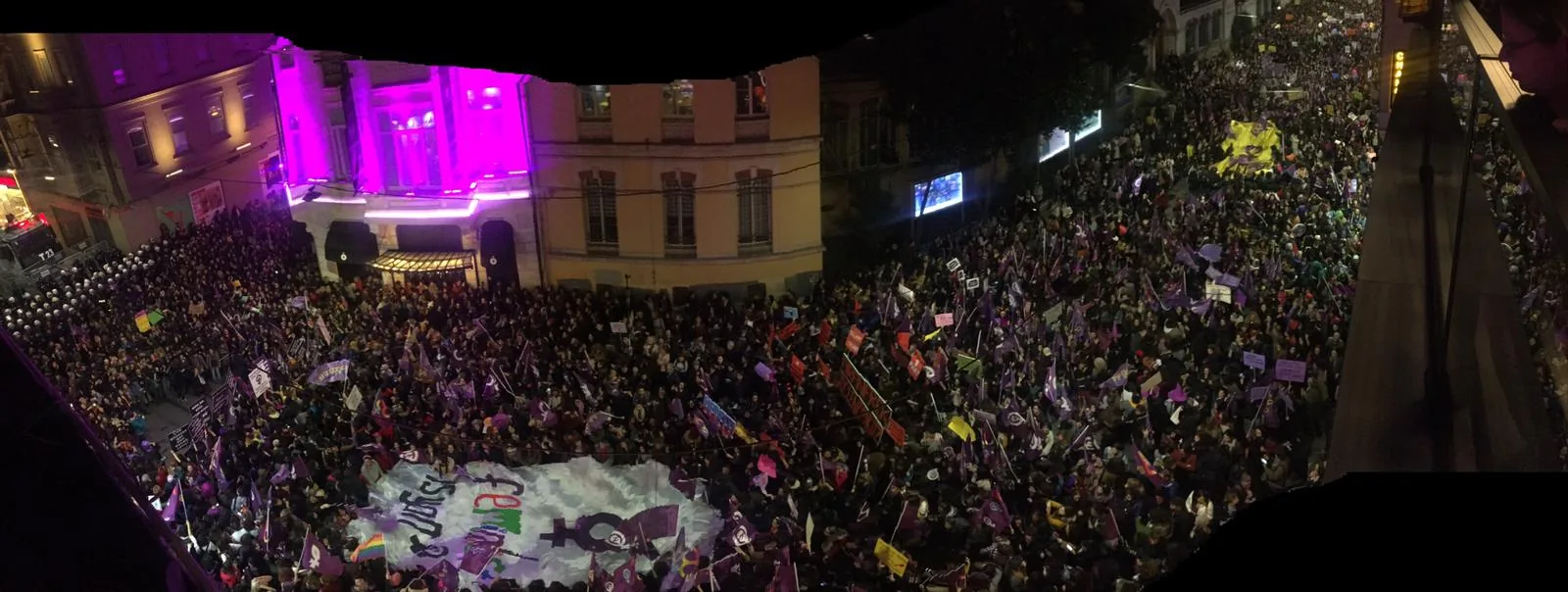
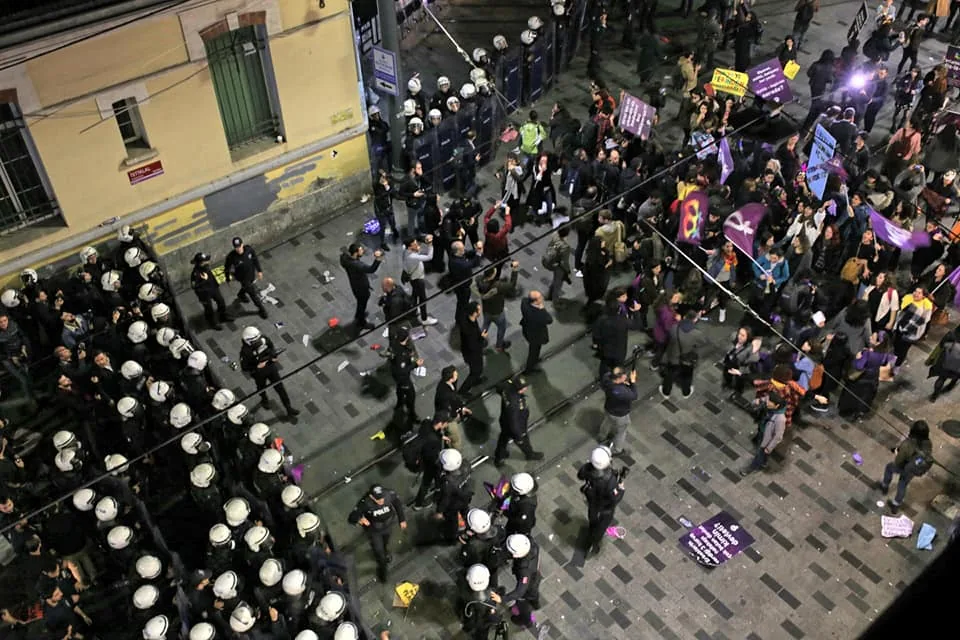
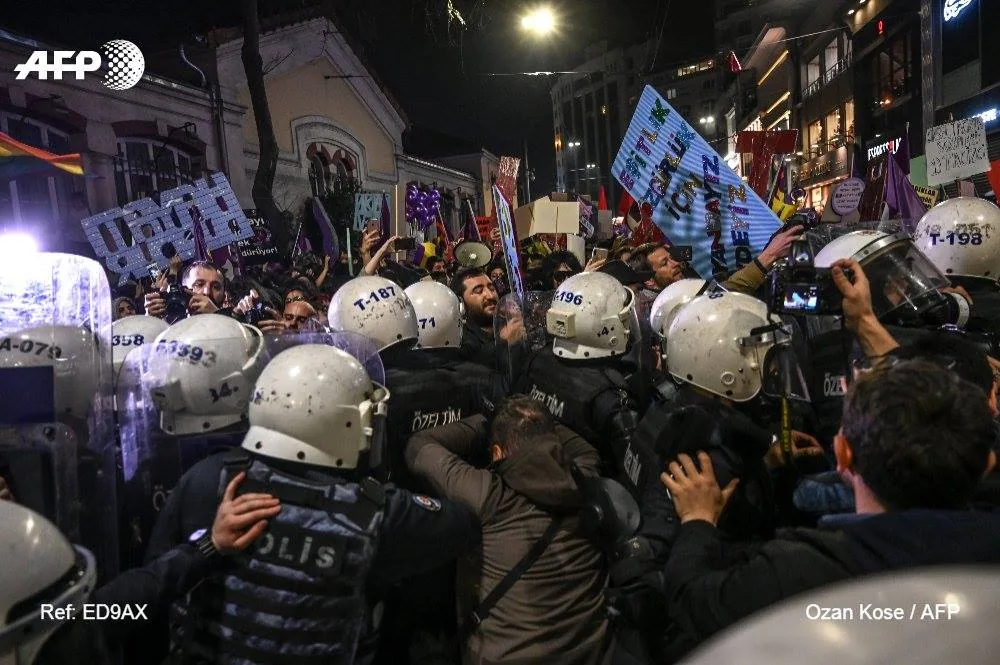
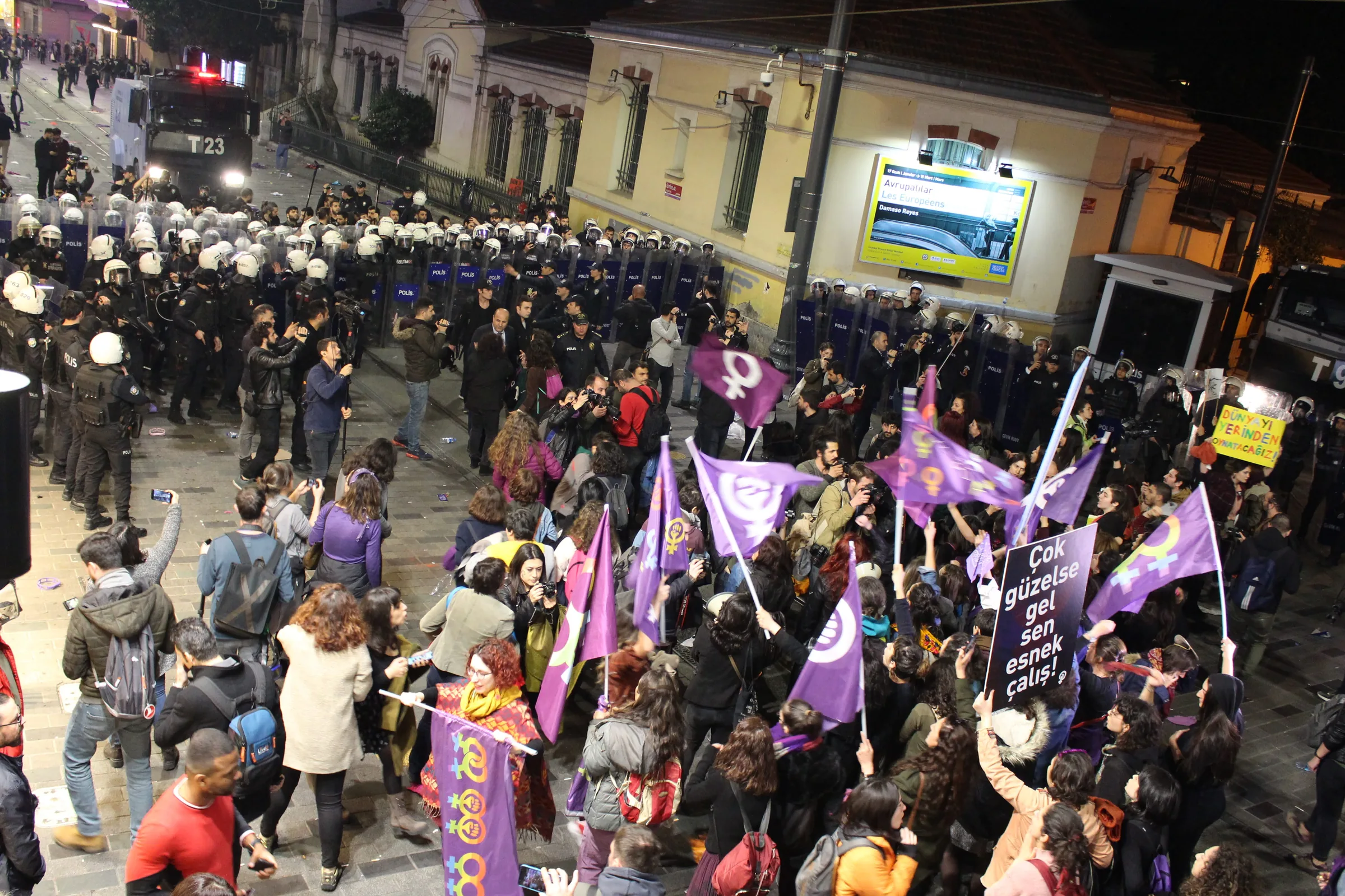
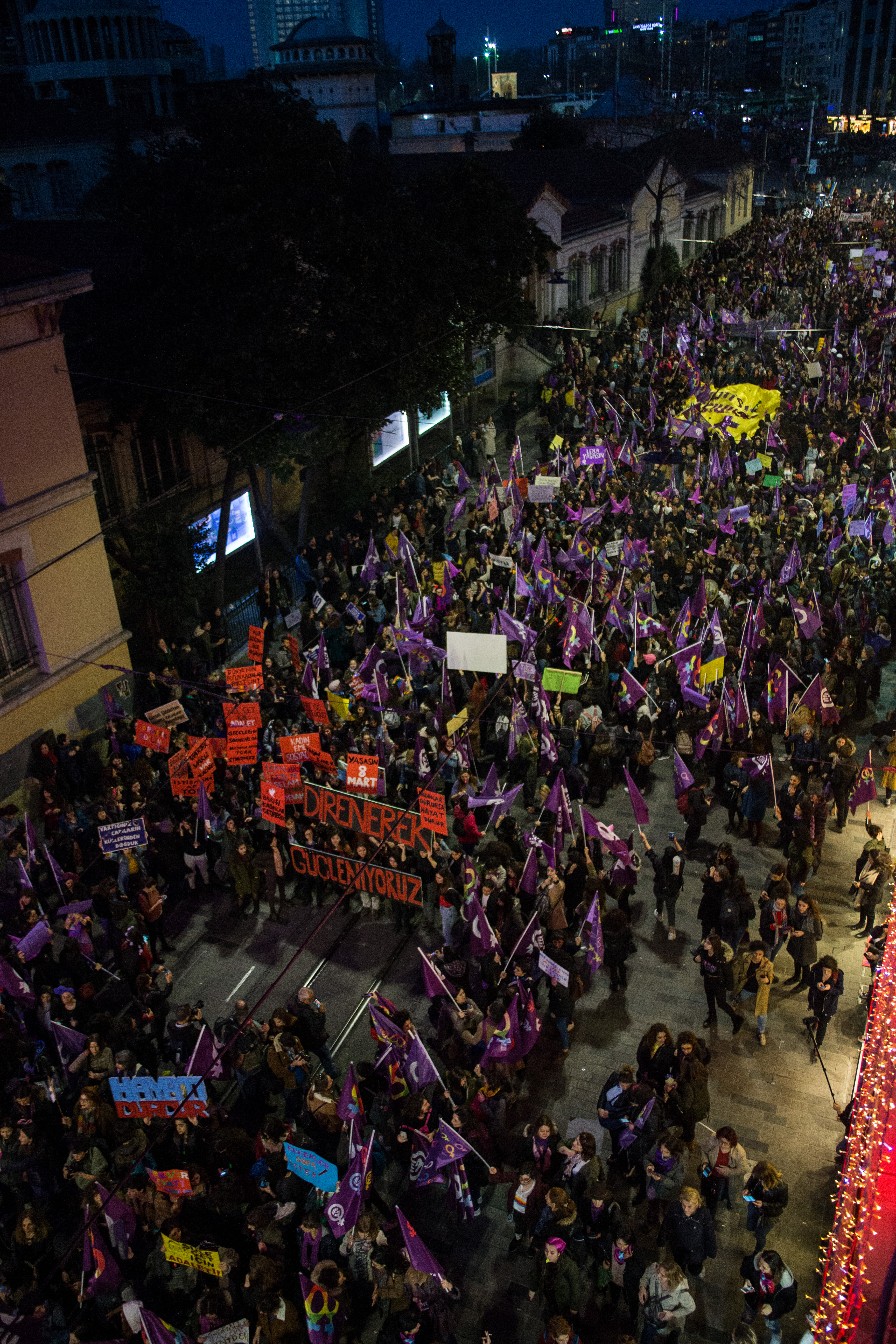
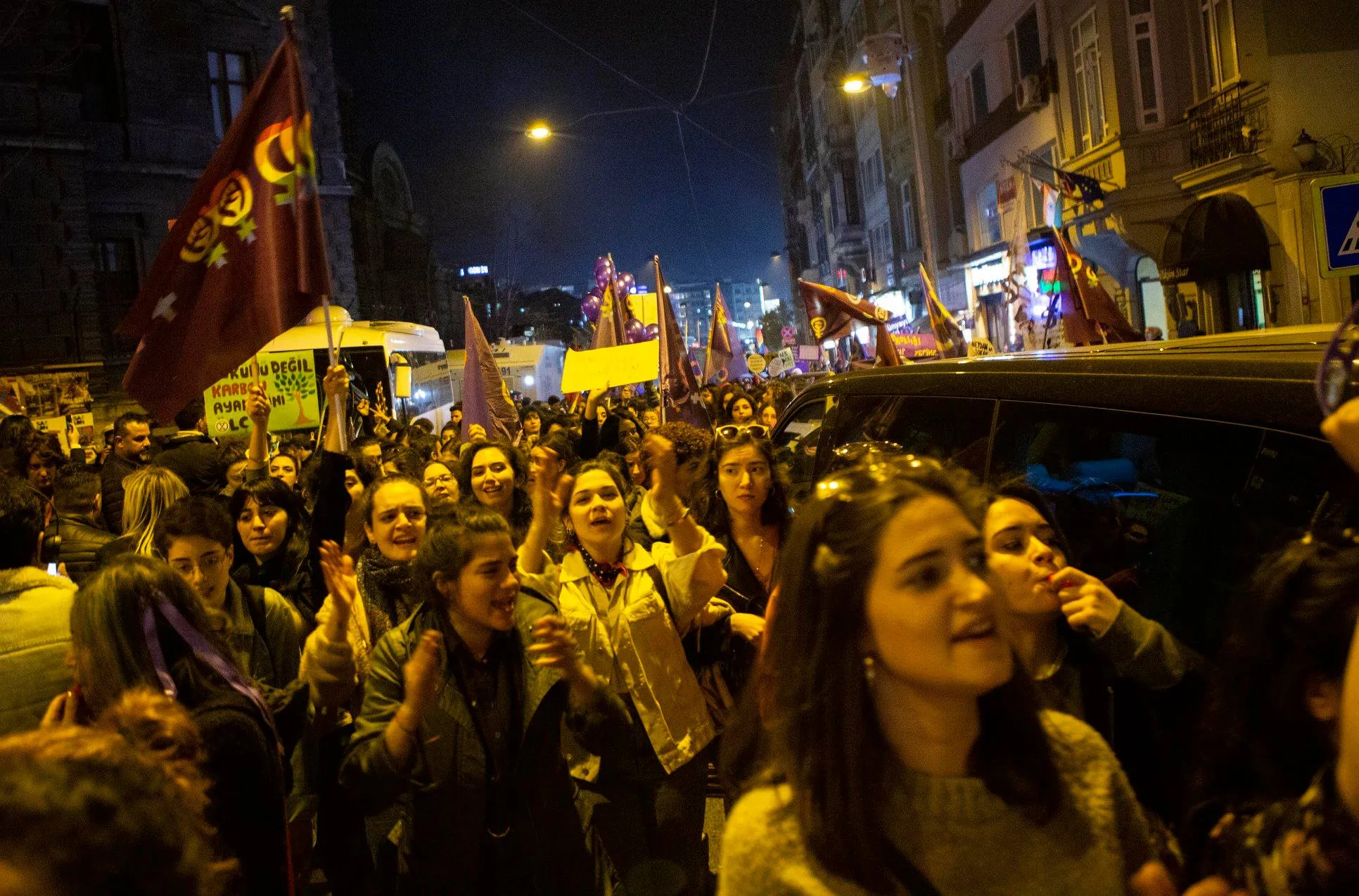
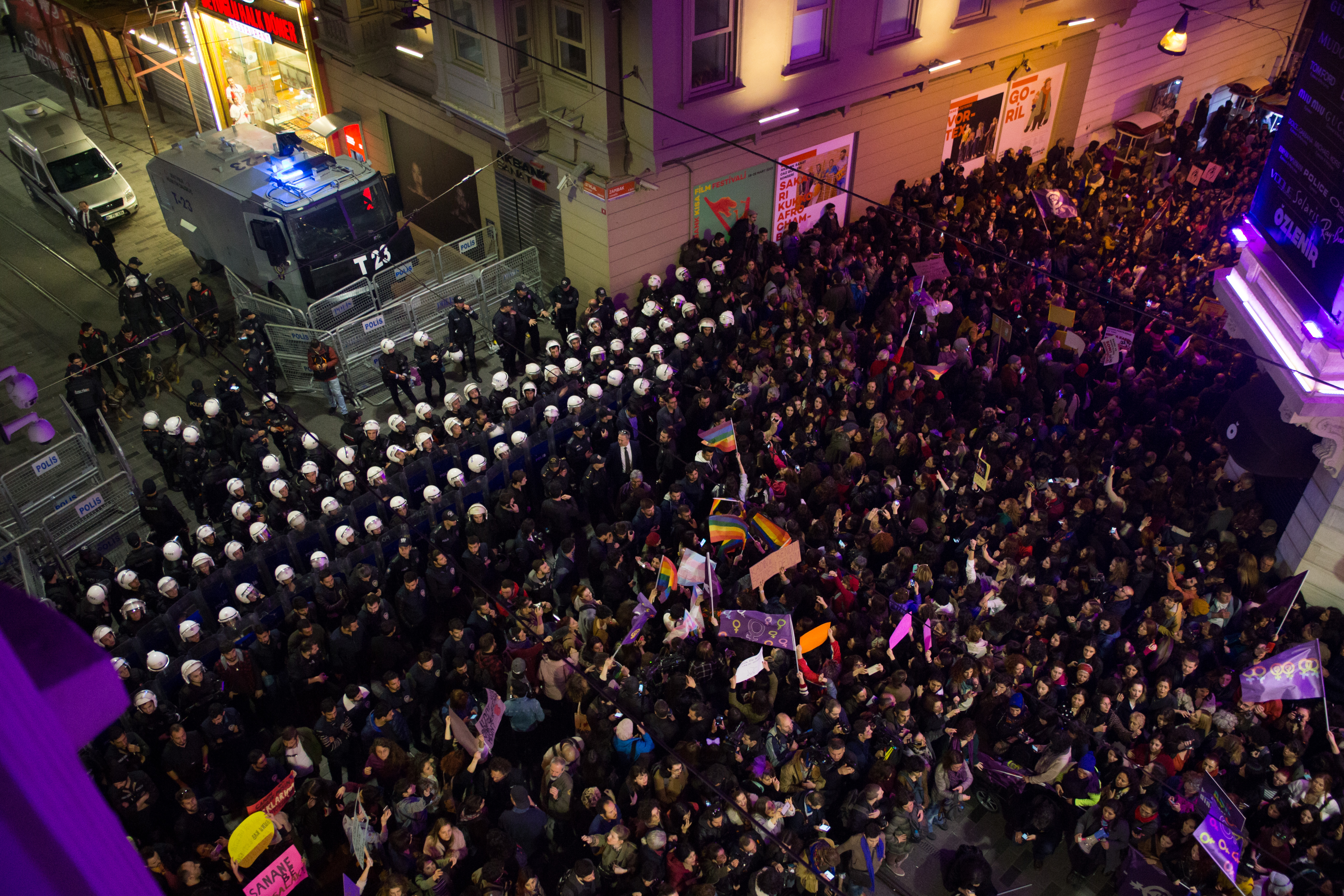
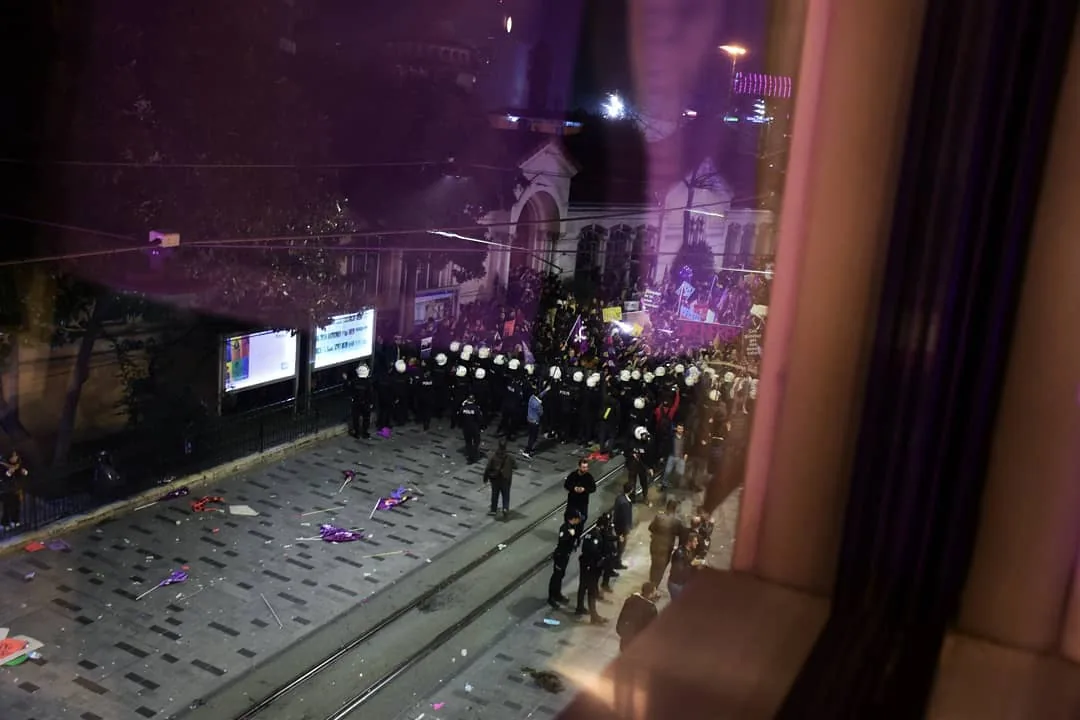
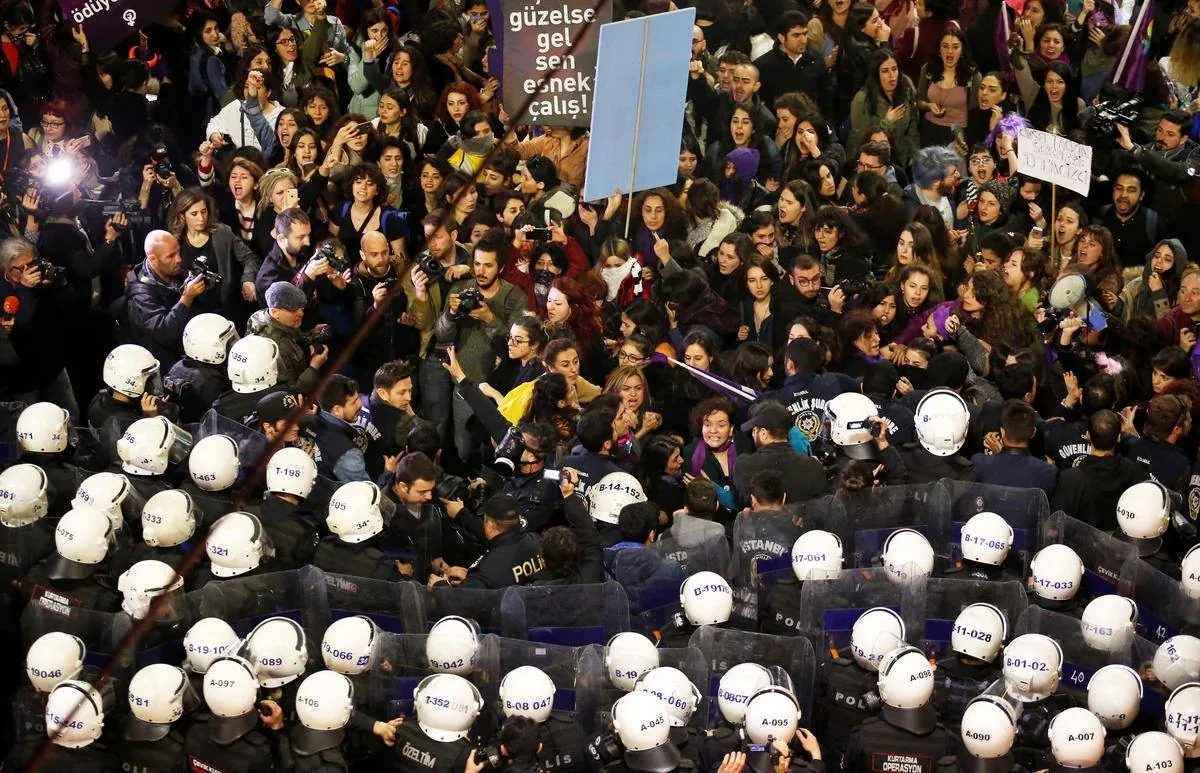
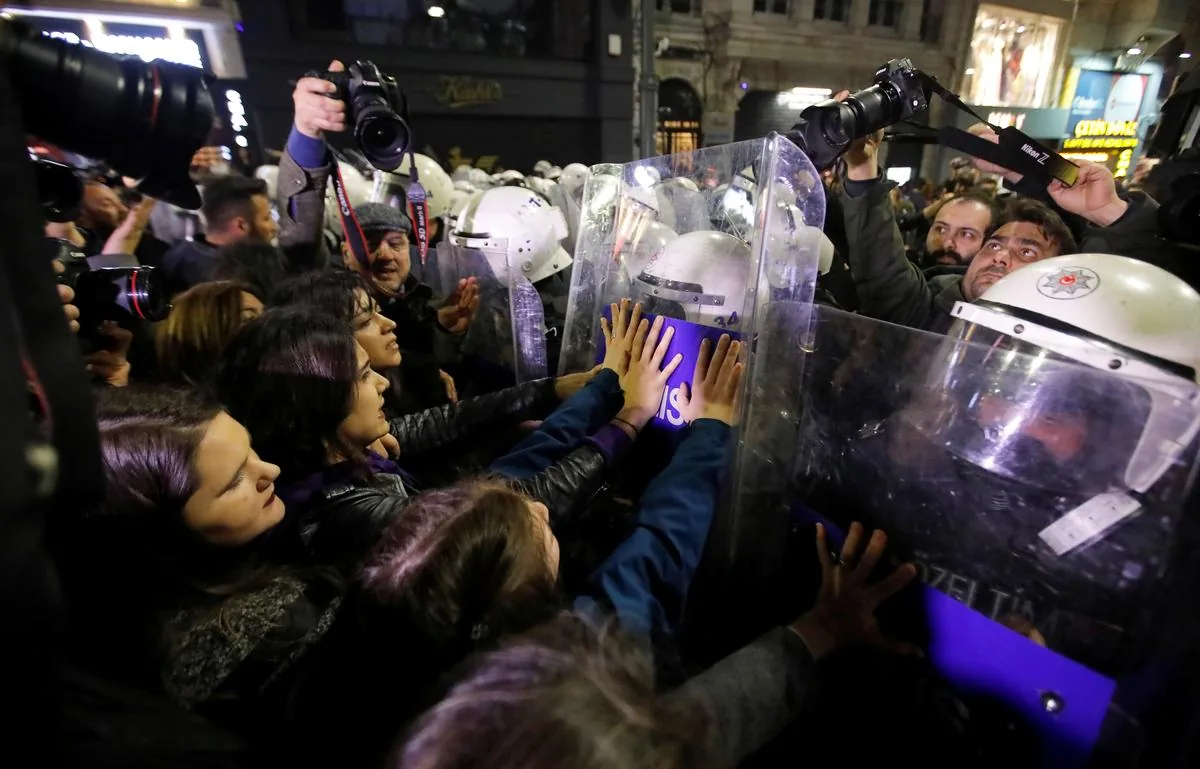
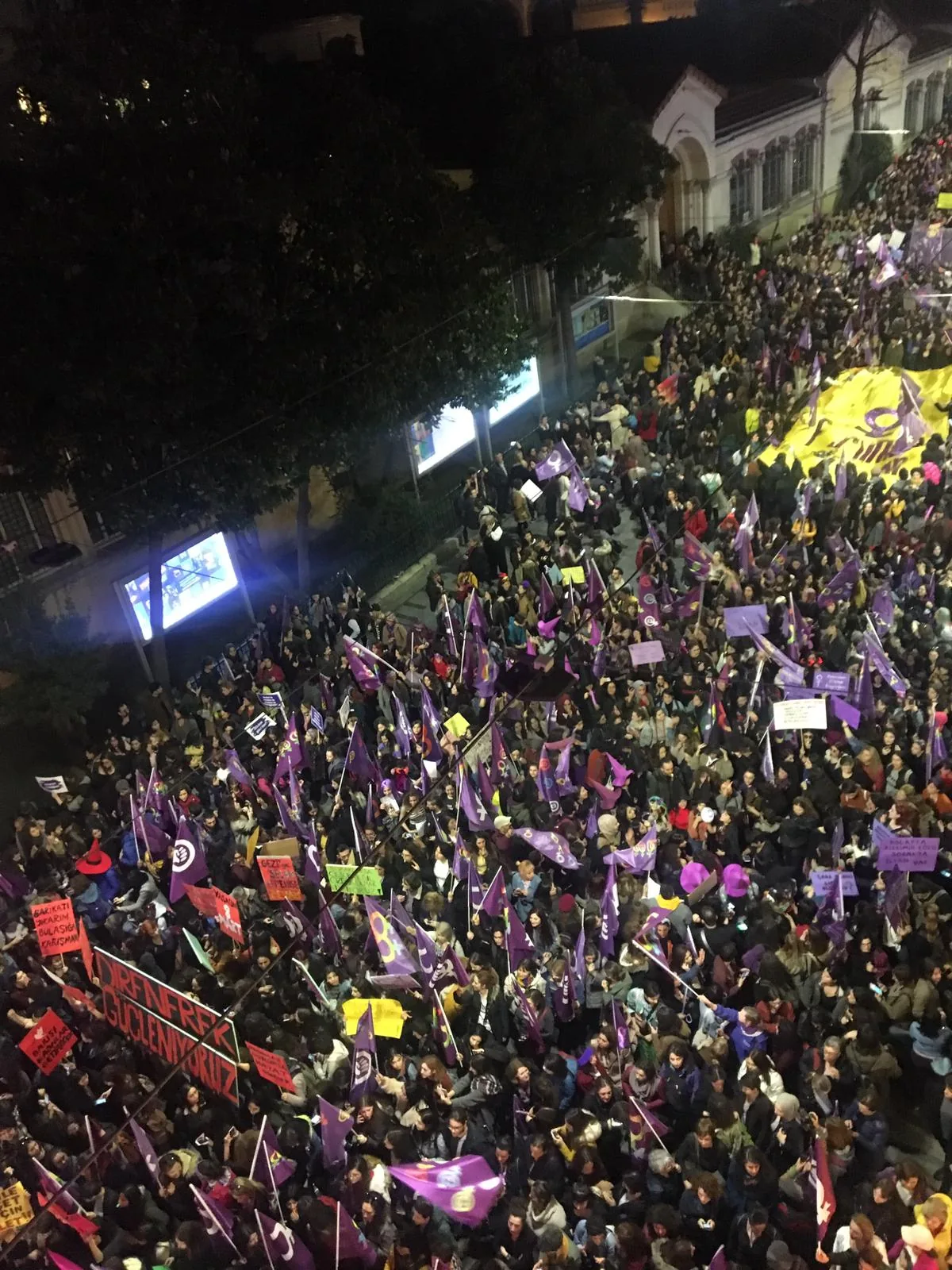
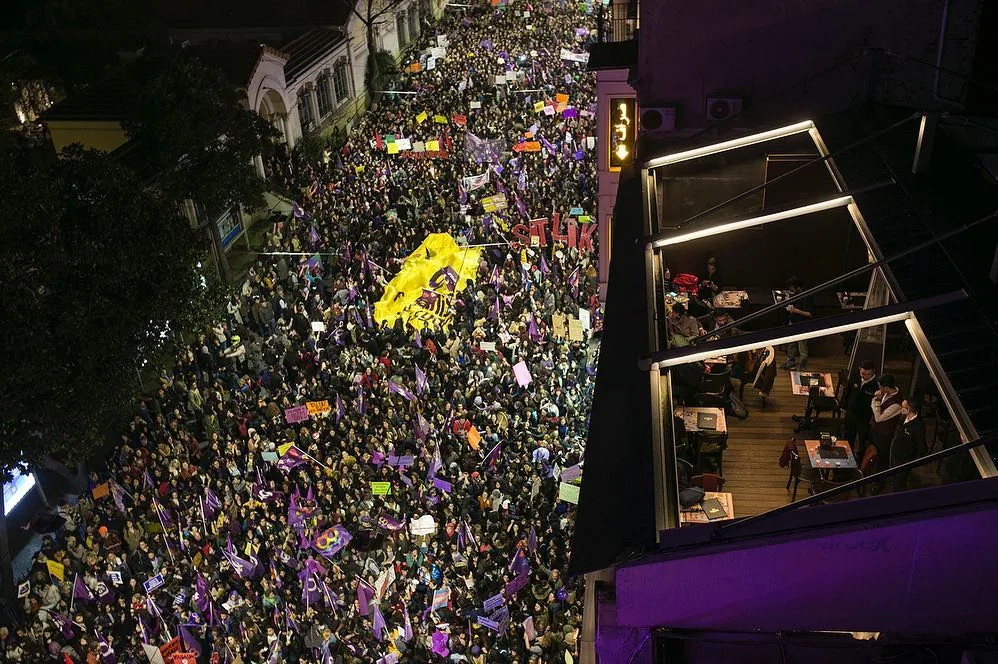
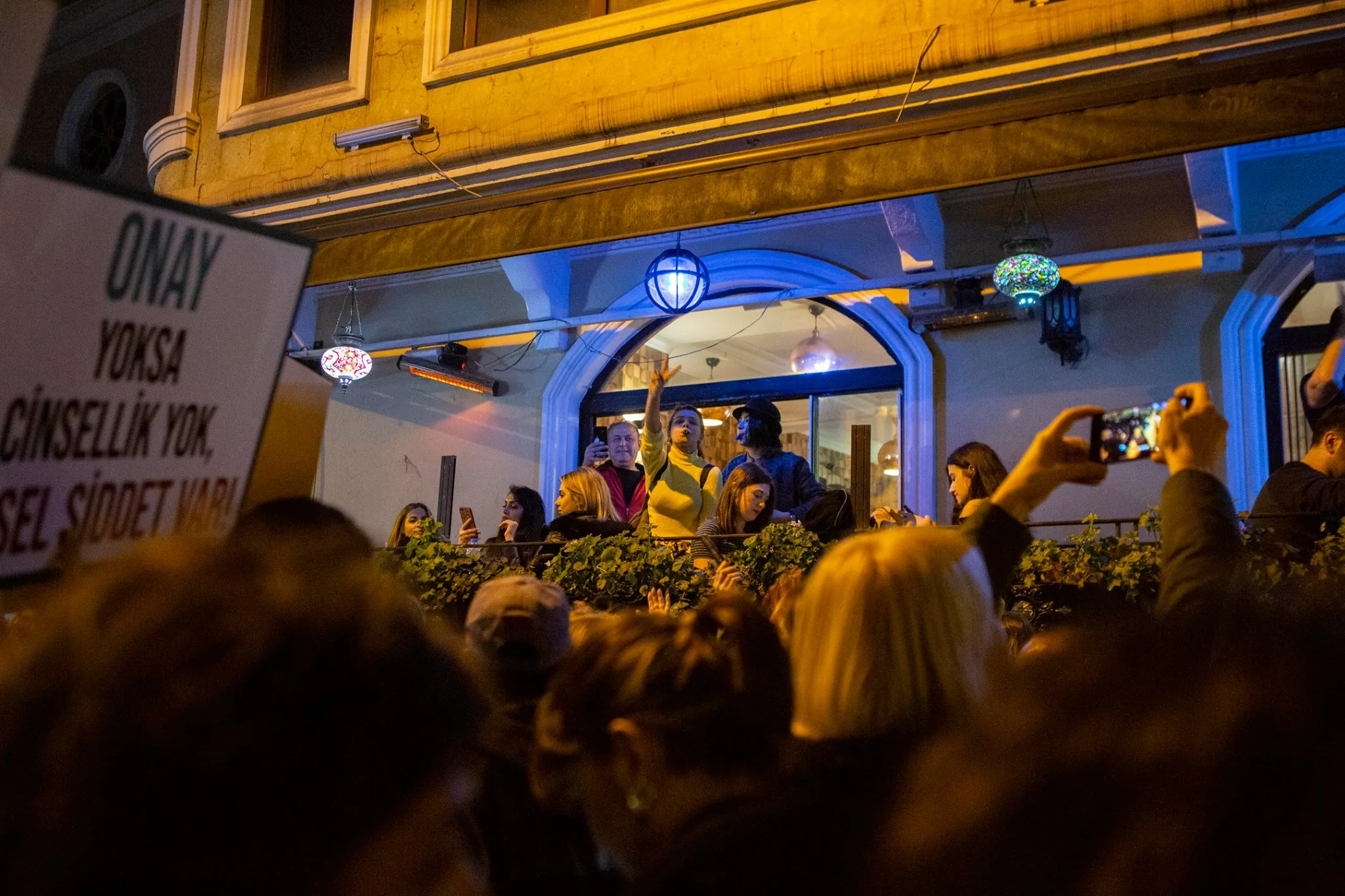
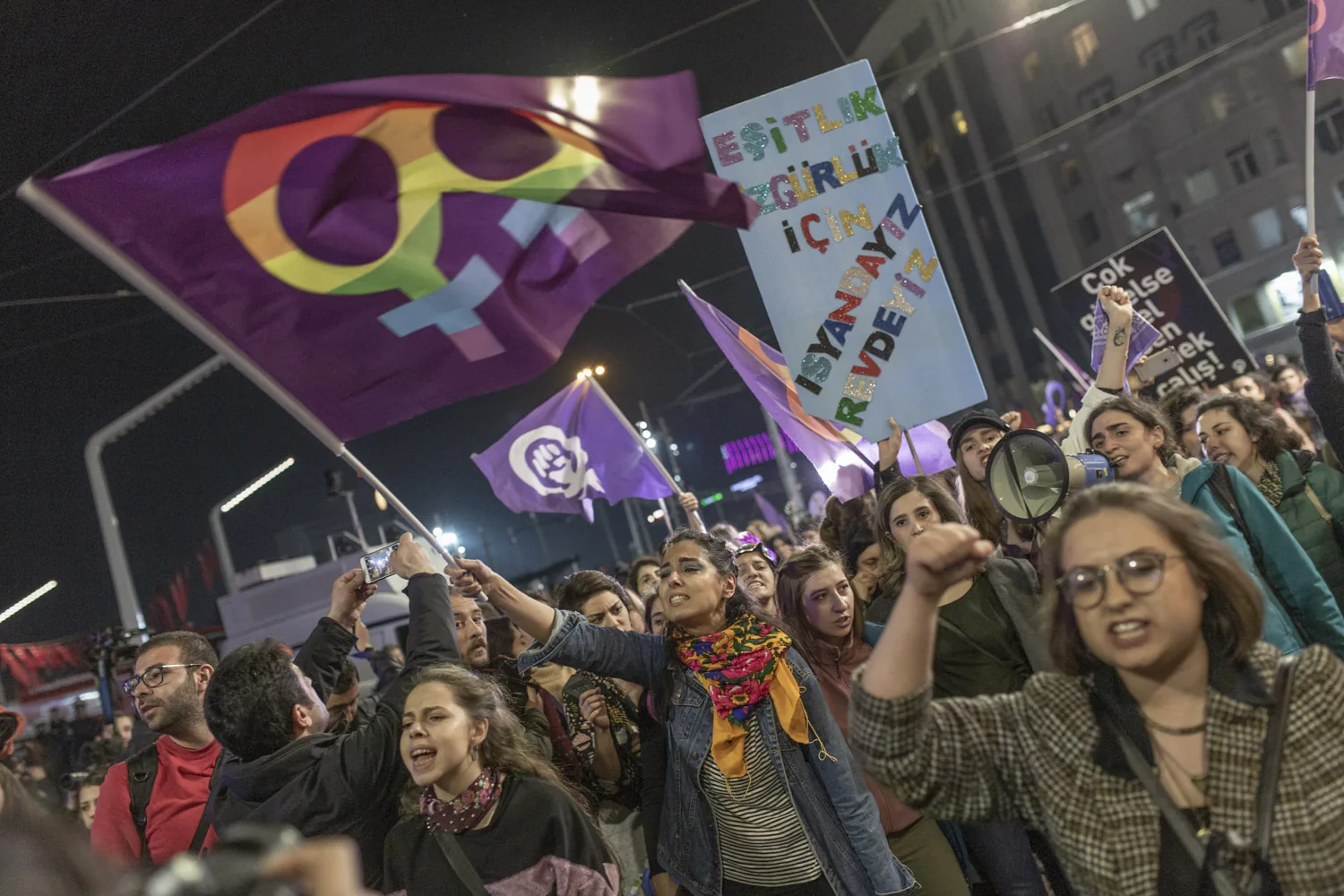
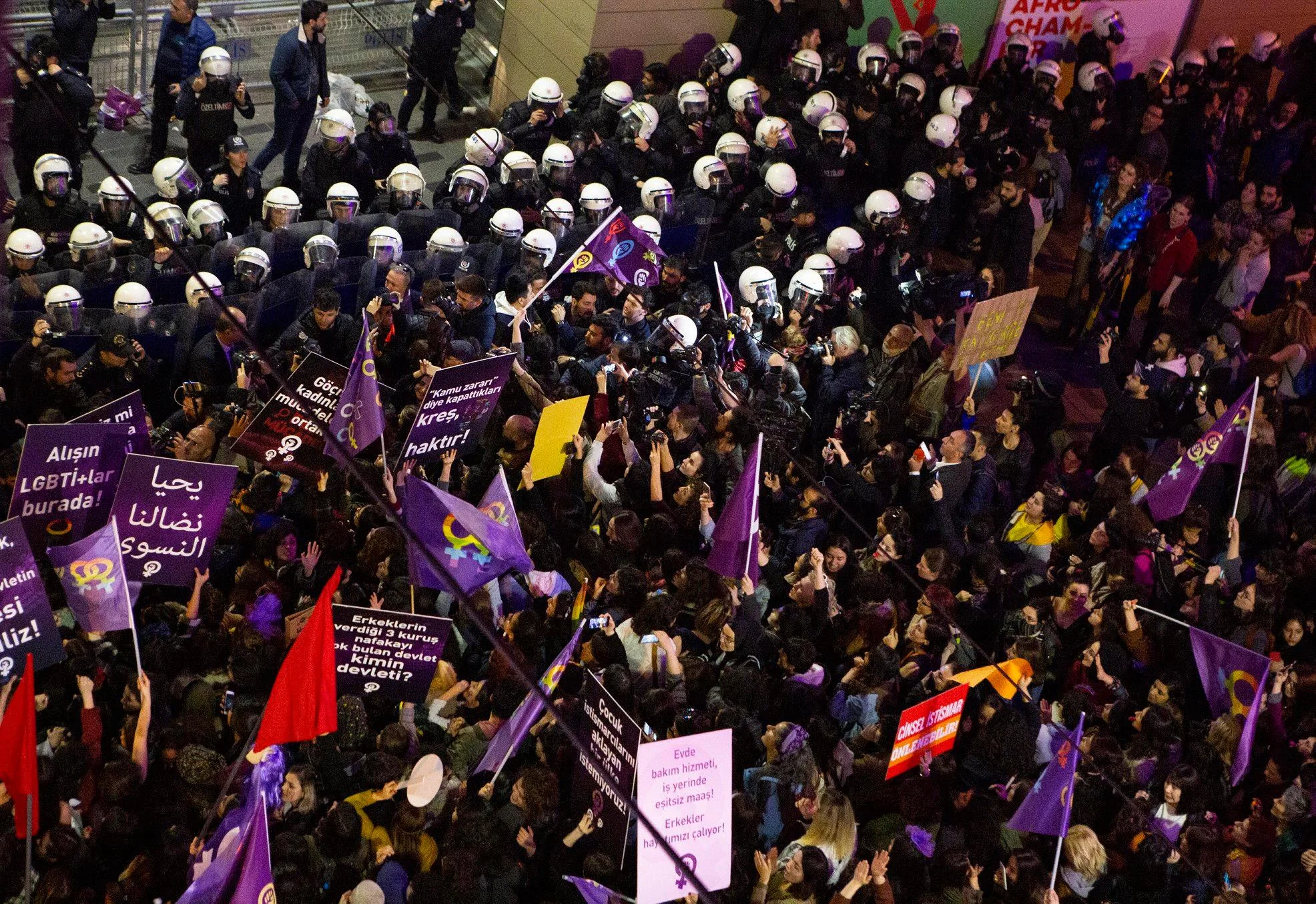
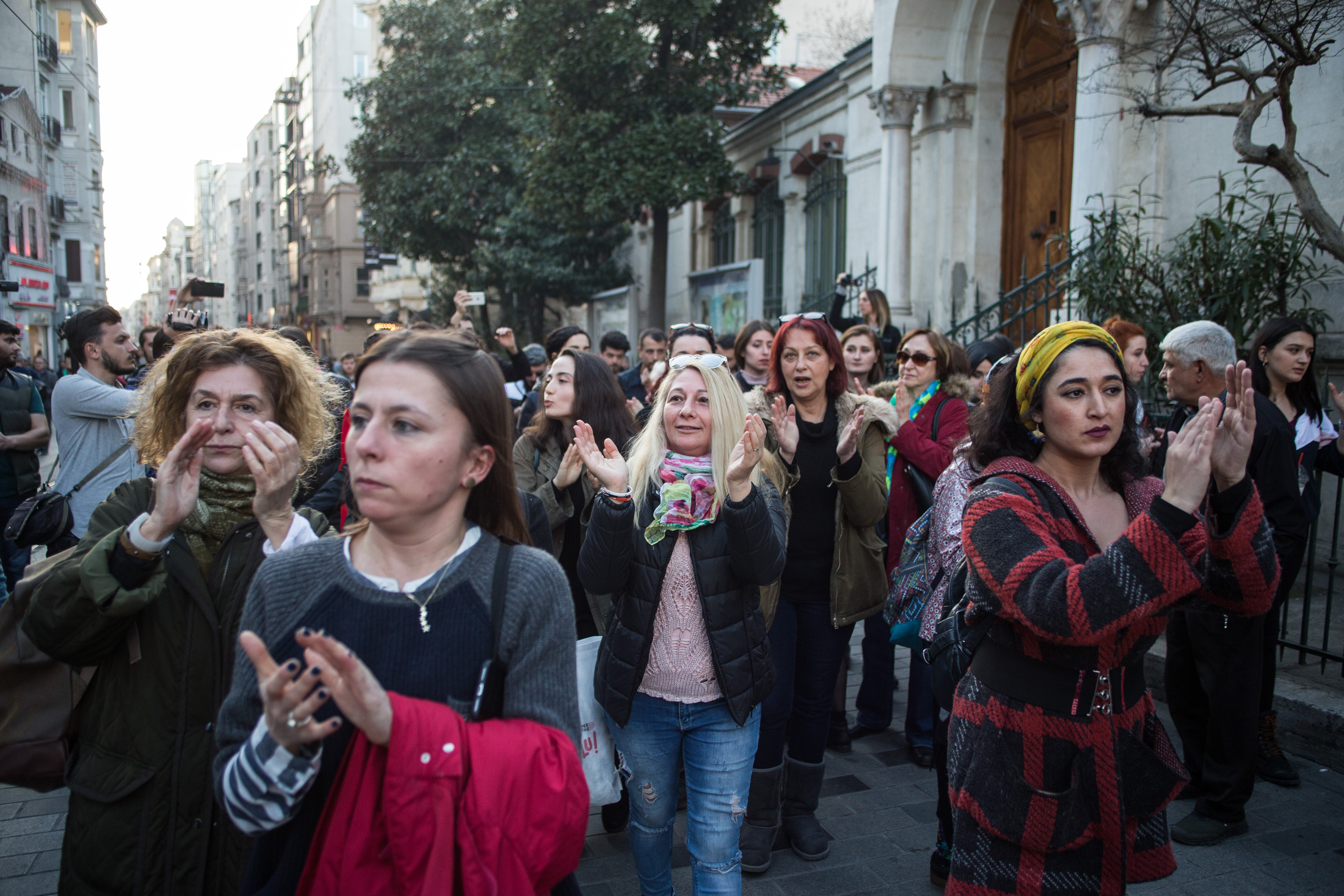
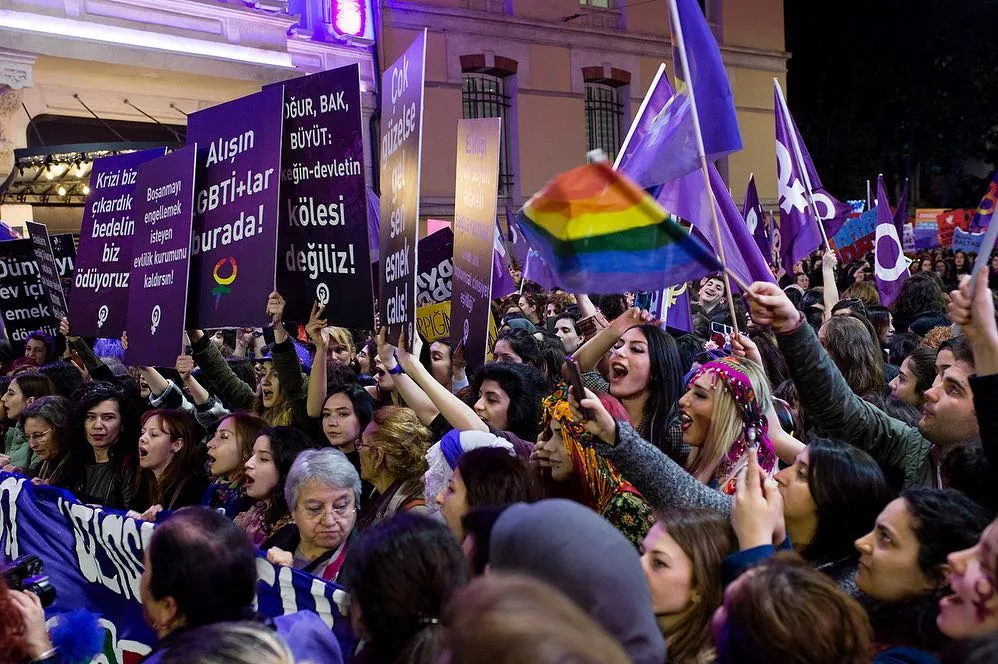
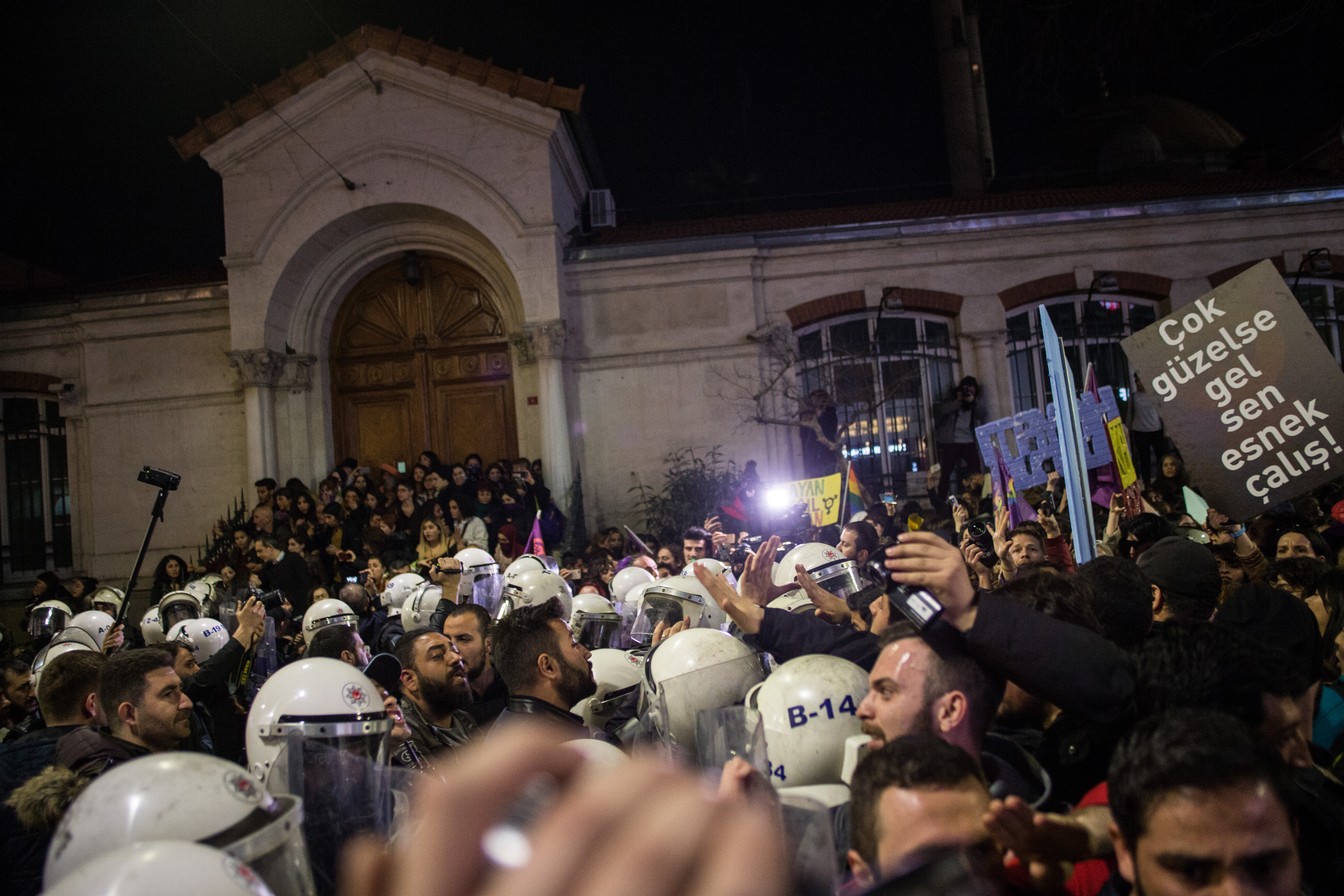
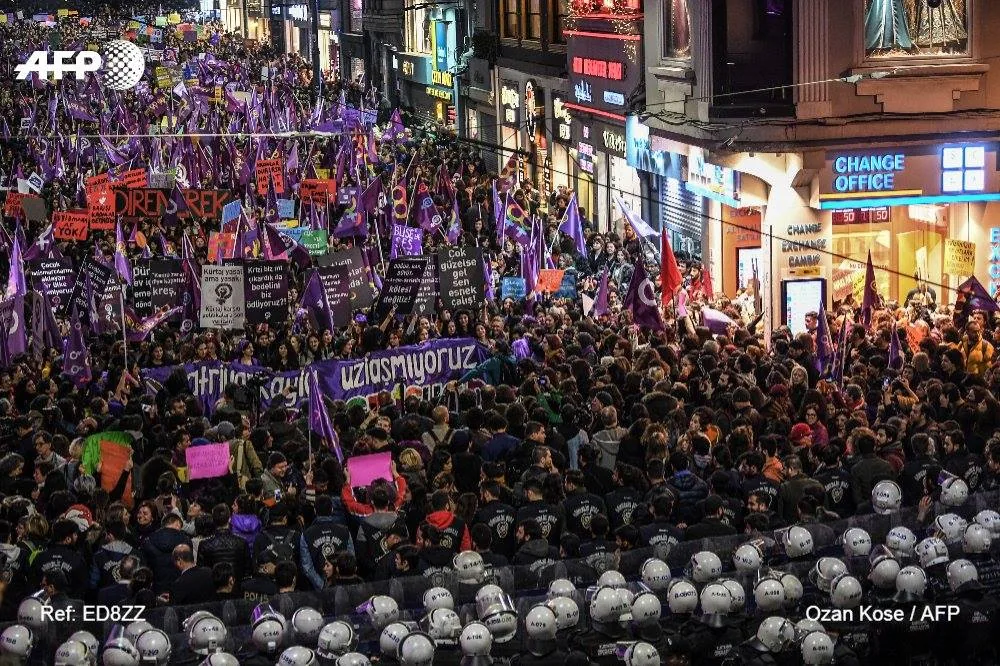
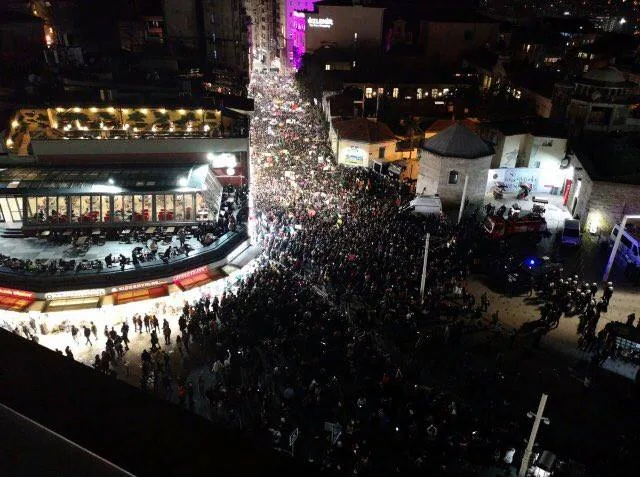
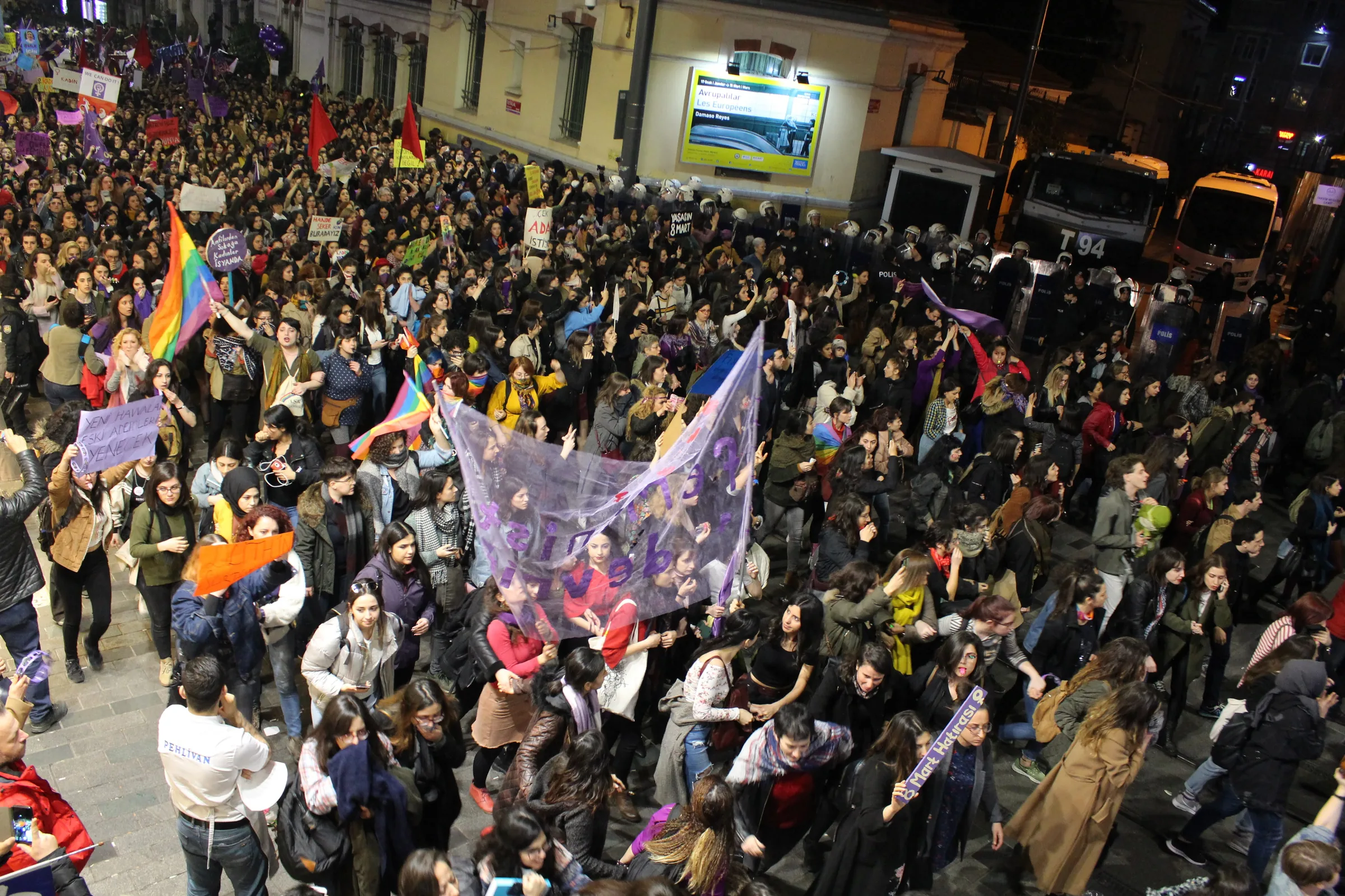
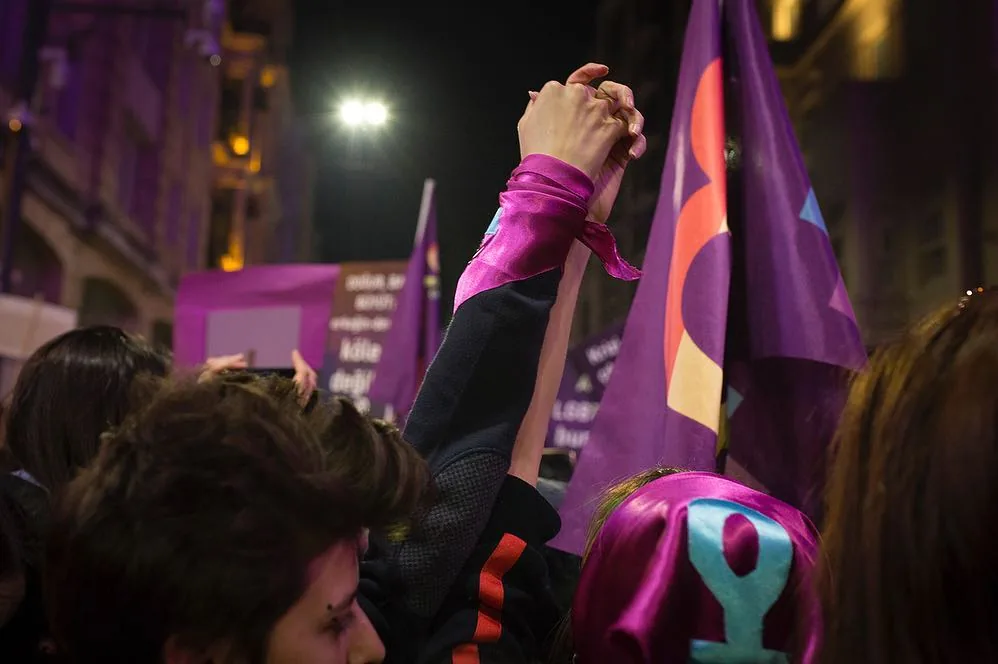
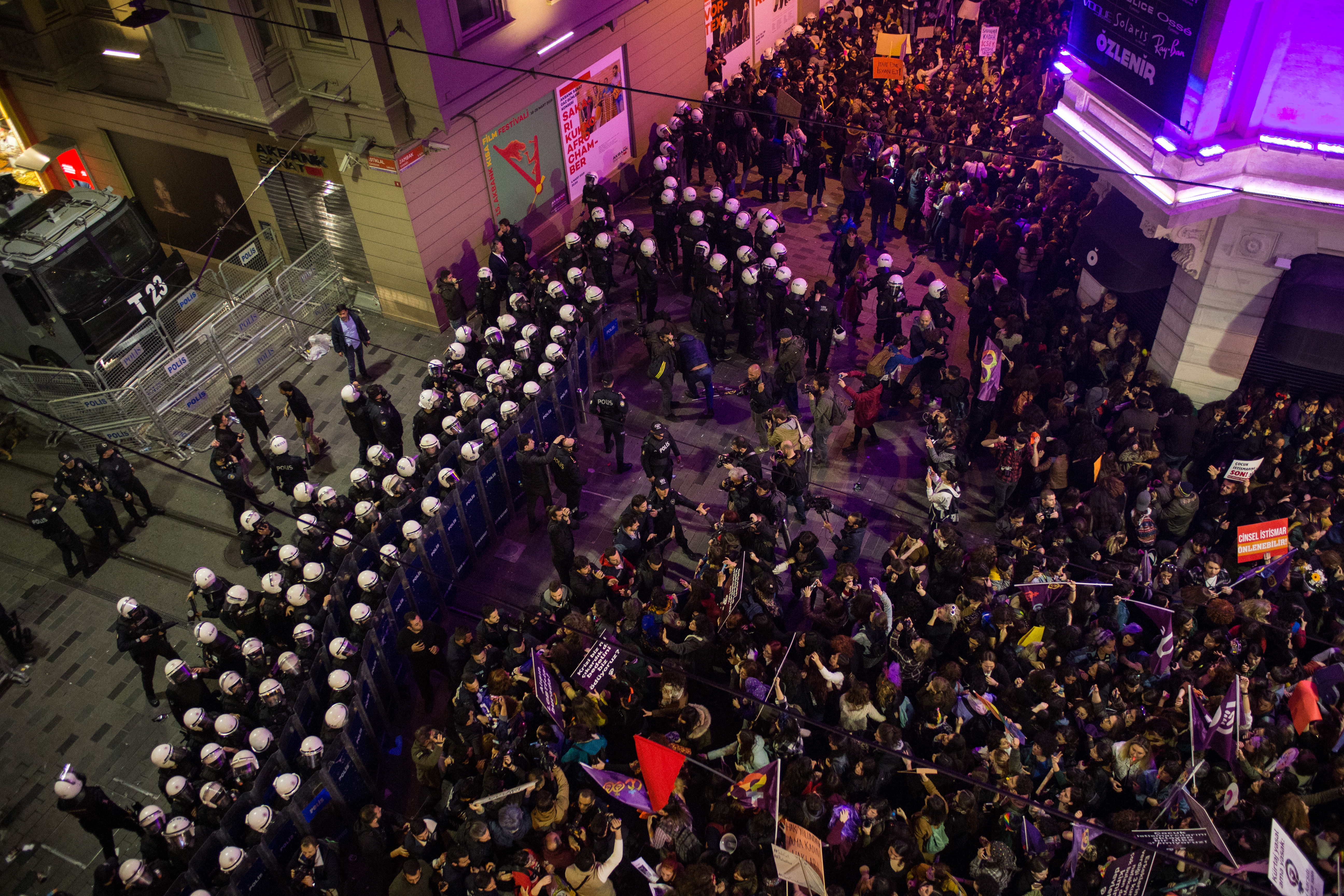
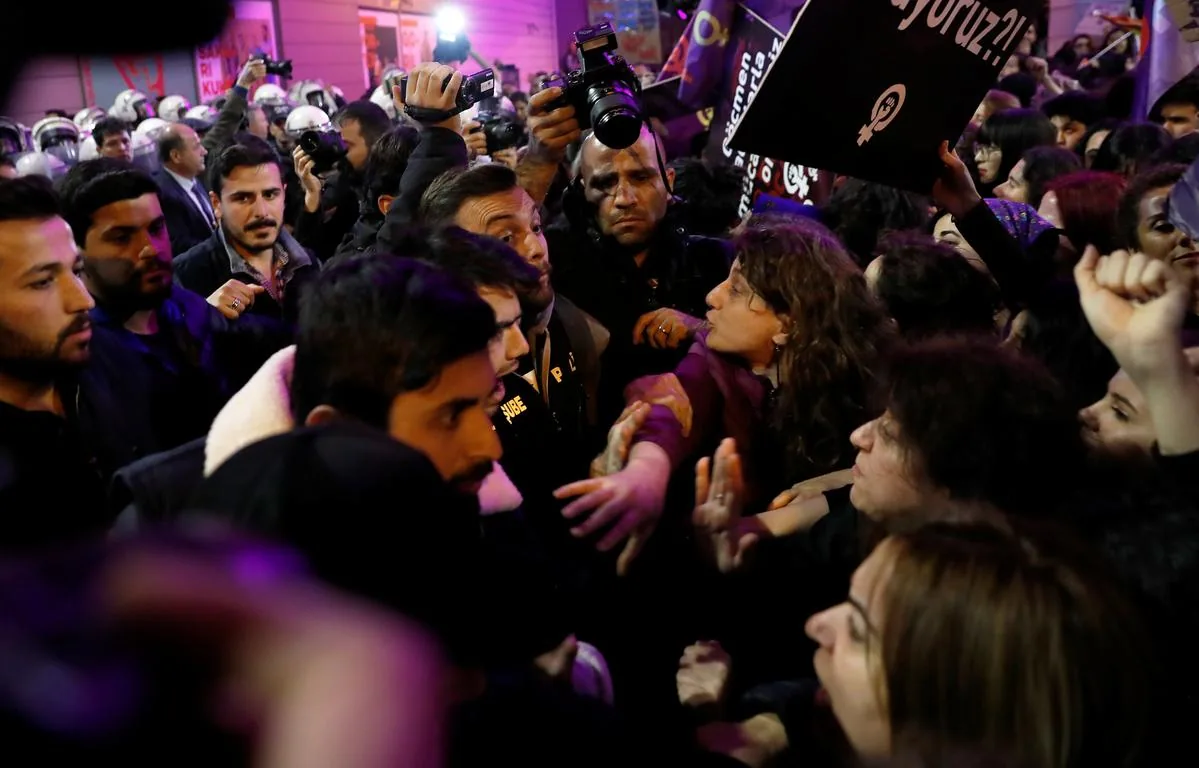
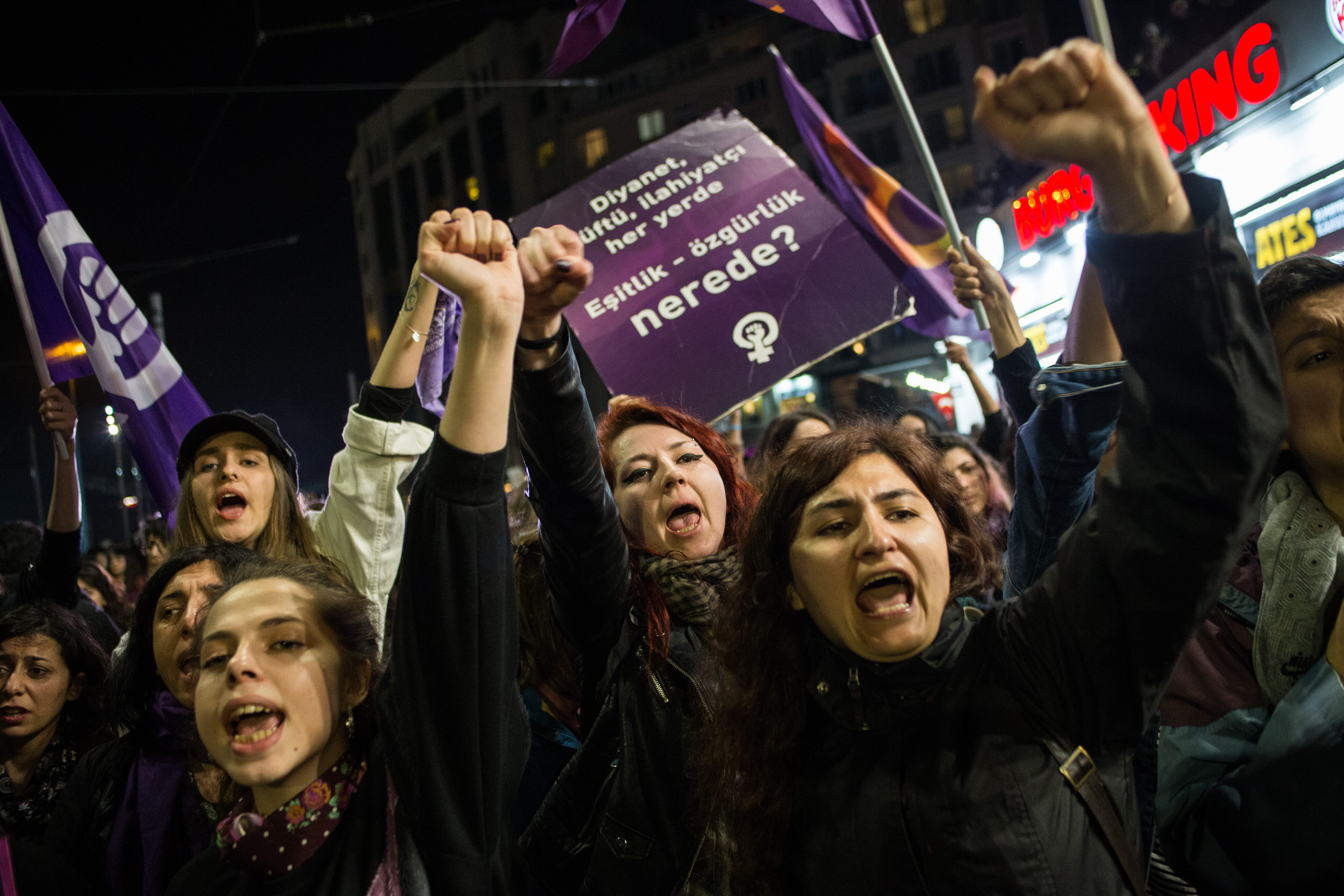
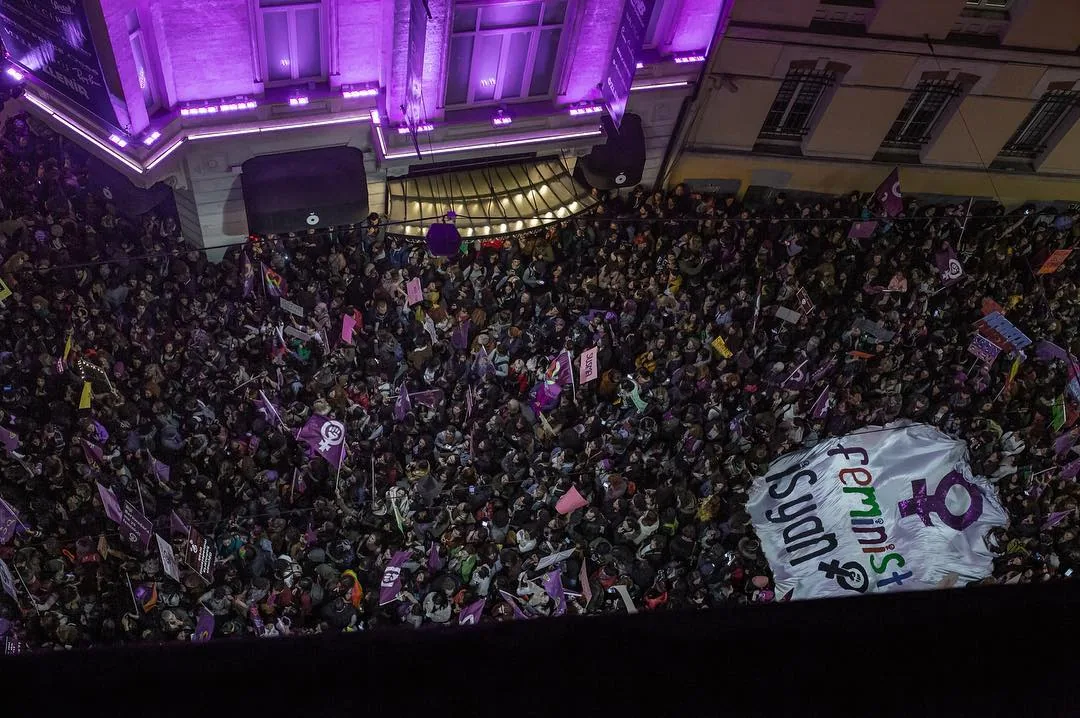
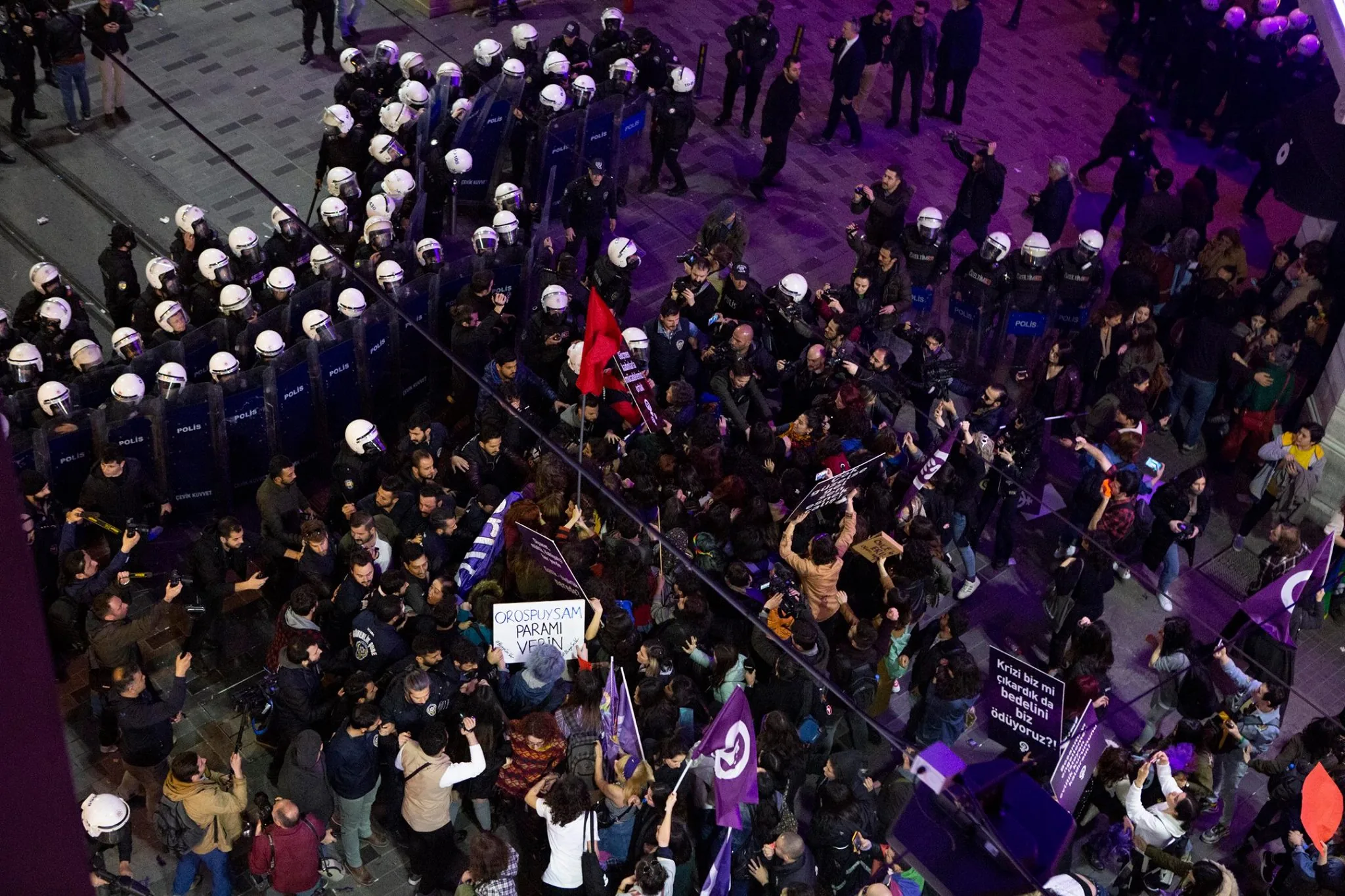
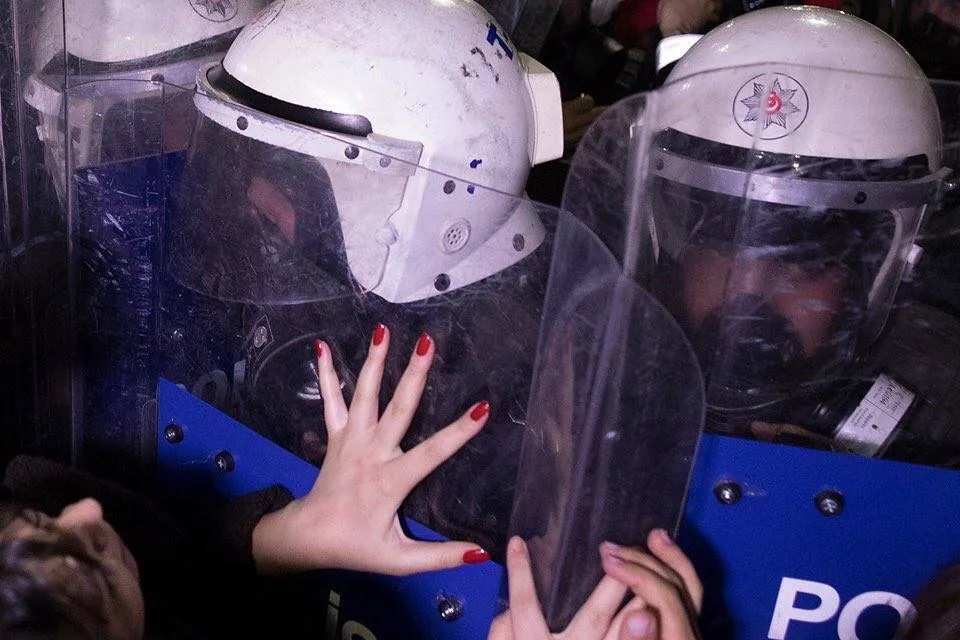
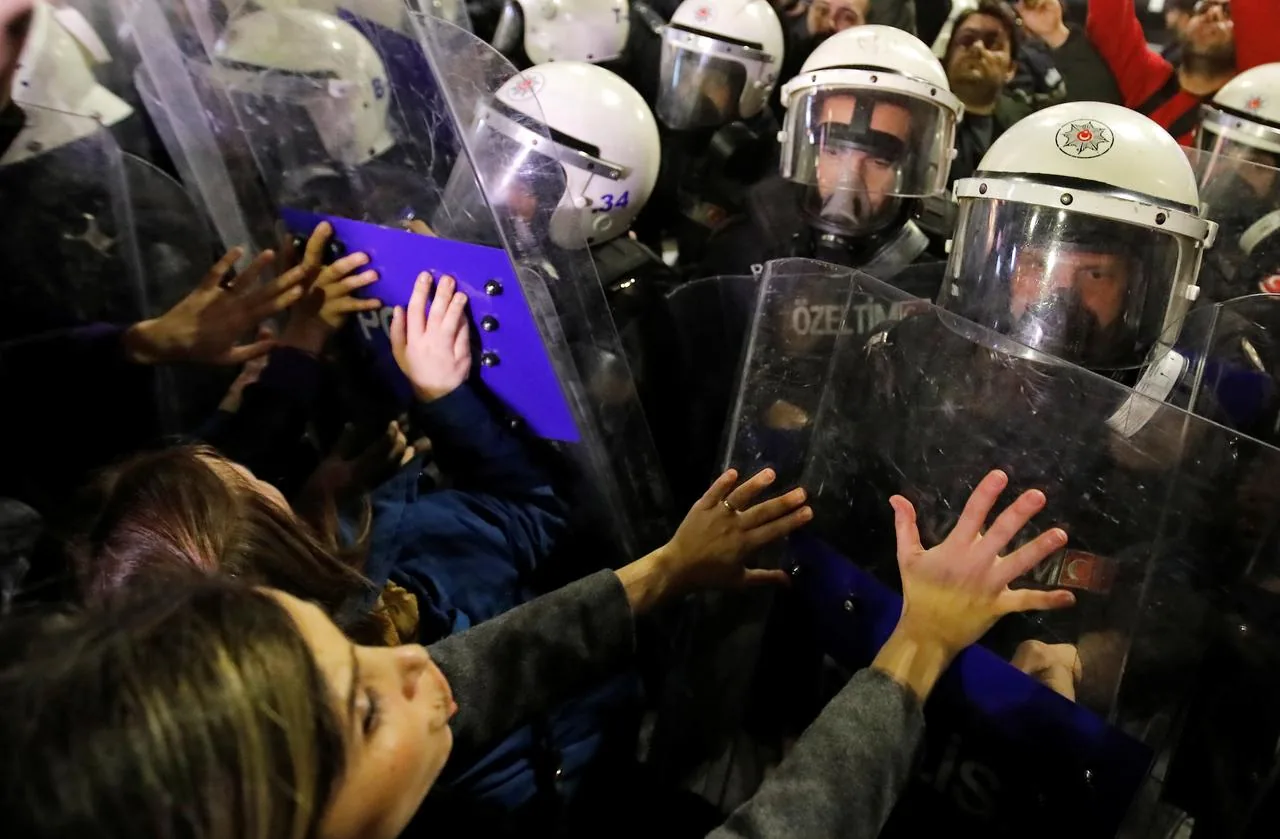
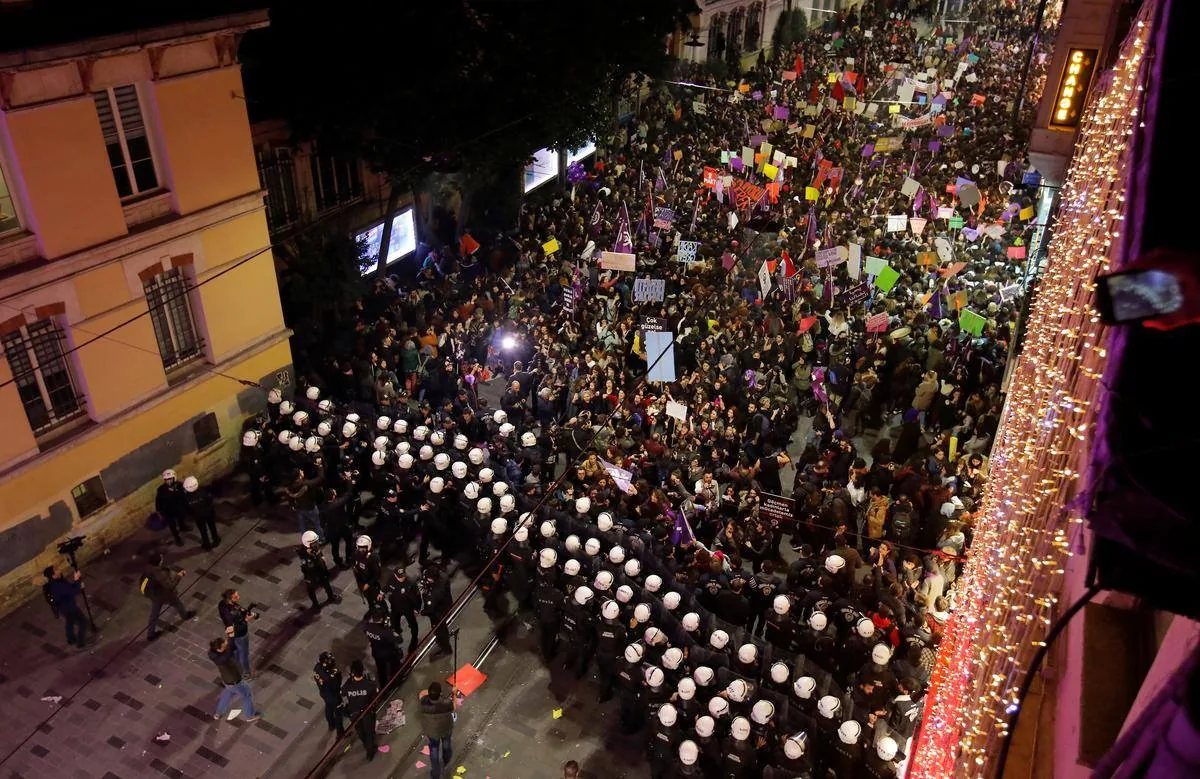
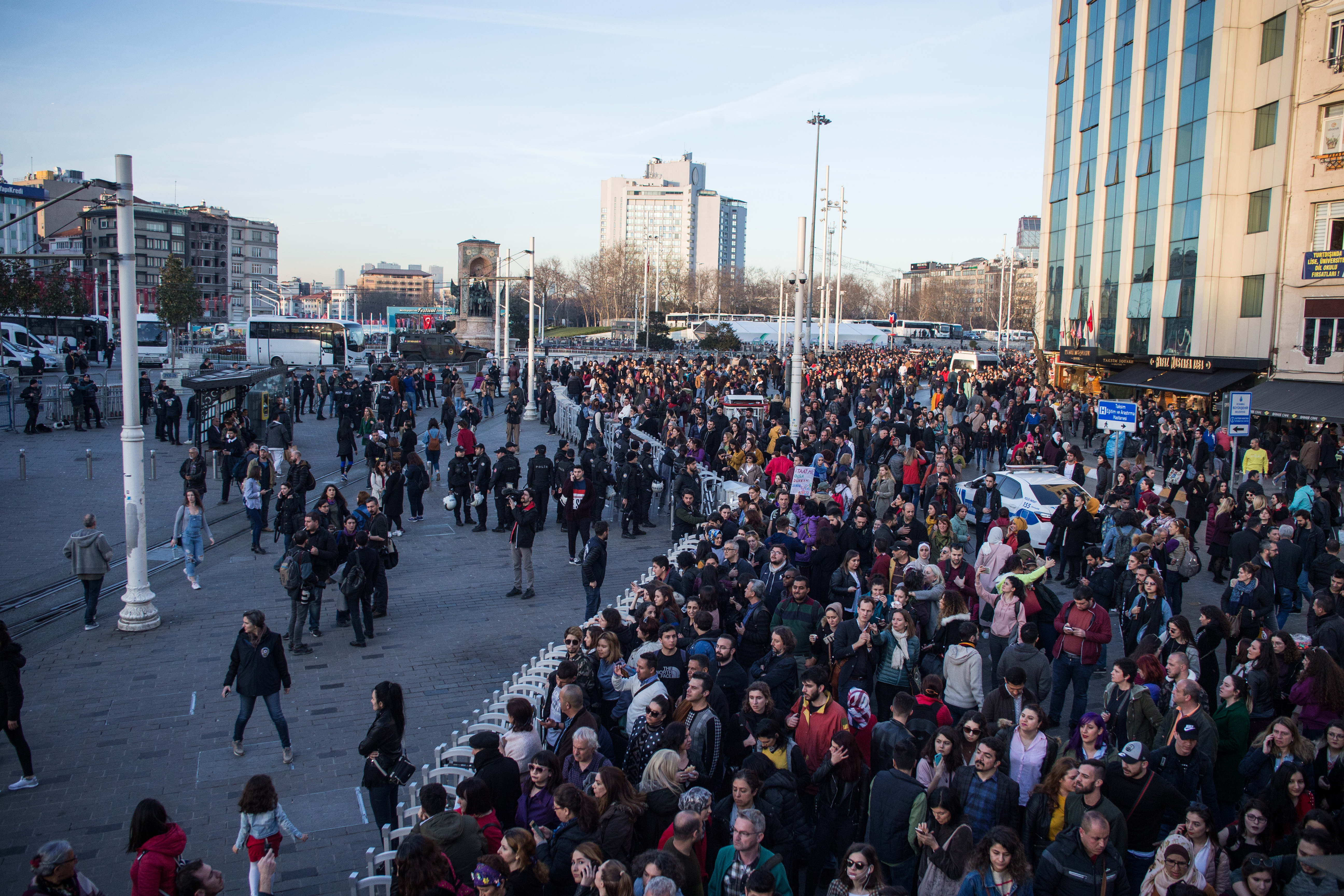
Despite the announcements and decisions by the police and the Governor's Office, it was announced that participants would still gather outside the French Cultural Centre. Shortly before the demonstration, police used barricades on İstiklal Avenue to try to keep people out, either by searching them or telling them there was no entry. As the crowd grew, this barrier effectively ceased to function. Special operations police were seen stationed on some rooftops. At the appointed time, participants left Feminist Mekan in high spirits and headed towards the French Cultural Centre. From Zambak Street onwards, police blocked İstiklal with barricades and riot officers. The crowd grew along three approaches, İstiklal Avenue, Meşelik Street and Zambak Street, eventually extending into Taksim Square.
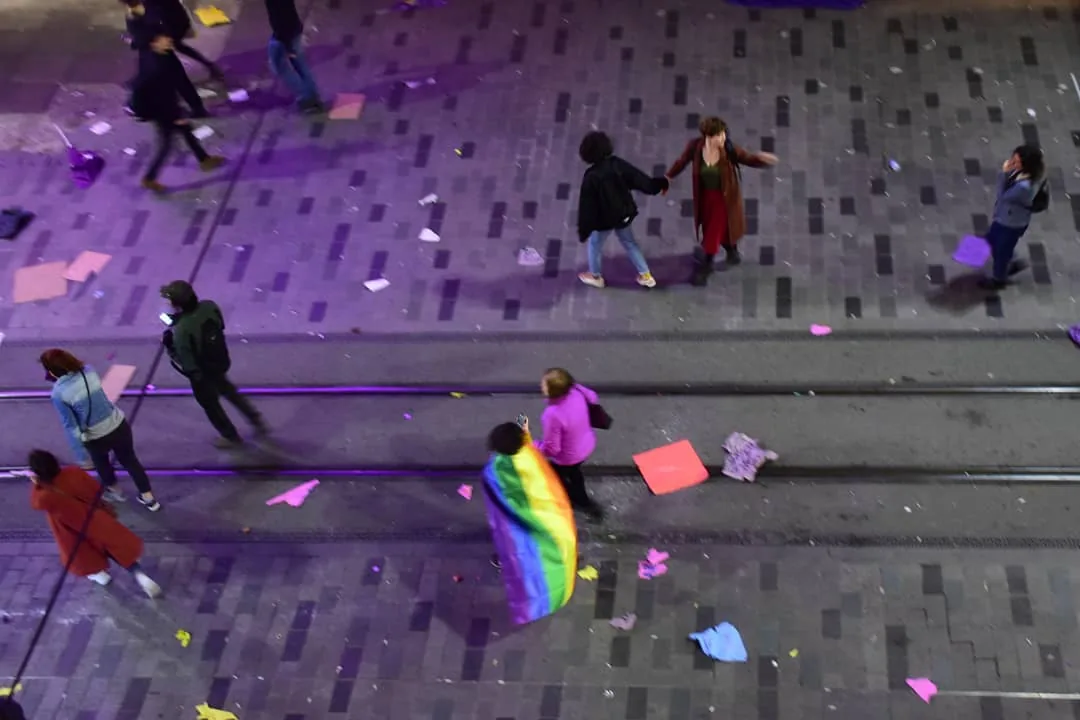
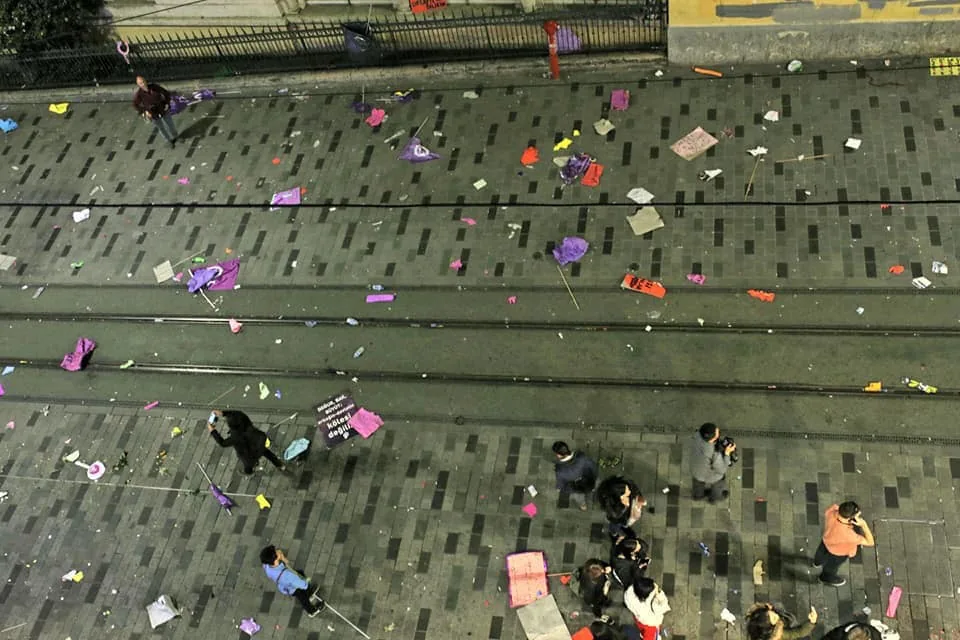
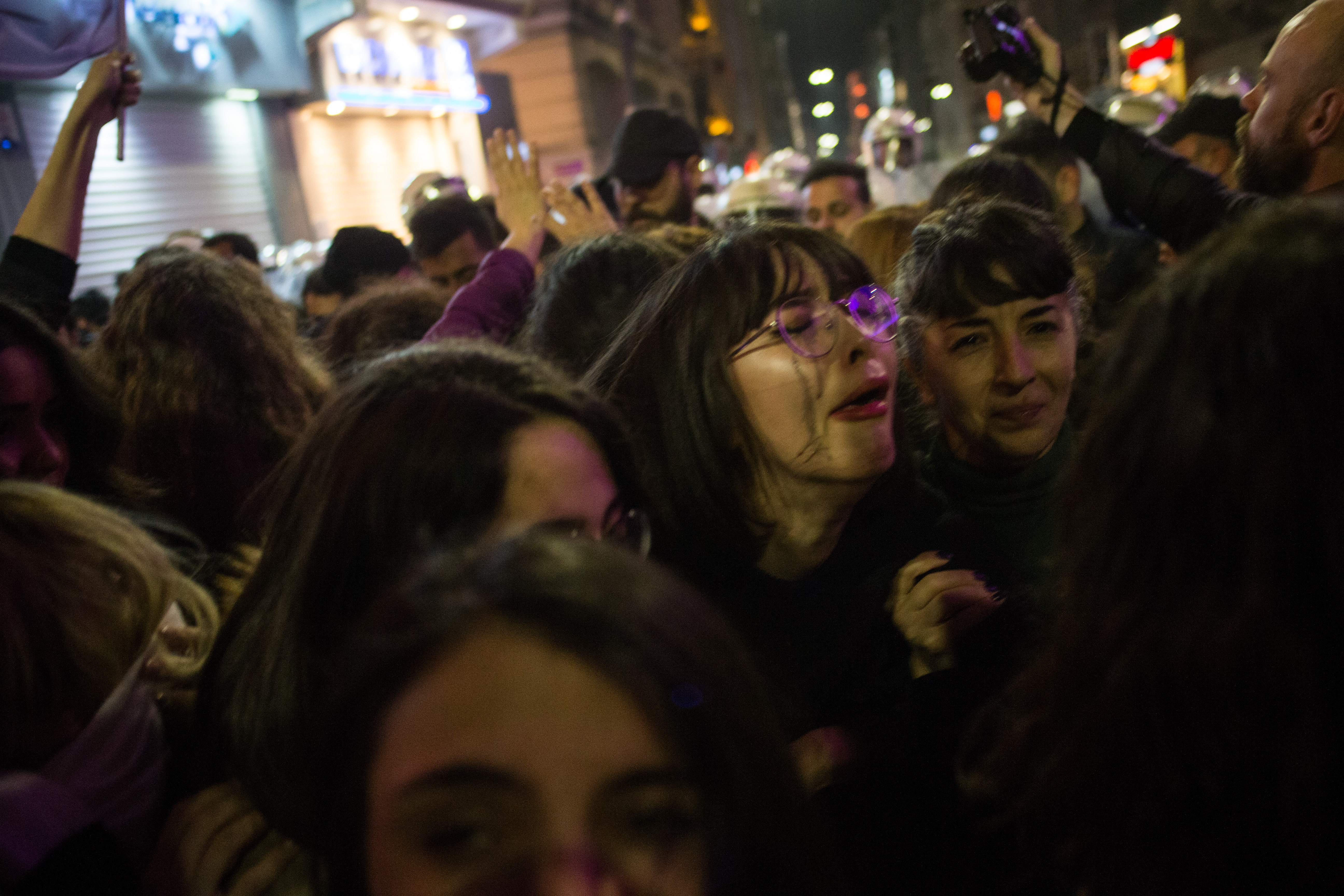
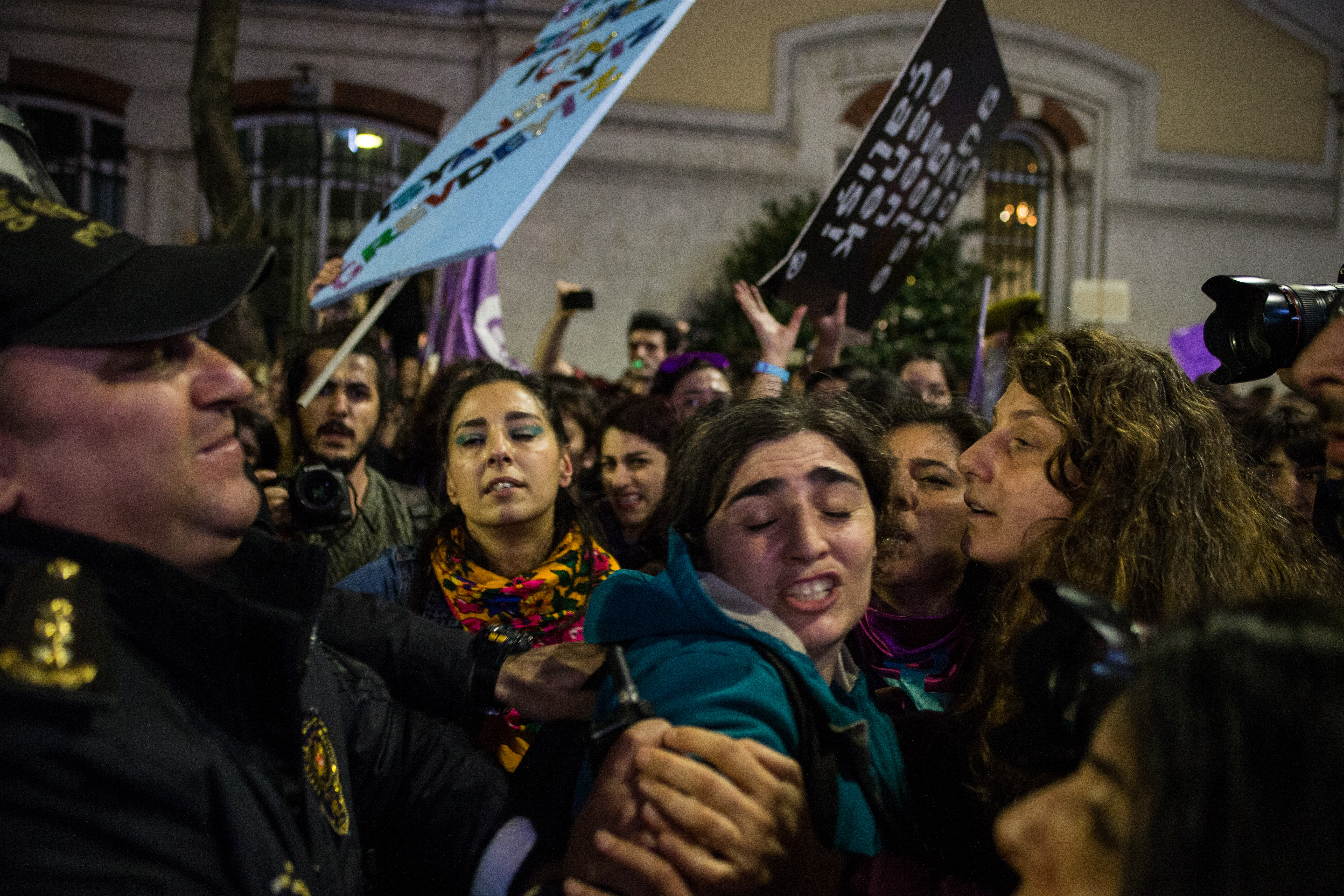
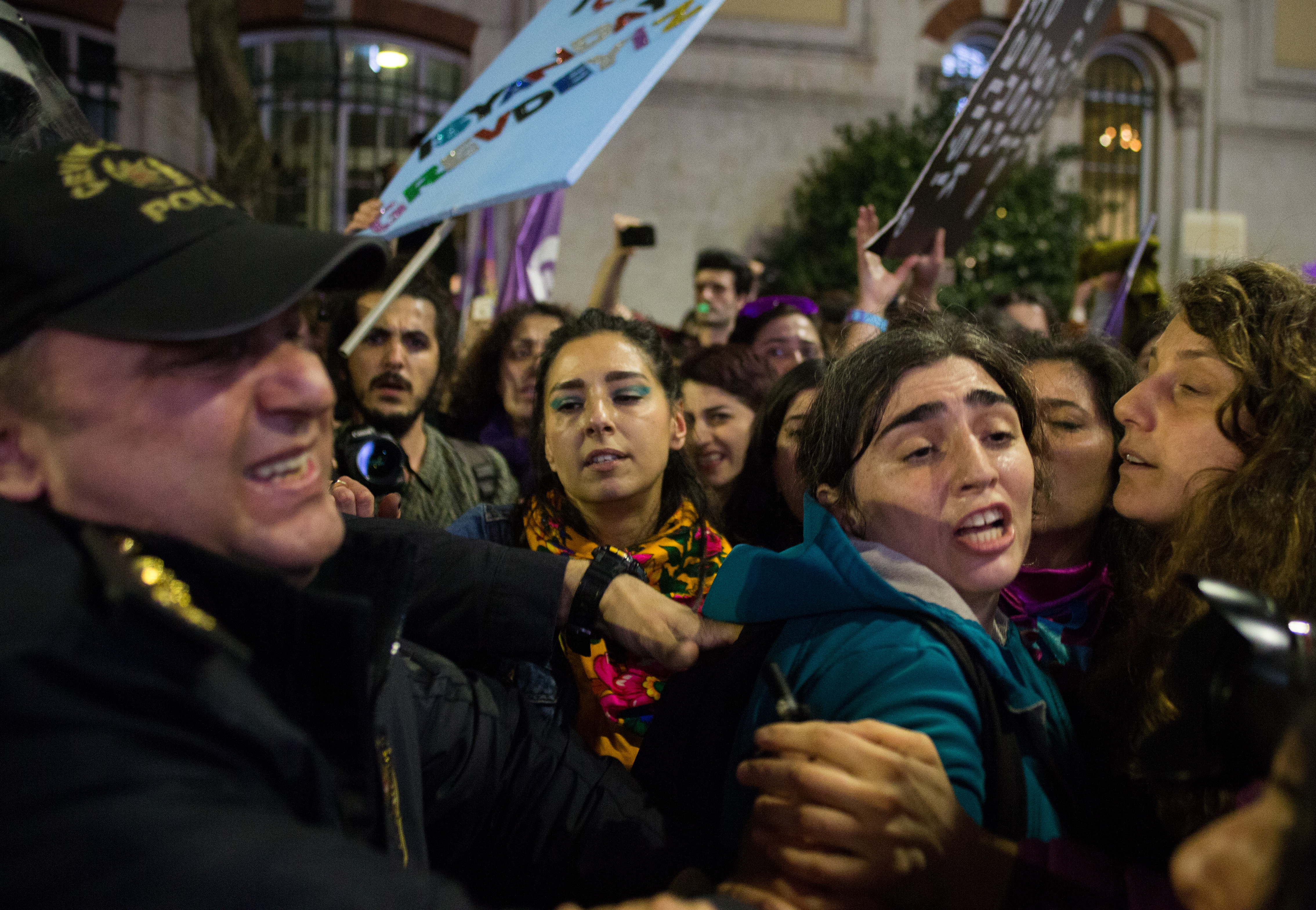
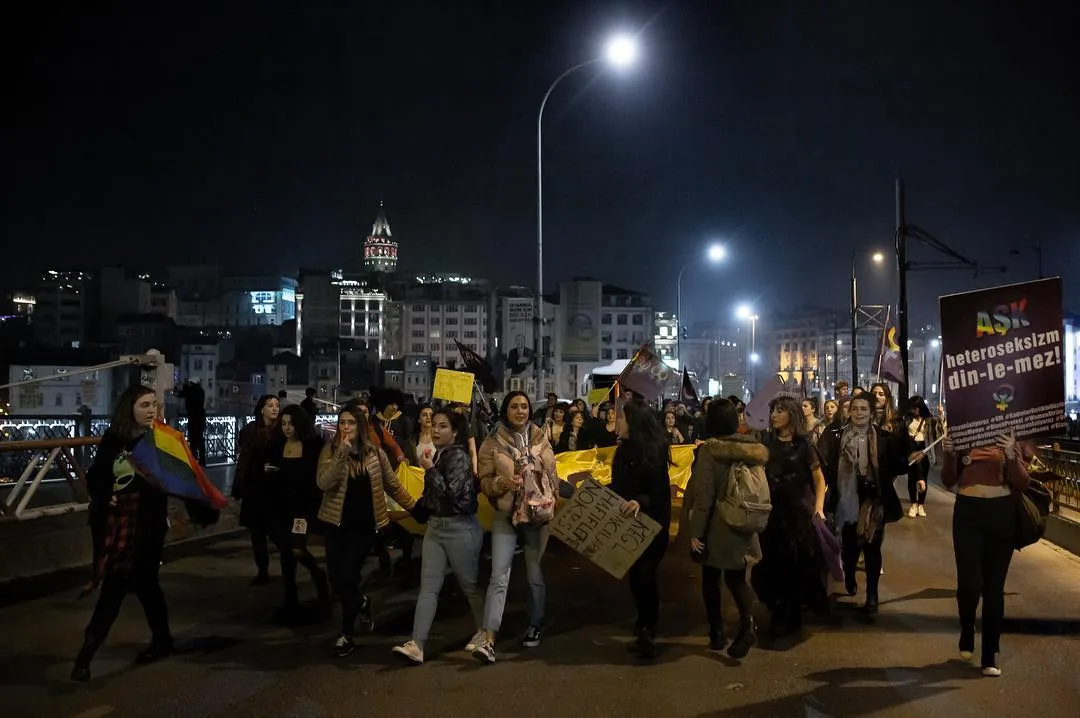
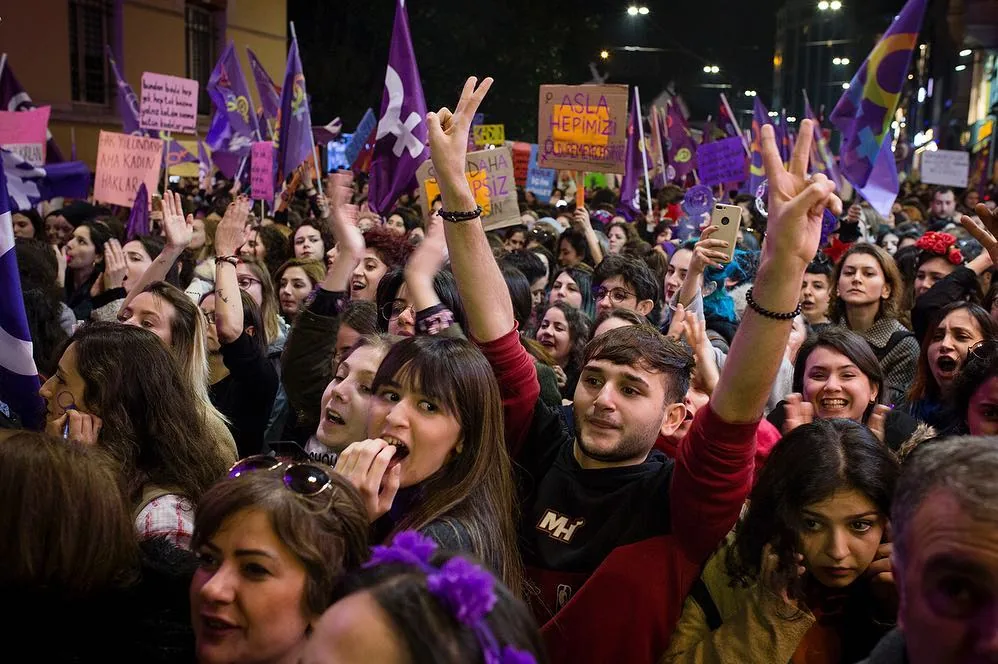
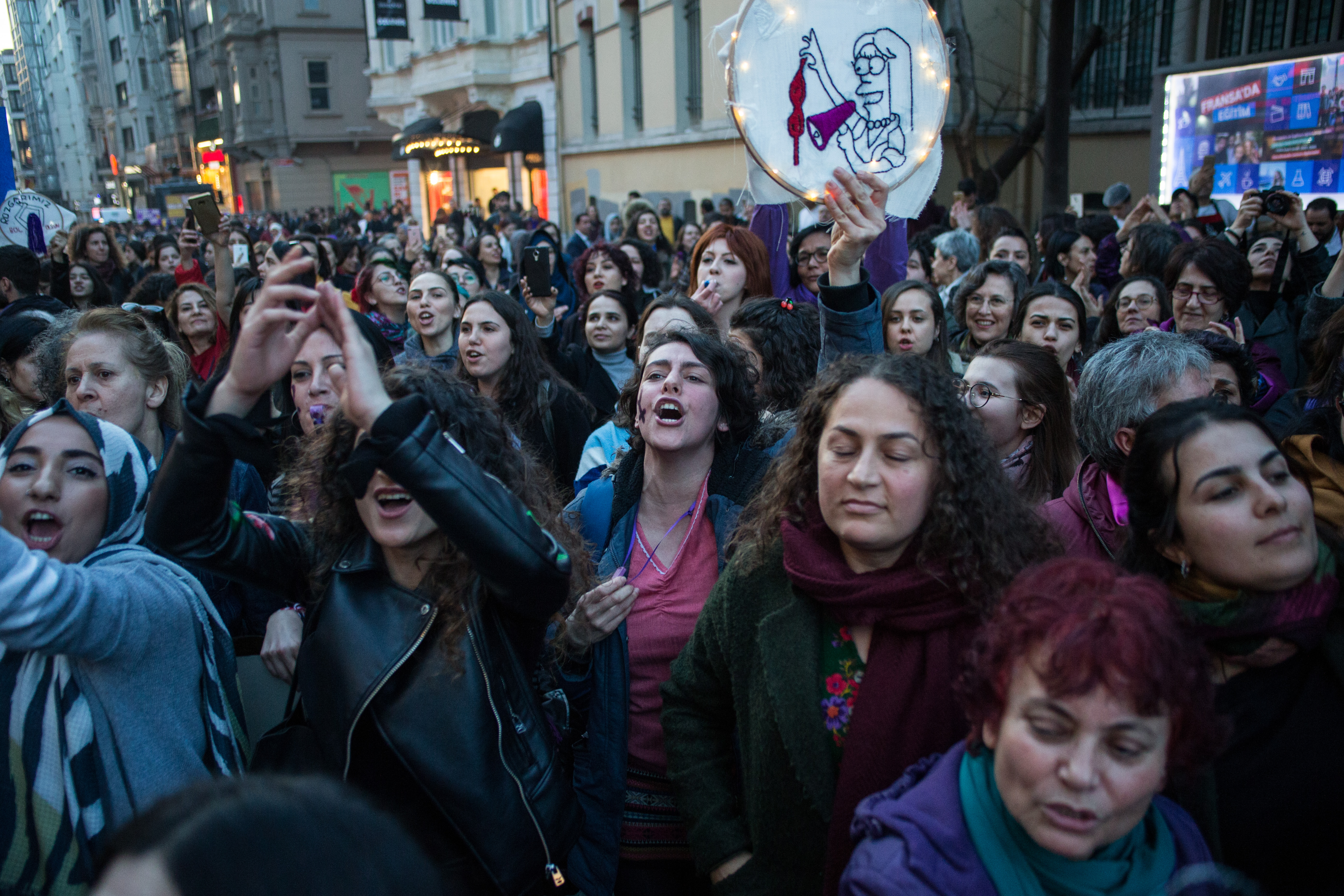
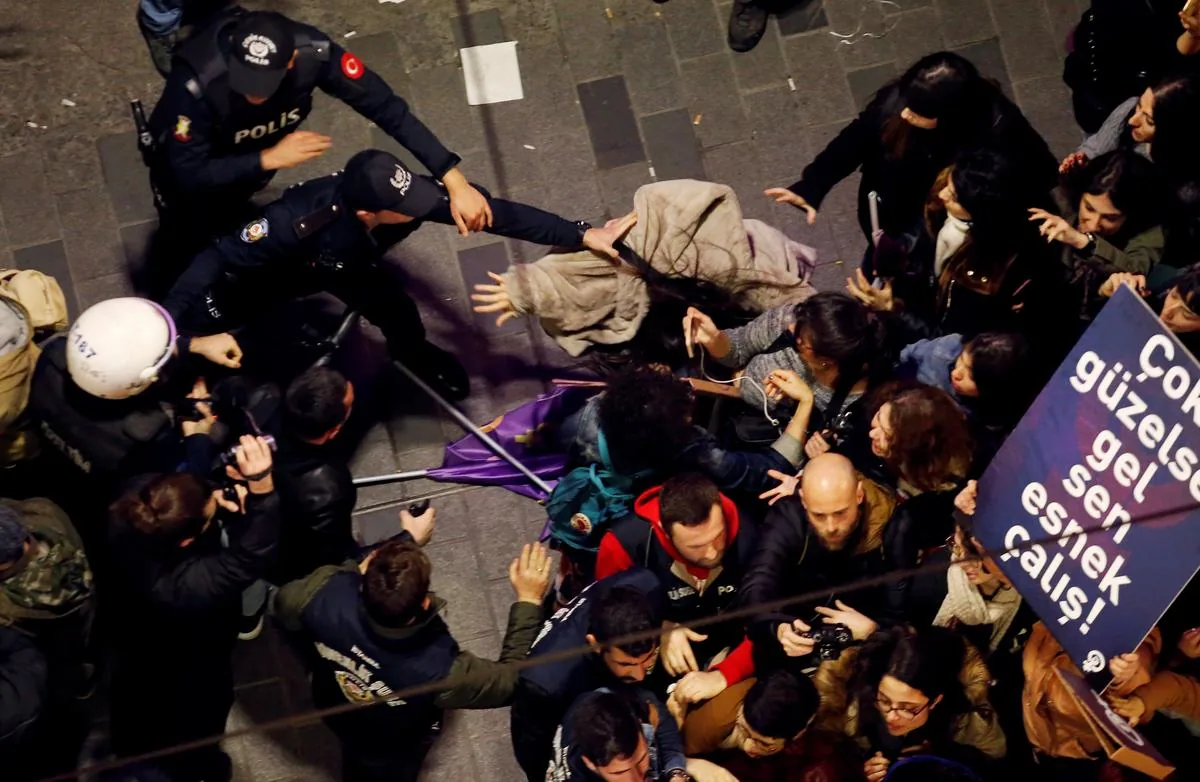
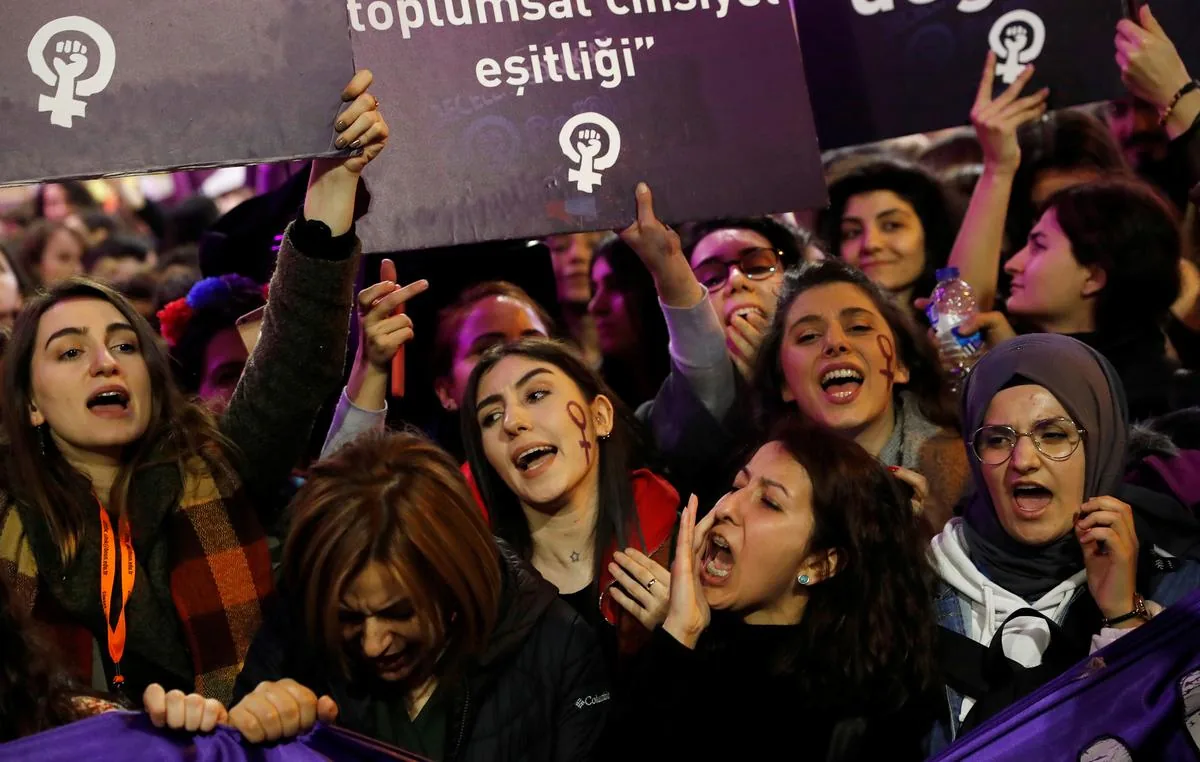
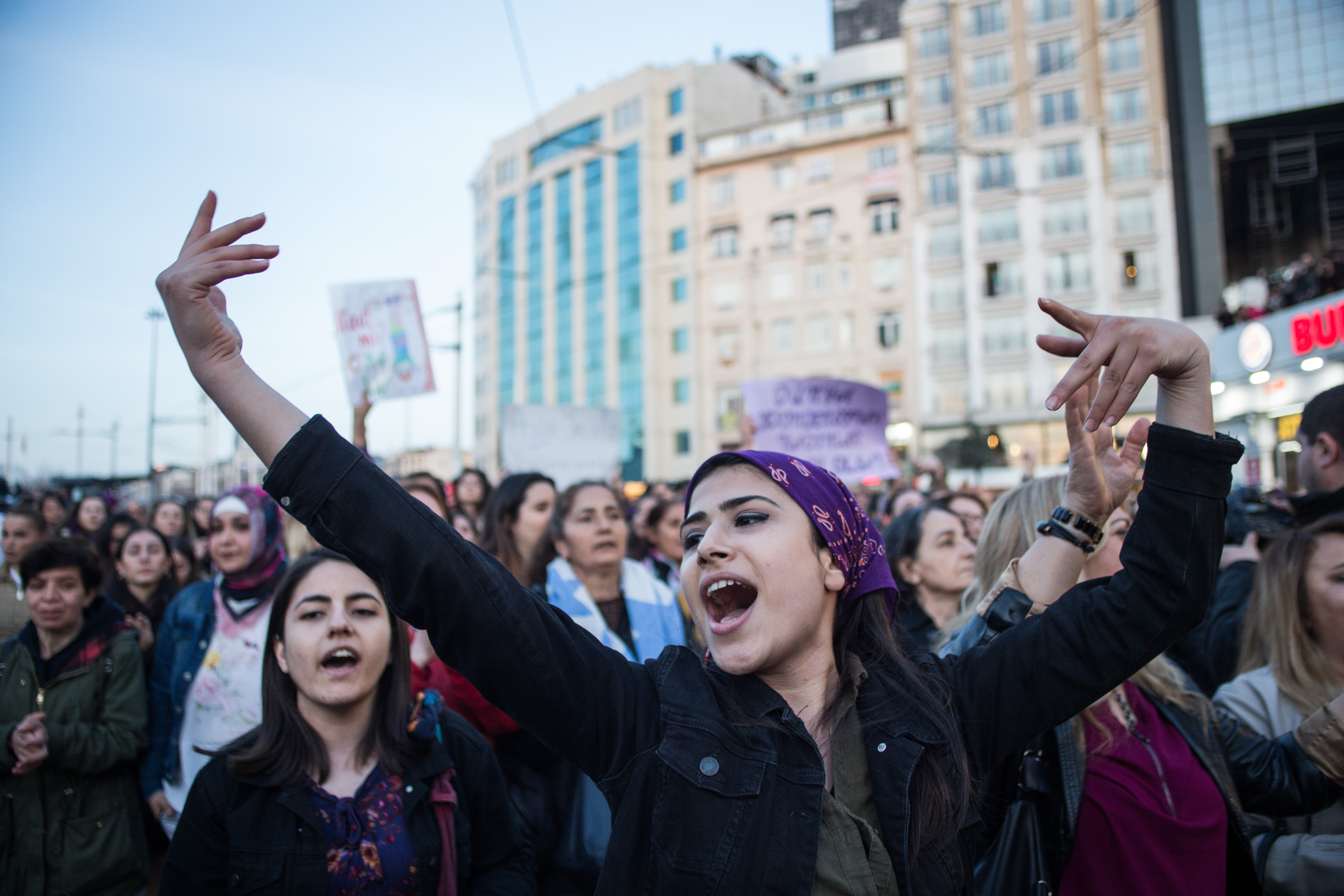
The additional banners greatly lifted the atmosphere. For about an hour and a half, the crowd remained in the area, chanting with enthusiasm. Participants called on the police to 'Open, open, open the barricade!' As numbers grew, people were pushed forward and pressed together around the main banner. When the police refused to open the route, protesters pushed against the barricade. Police responded with tear gas and rubber bullets. Attacking from both the front and the rear, they hemmed the women in. A group took the initiative and began moving down Sıraselviler Avenue. With one of the additional banners and someone carrying a megaphone on that side, a march began to form. A substantial part of the crowd followed, and an unplanned march with banners and slogans continued all the way to Eminönü.
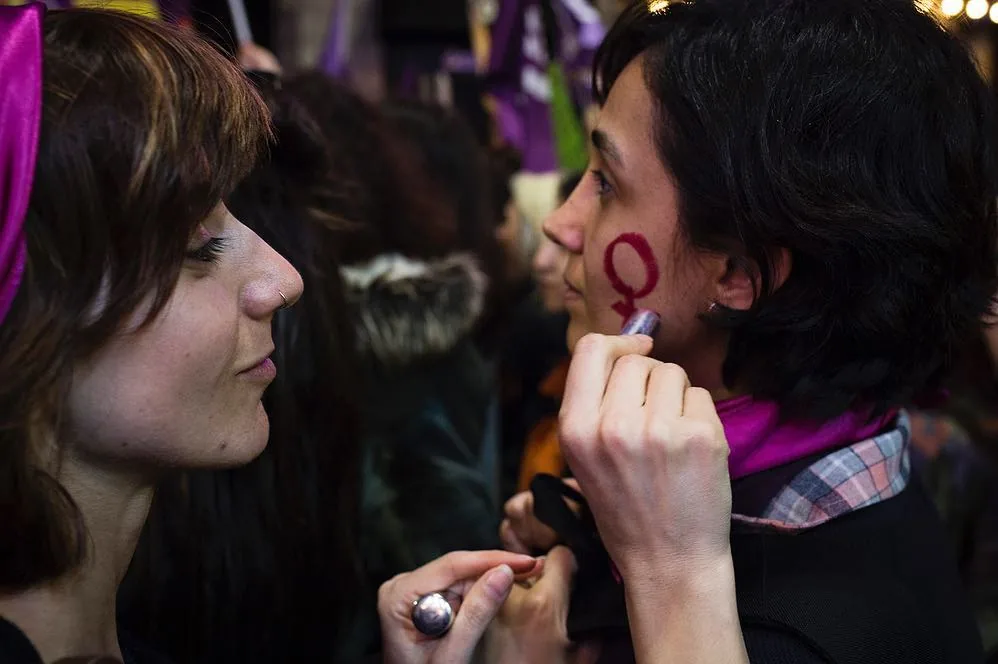
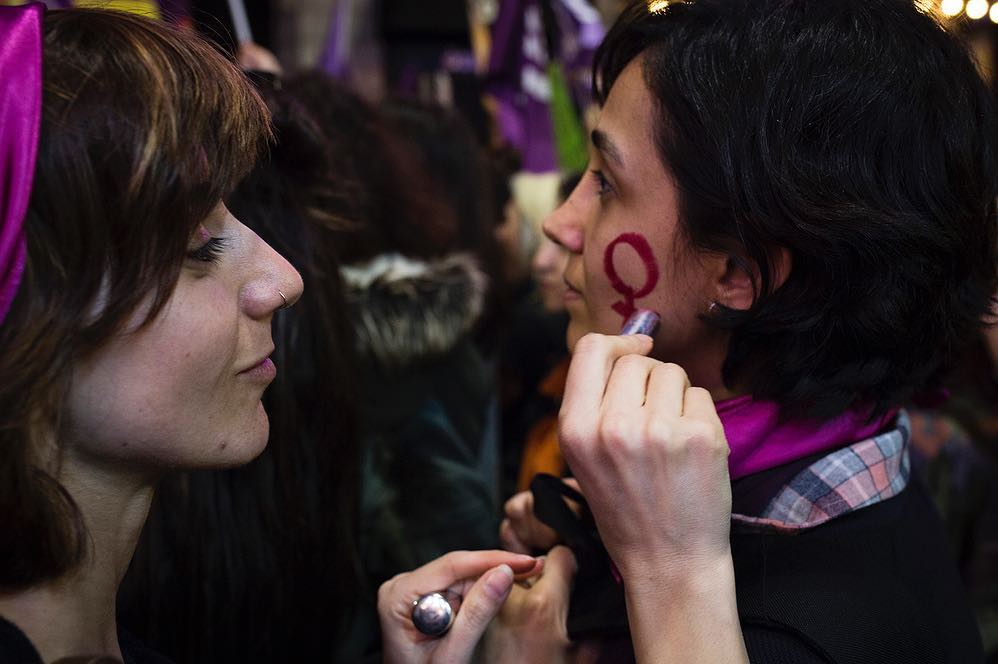
The party that followed took place at The Mekan with a very large turnout. Stamps bearing the feminist symbol had been prepared in advance and were used at the entrance, and Ritim Kolektif performed.
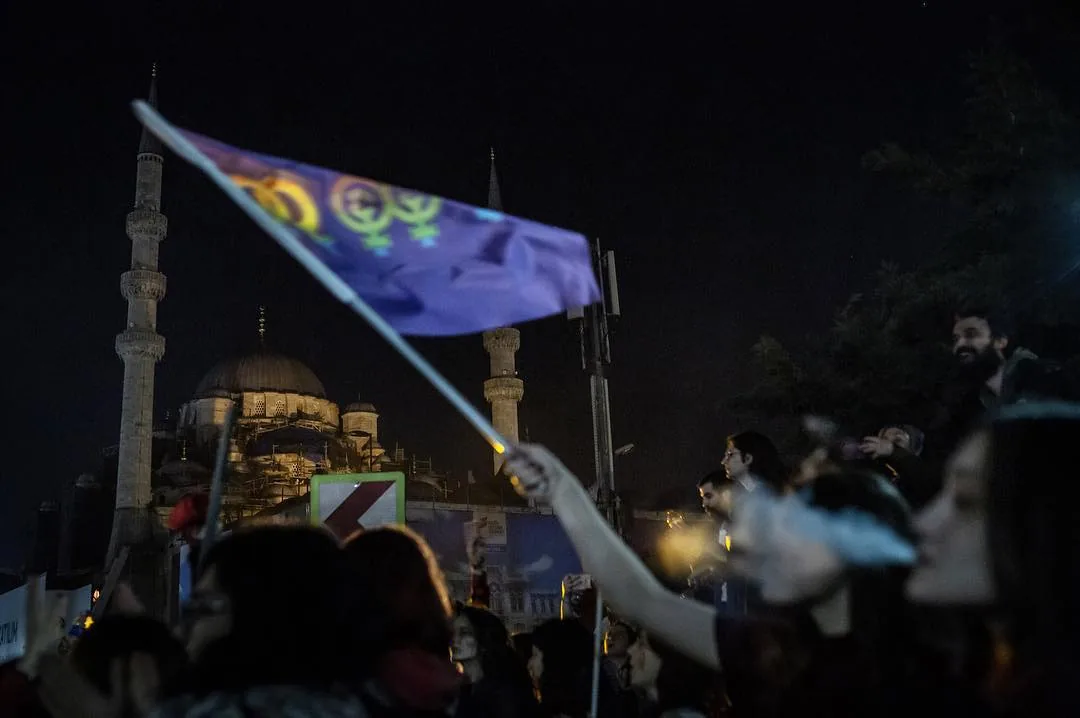
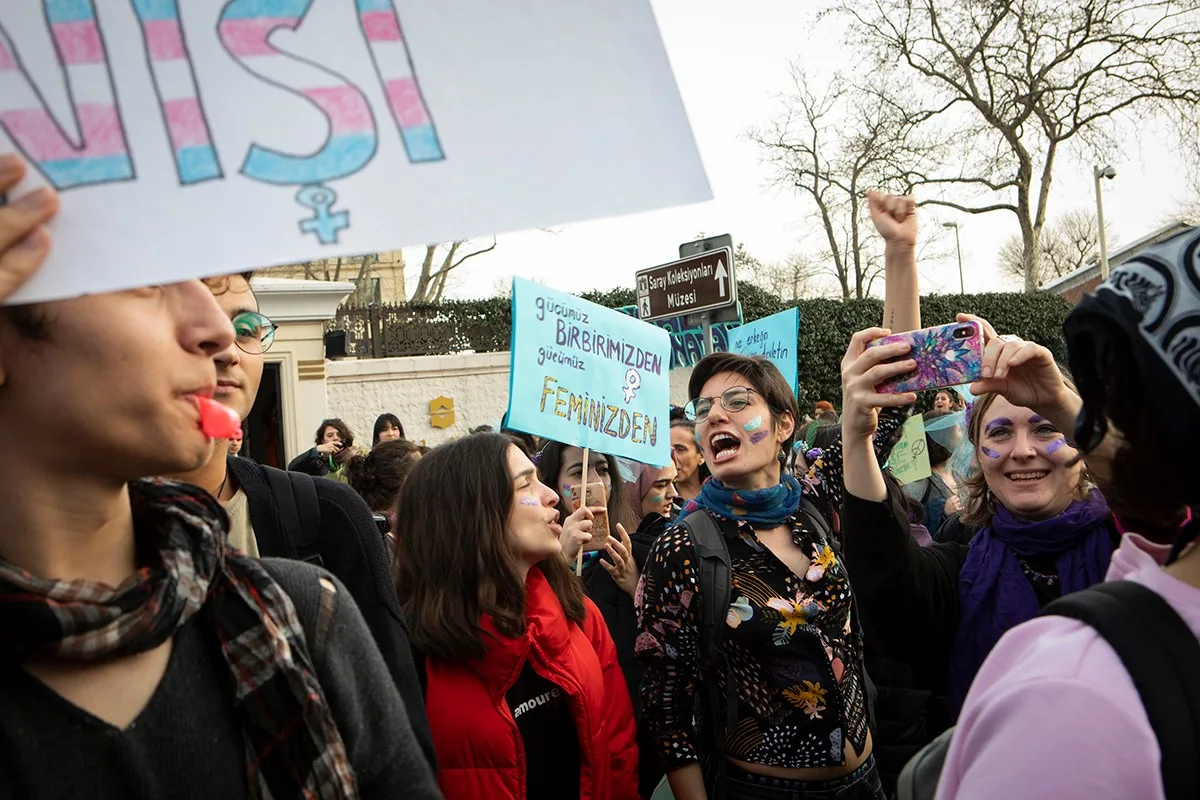
In the days after the march, an online campaign targeted it on Twitter with the accusation that participants had 'whistled at the call to prayer during the March 8 Night March'. Politicians then joined in. At a rally, Erdoğan targeted the march, saying: 'The other day, a group that supposedly gathered in Taksim for Women's Day under the leadership of the CHP and HDP showed disrespect to the call to prayer with whistles and slogans.' In Mis Street, a group wearing robes and turbans marched through the area of bars, chanting religious slogans and 'May the hands raised against the call to prayer be broken'. After lengthy discussions, a response was drafted. There were differences within the organising committee, and a fuller discussion was deferred to the evaluation meeting. Kadın Savunması was also criticised for issuing a separate statement alongside the agreed text.
At the evaluation meeting, most speakers considered it worthwhile to have issued a statement. Others argued that no statement was necessary and criticised it for marginalising opposition to religious pressure. Nevertheless, there was agreement that the resulting text had been as inclusive and straightforward as possible on these points. The way it had been discussed in the WhatsApp and email groups, journalists' persistent requests for comment and the resulting rush were also criticised. The meeting discussed the need for future statements to address women directly, strengthen them rather than leave them isolated, and bring their demands to the fore.
The assessment of the demonstration reflected different concerns and positions. Despite the march being blocked, the size of the crowd had lifted everyone's spirits. At the same time, participants discussed the future of demonstrations in light of the violence increasingly directed against them and the recent statement by then Interior Minister Süleyman Soylu that 'İstiklal Avenue is our red line'. They considered what could be done to sustain the march the following year without losing its legitimacy or its broad participation.
Podcast